A Uganda birding safari almost always runs west and south-west: Murchison Falls for the Nile and its delta, Kibale for tall moist forest, Queen Elizabeth for crater rims and papyrus channels, and Bwindi for the Albertine Rift birds. December to February is dry across the country; June to August is the dependable dry window in the south-west. The wetter months are also the cheapest for primate permits.
Uganda's appeal to birders is how many habitat types sit inside one driveable loop. Below is where they are, what the authority charges, and how the seasons behave.
Where should a Uganda birding safari go?
Think in habitats rather than park names: the habitat determines the list.
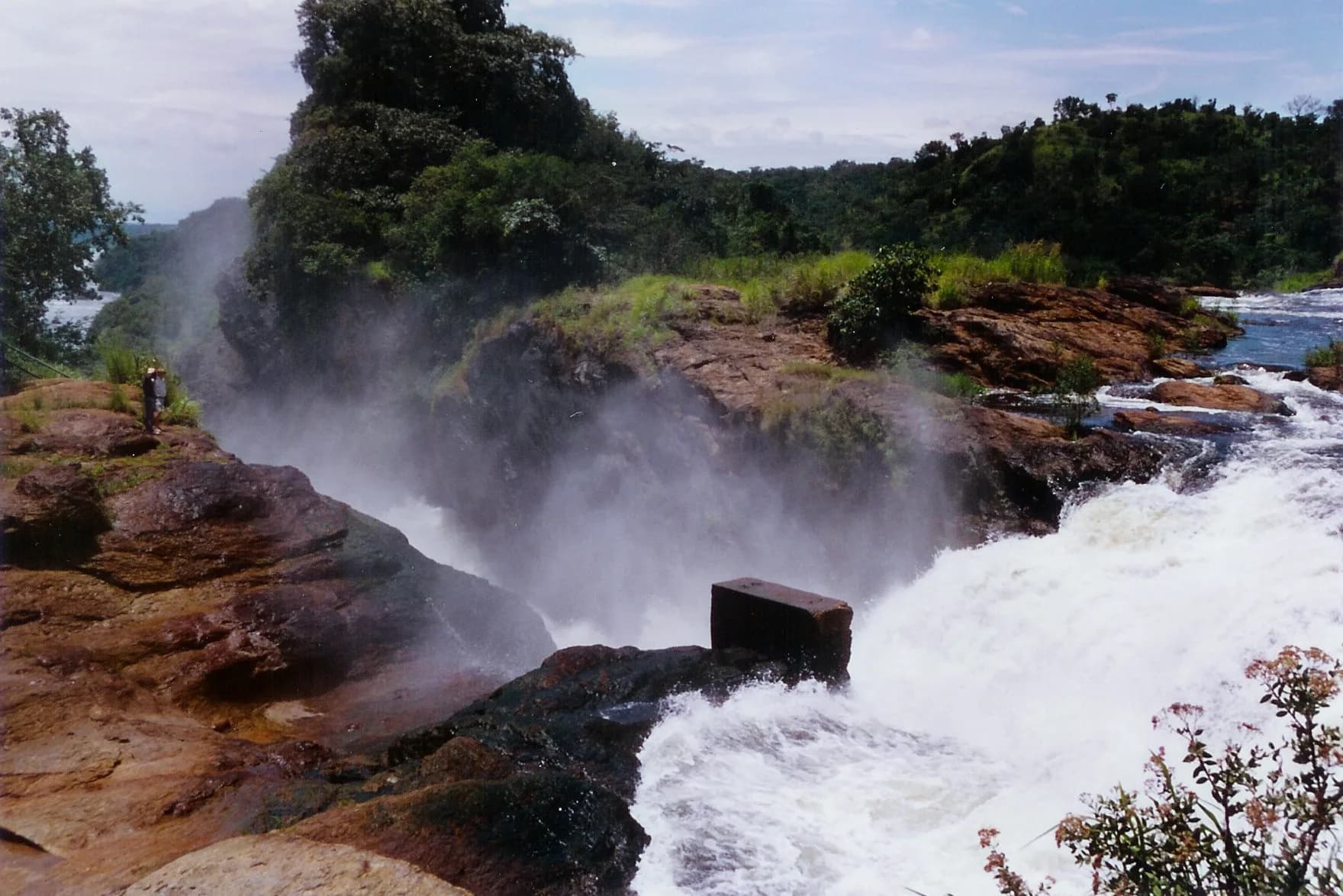
- Big river and delta. Murchison Falls National Park gives you the Nile and its delta, papyrus fringes, riverine woodland and open borassus savannah in a single morning. The launch trip is the core birding activity here, not an add-on.
- Tall moist forest. Kibale Forest is the classic Ugandan forest-birding block, and the same trails carry the chimpanzees.
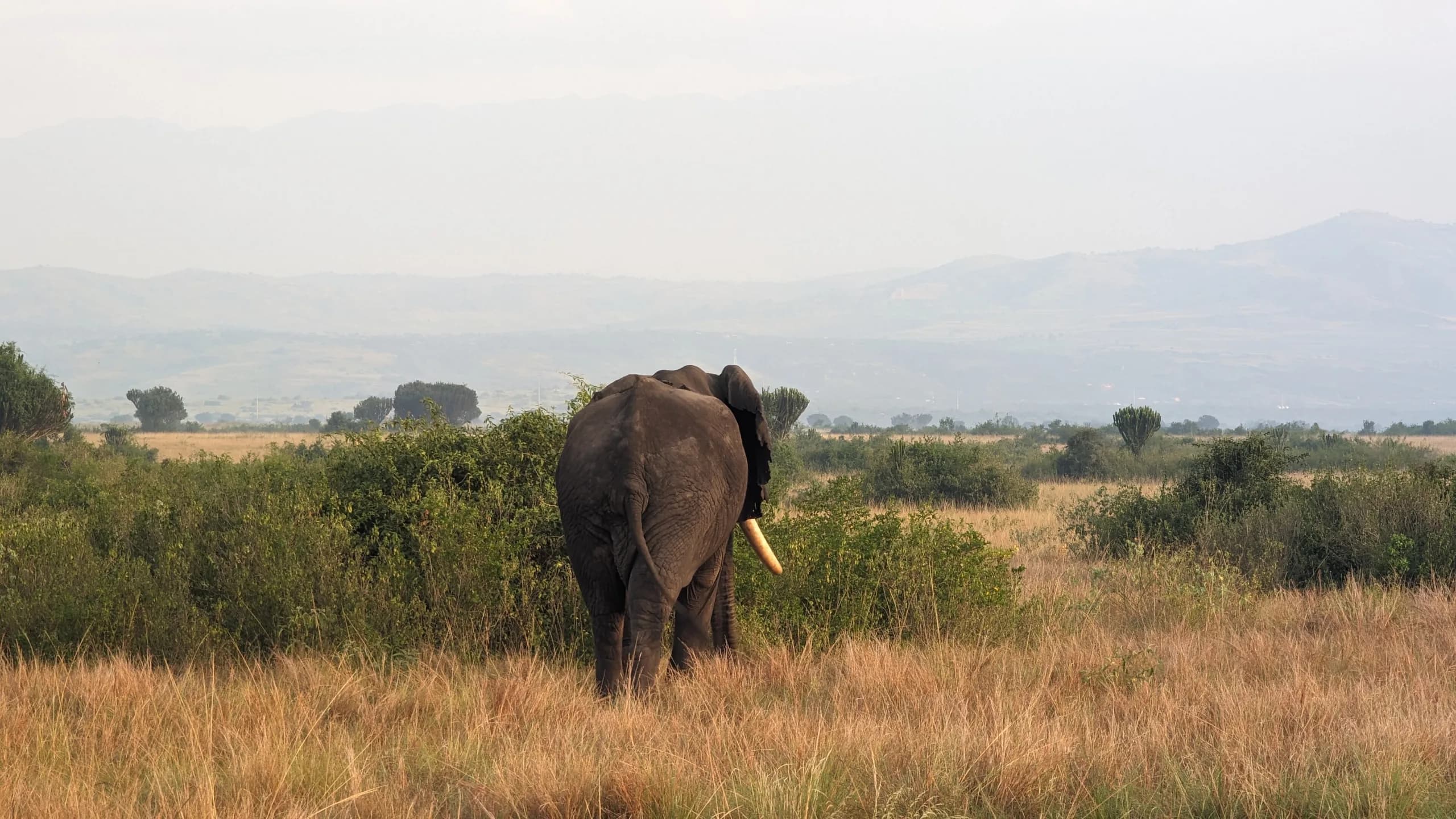
- Crater lakes, channels and savannah. Queen Elizabeth National Park stacks water birds, papyrus specialists and open-country species within very short drives, plus a boat channel.
- Montane and Albertine Rift forest. Bwindi Impenetrable Forest holds the birds restricted to the mountain chain along Uganda's western edge, and it is slow, on-foot, trail-and-track birding.
- Acacia and lakeshore. Lake Mburo National Park is small, close to Kampala, and a natural first or last stop with its own boat trip.
- Dry north. Kidepo Valley National Park holds a drier suite of birds, at the cost of a long drive or a flight.
A first Uganda trip taking in Murchison, Kibale, Queen Elizabeth and Bwindi covers four of those habitat types without doubling back. That is the shape of the Uganda Grand Circuit. See the full set of destinations to add or drop links in that chain.
What do the park and boat fees actually cost?
Uganda Wildlife Authority (UWA) charges park entrance independently of package activities. Its tariff names gorilla tracking, chimpanzee tracking, mountain climbing and birding — so a gate ticket is not an activity booking. Independent is not the same as always additional, and that is where budgets go wrong. Some permits bundle the day's entrance and some do not: the Kibale chimpanzee tracking permit includes park entrance and the guide fee, and the gorilla permit includes park entrance for the day, the guide fee and a community development contribution, while chimpanzee tracking at Kyambura Gorge in Queen Elizabeth includes the guide fee but excludes entrance. Add a gate ticket on top of the first two and the budget is USD 40 a head a day too high.
| Site | UWA entrance, foreign non-resident | Boat or activity fee |
|---|
| Murchison Falls NP | USD 45 adult / USD 25 child per 24 hours | Launch trip USD 30 per person, about 2 hours |
| Queen Elizabeth NP | USD 40 adult / USD 20 child per 24 hours | Boat trip USD 30 per person; Kyambura Gorge chimpanzee tracking USD 100, park entrance not included (rises to USD 200 on 1 January 2027) |
| Kibale NP | USD 40 adult / USD 20 child per 24 hours | Chimpanzee tracking permit USD 250, park entrance and guide fee included (rises to USD 300 on 1 January 2027) |
| Bwindi Impenetrable NP | USD 40 adult / USD 20 child per 24 hours | Gorilla tracking permit USD 800, or USD 600 in April, May and November; includes park entrance for the day, guide fee and community development contribution |
| Lake Mburo NP | USD 40 adult / USD 20 child per 24 hours | Boat trip USD 30 per person |
| Kidepo Valley NP | USD 40 adult / USD 20 child per 24 hours | Confirmed at quote |
| Toro-Semliki WR | Confirmed at quote | Shoebill viewing by boat USD 100 covering 3 people, USD 20 per extra person |
Three details that matter to birders:
- An entrance ticket runs 24 hours from the time you enter, and UWA's Murchison Falls entrance line adds that extra time is charged as an extra day, so plan a pre-dawn second morning around it rather than discover it at the gate.
- UWA's tariff sets a minimum charge of USD 120 for a small boat, and separately a minimum party size of eight people for small boats at Murchison and four at Lake Mburo; a big boat's minimum is the equivalent of fifteen people. Which floor binds depends on the site, so we confirm the private-boat figure when we quote.
- UWA's Murchison Falls entrance line defines children as 5 to 15 and exempts under-fives. The tariff does not repeat that note for the other parks, so we confirm age bands before pricing a family.
Those are UWA's published foreign non-resident rates. UWA revises them on its own schedule and the tariff states that fees can change without prior notice; the next announced changes take effect on 1 January 2027, and gorilla tracking is not among the rates changing on that date. We confirm the current figure at the point we quote.
When is the best time for birding in Uganda?
The Uganda National Meteorological Authority describes two rainfall seasons nationally — March to May, and September through December — and says that December to February is typically dry across Uganda, with February the hottest month. Northern and parts of eastern Uganda also receive substantial rainfall in June, July and August, which is the trap in any single national calendar: the mid-year dry window the south-west enjoys is not shared by Murchison and Kidepo.
In the south-west there is an instrumental record to work from. The Institute of Tropical Forest Conservation's 13-year record kept at Ruhija in Bwindi (1987–1999) found June, July and August to be the driest months in every single year of that record — the most stable feature in the dataset. Bwindi is also cool: mean daily maximum around 19C, mean minimum around 14C, with recorded extremes of 11C to 24C. Bring fleece and waterproofs whatever the month.
So: December to February gives you the countrywide dry window; June to August gives the most reliable forest conditions in the south-west while the north is wetter. For how those seasons read when a gorilla trek is the fixed point of the trip, see best time to visit Uganda for gorilla trekking.
One thing to flag honestly. Birding guides commonly prefer to work the wetter shoulder months, the reasons given being more song, display and activity. No meteorological or research authority we can cite publishes a season-by-season birding differential for Uganda, so treat that as guide preference rather than as a published fact. What is not in dispute is that wet-season trails are harder and the light is more variable.
Why April, May and November deserve a second look
UWA introduced discounted low-season permit rates in April, May and November: a gorilla permit at USD 600 for foreign non-residents instead of the standard USD 800, and chimpanzee tracking at USD 200 against Kibale's standard USD 250. The circular that introduced those rates names the chimpanzee activity without naming a park, so we confirm with UWA which parks the USD 200 covers before quoting it. Those are the wet months — and, on the guide preference flagged above rather than on any published evidence, often the months a birding-led trip would choose anyway.
The catch is written into the rule: UWA states that low-season permits cannot be rescheduled. If your dates are firm, that is a saving. If they might move, it is a risk you are taking on knowingly.
Where do you look for the shoebill?
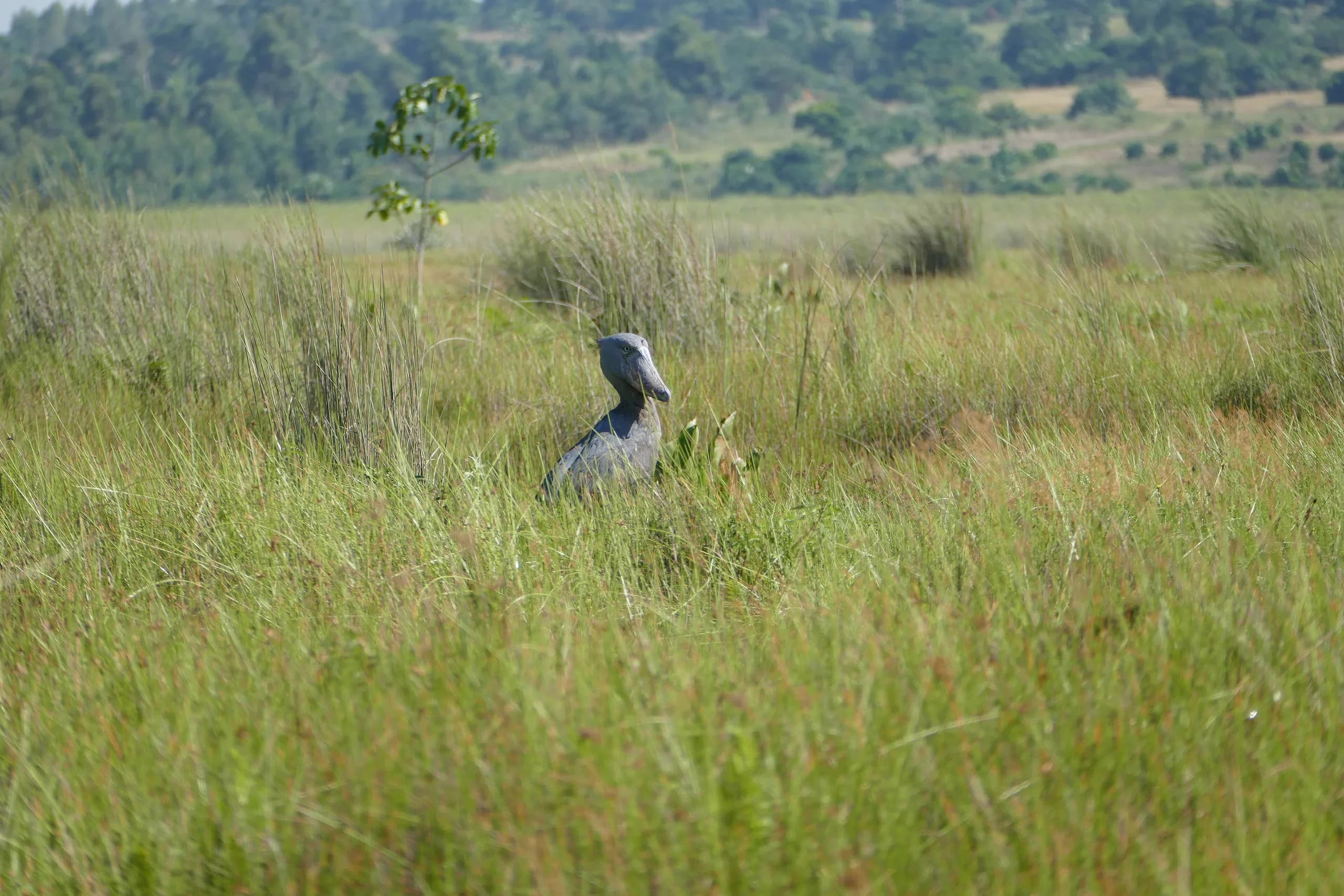
The shoebill is a swamp bird, which means you look for it from a boat, in papyrus, not from a vehicle. UWA prices a dedicated shoebill viewing boat at Toro-Semliki Wildlife Reserve at USD 100 covering three people, each additional person USD 20 — the clearest signal of where the authority expects the search to happen.
There is useful small print attached. A UWA gorilla tracking permit includes one day's free entrance to Mount Elgon National Park and to Toro-Semliki Wildlife Reserve, usable within one month before or after your tracking date. If you are trekking gorillas anyway, a Semliki day is partly paid for already.
No operator can honestly guarantee a shoebill.
How do birding and primate trekking fit together?
Comfortably, with two rules to plan around.
First, in Uganda, foreign non-residents can buy gorilla and chimpanzee permits only through a tour operator licensed by the Uganda Tourism Board. That is UWA's rule, not an operator's preference. It is also a Ugandan rule specifically, and it says nothing about Rwanda, where the Rwanda Development Board lets visitors book permits directly, including online through Irembo.
Second, since 1 March 2026 there is no free hold period. UWA suspended the seven-day reservation window, and its booking system now secures a permit only on full payment at the time of booking. Anything online about holding a permit while you decide is out of date. There is more in Uganda gorilla permits: cost and booking.
A Kibale chimpanzee trek is a forest walk with a target, and it slots into a birding day well. UWA lists departures at 08:00, 11:00 and 14:00 from Kanyanchu, with treks lasting two to five hours — the two numbers a birding day has to be built around. On minimum age, UWA's own two sources differ: the 2024 tracking guidelines set 12 years for chimpanzee tracking, while the UWA Kibale park page states 16, so we confirm the age applied to a booking with UWA reservations. More on our chimpanzee tracking page.
How many days do you need?
Birding routes are slower than general game-viewing routes because the unit of travel is a trail or a stretch of road, not a park. As a shape rather than a rule: one habitat per two nights is comfortable, one per night is a transfer schedule with binoculars. Four habitats is a week and a half rather than a week. The safari itineraries give a sense of the distances, and Kidepo decides whether you drive or fly.
What actually makes the difference
Three things, none of them a park fee.
- The guide. A specialist birding guide who knows the calls and the specific trails is the single largest variable in a Ugandan trip, worth more than any lodge upgrade.
- Seats and space. A vehicle configured for four birders with tripods and scopes behaves very differently from one carrying seven. So does a chartered boat versus a shared launch, which is where the small-boat minimums above become relevant.
- Pace. A general safari itinerary is not a birding itinerary. The stops are in the wrong places and the mornings start too late.
You will see a national species total quoted on almost every Uganda birding page. We do not publish one: it depends on which taxonomy you follow, it changes, and it tells you nothing useful about a ten-day route. Nor do we publish per-site checklists, because a realistic target list depends on your months, your altitude range and your guide.
Tell us your dates, your target groups and how hard you are willing to walk, and we will build the route around them. Start at plan your safari, look at how we handle slow, specialist trips on our photographic safaris page, or just get in touch.