10 daysUganda
10-Day Uganda Grand Circuit
Rhino on foot at Ziwa, the Nile at Murchison, chimps at Kibale, the Kazinga Channel and gorillas in Bwindi
From$7,200 per person
Loud, fast, political forest apes, tracked on foot in Kibale and Nyungwe
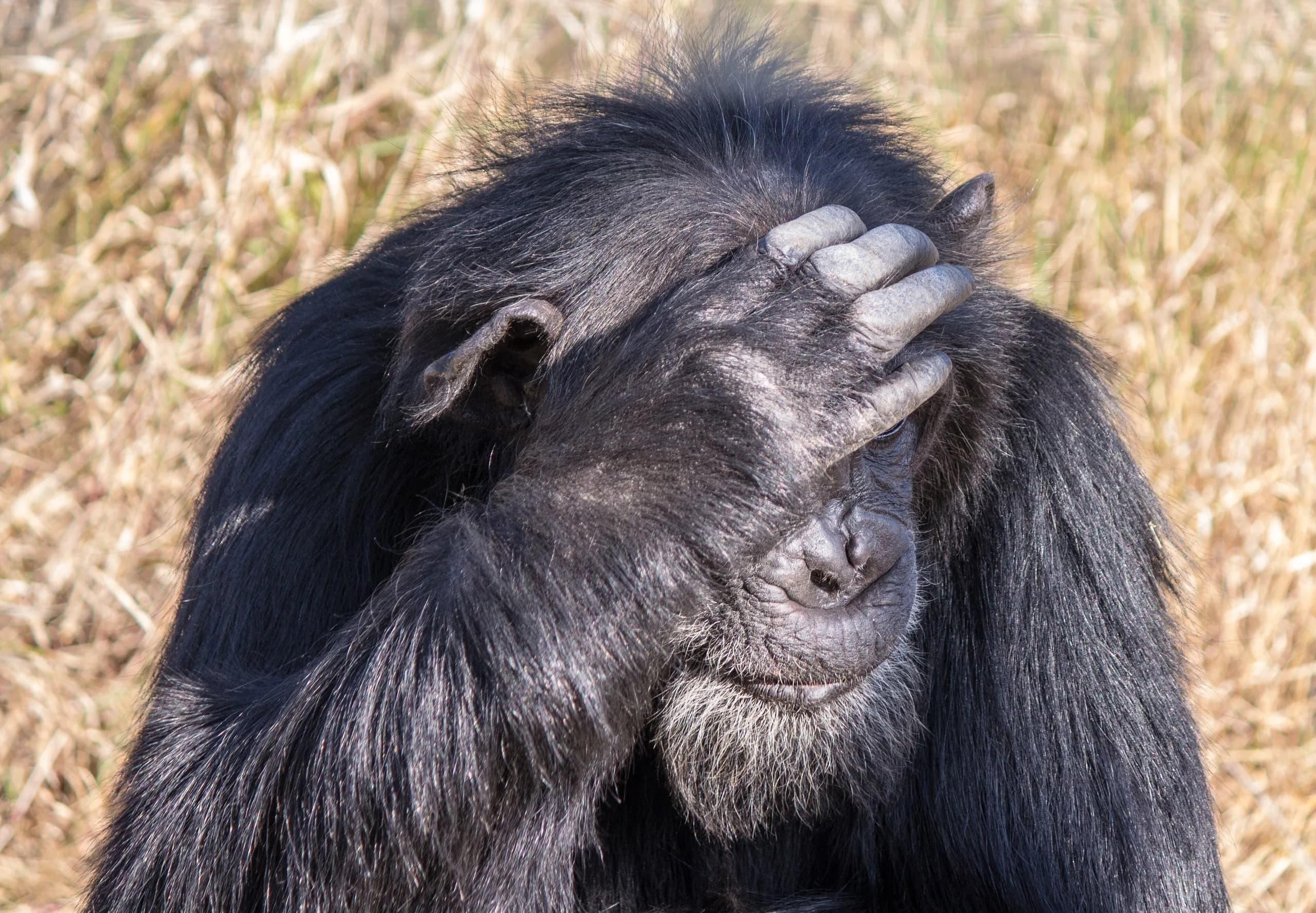
Chimpanzees are not a quieter version of gorillas. Gorillas sit and eat and let you watch. Chimpanzees scream, drum on buttress roots, chase each other through the canopy and move faster on the ground than you can follow. A good hour with them is loud and chaotic, and you will spend a lot of it looking up.
Kibale Forest in western Uganda has the most reliable tracking in Africa, with several communities habituated over decades and a high chance of a sighting on any given morning. Nyungwe in southern Rwanda holds more chimpanzees across a bigger forest but they are harder to find, and the dawn starts are genuinely early.
The experience splits in two. Standard tracking gives you one hour once the community is located. Habituation puts you with the researchers from before the chimpanzees leave their night nests until they build new ones, which is most of a day.
Kibale is the answer for almost everyone. Around 1,500 chimpanzees live in the forest, several communities are fully habituated, and the terrain is close to flat, which after Bwindi feels like a holiday. Tracking permits are roughly 250 US dollars per person for a foreign non-resident, set by the Uganda Wildlife Authority, and the full-day habituation experience is roughly 300 US dollars. Both rise on 1 January 2027, to 300 and 400 respectively, under a tariff revision confirmed in February 2026. In April, May and November a low-season chimpanzee rate of 200 US dollars applies instead.
Nyungwe is a bigger, older, wilder forest and the tracking is harder. Permits are roughly 150 US dollars per person, set by the Rwanda Development Board. Departures leave at 04:30 to reach the nest site before the community wakes, and the walk in the Cyamudongo sector in particular is steep. Choose Nyungwe if you are already in Rwanda for gorillas and want the forest, the canopy walkway and the thirteen other primate species. Choose Kibale if the chimpanzees themselves are the point.
| Standard tracking | Habituation experience | |
|---|---|---|
| Time with the chimpanzees | One hour once located | Most of a day, from nest to nest |
| Start time | 08:00 or 14:00 | Around 06:00, at the night nests |
| Group size | Up to six per group | Up to four, with researchers |
| Indicative permit, Kibale | About 250 US dollars | About 300 US dollars |
| Best for | First visit, families, tight schedules | Photographers, repeat visitors, behaviour |
All permit figures above are indicative and set by the park authorities, not by us. Treat them as a planning guide and expect to be quoted the rate current on your booking date.
The canopy is high, the light underneath it is low and green, and the animals are black. That combination defeats most kit lenses. What works is a fast prime or a fast zoom, an ISO you would normally consider too high, and a willingness to shoot at 1/250 second and accept some noise. A monopod helps more than a tripod because you are moving constantly.
Kibale holds thirteen primate species, and the red colobus and grey-cheeked mangabey are easy to see on the same walk. The Bigodi wetland sanctuary next door is run by the neighbouring community, costs a fraction of a park fee and is one of the better birding walks in Uganda. In Nyungwe the canopy walkway at Uwinka, sixty metres above the valley floor, is worth building an afternoon around.
Each of these already includes it. Any of them can be reshaped around your dates.
Tell us your dates and we will come back with an itinerary, the lodges we would use and a price that holds.