3 daysUganda
3-Day Bwindi Gorilla Short Break
Fly in to Kihihi, trek one family in Buhoma, fly out. The shortest honest gorilla trip.
From$2,950 per person

Uganda, national park
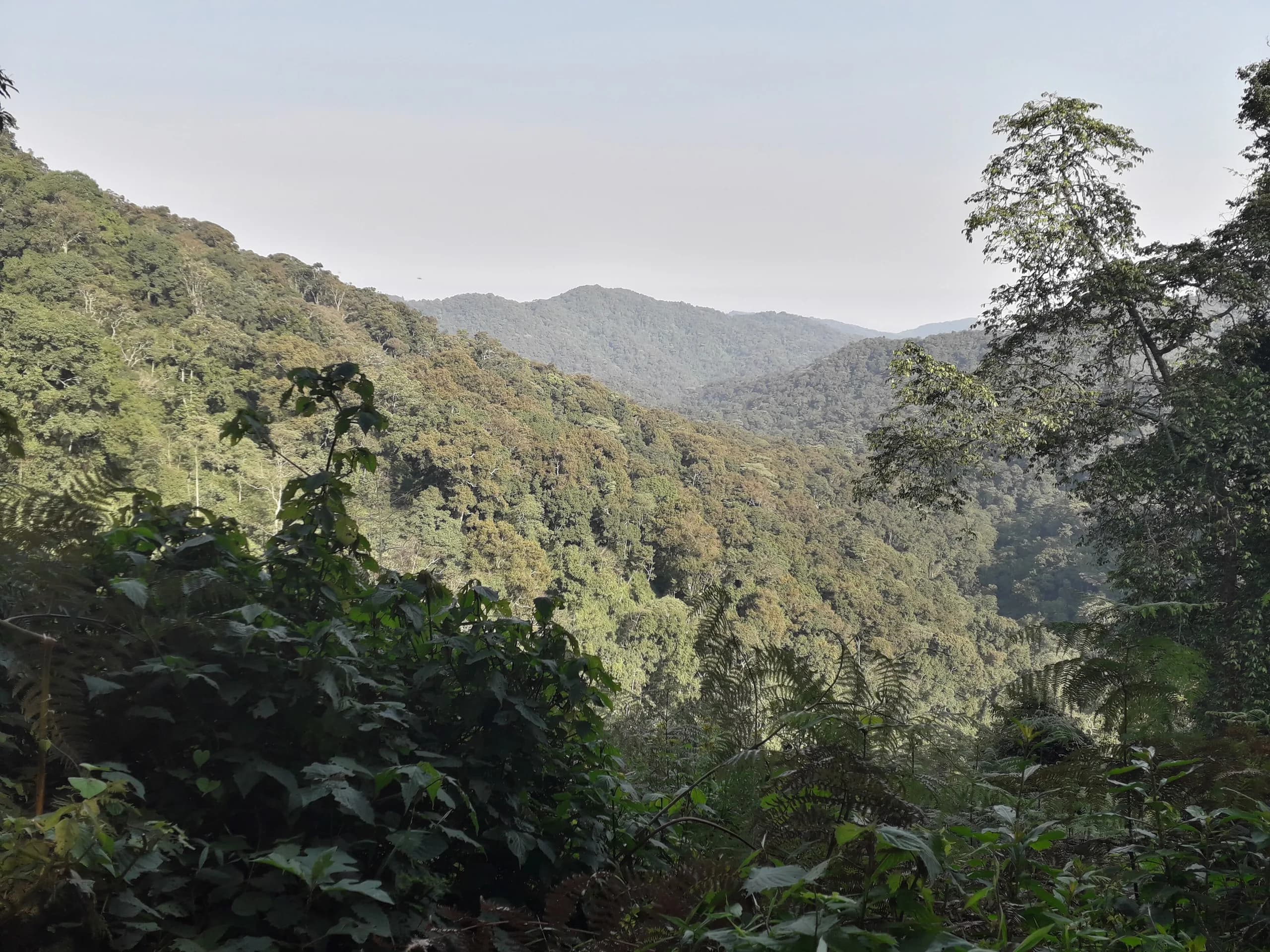
Roughly half the world population of mountain gorillas, in 331 square kilometres of forest
Bwindi is old forest. It survived the last ice age when most of the montane forest around it did not, which is why it holds species that exist nowhere else in Uganda and why the undergrowth is as dense as it is. The name is not marketing. Off the cut trails you are moving through vine, nettle and wet ground on a slope, and a tracker is opening the way with a machete.
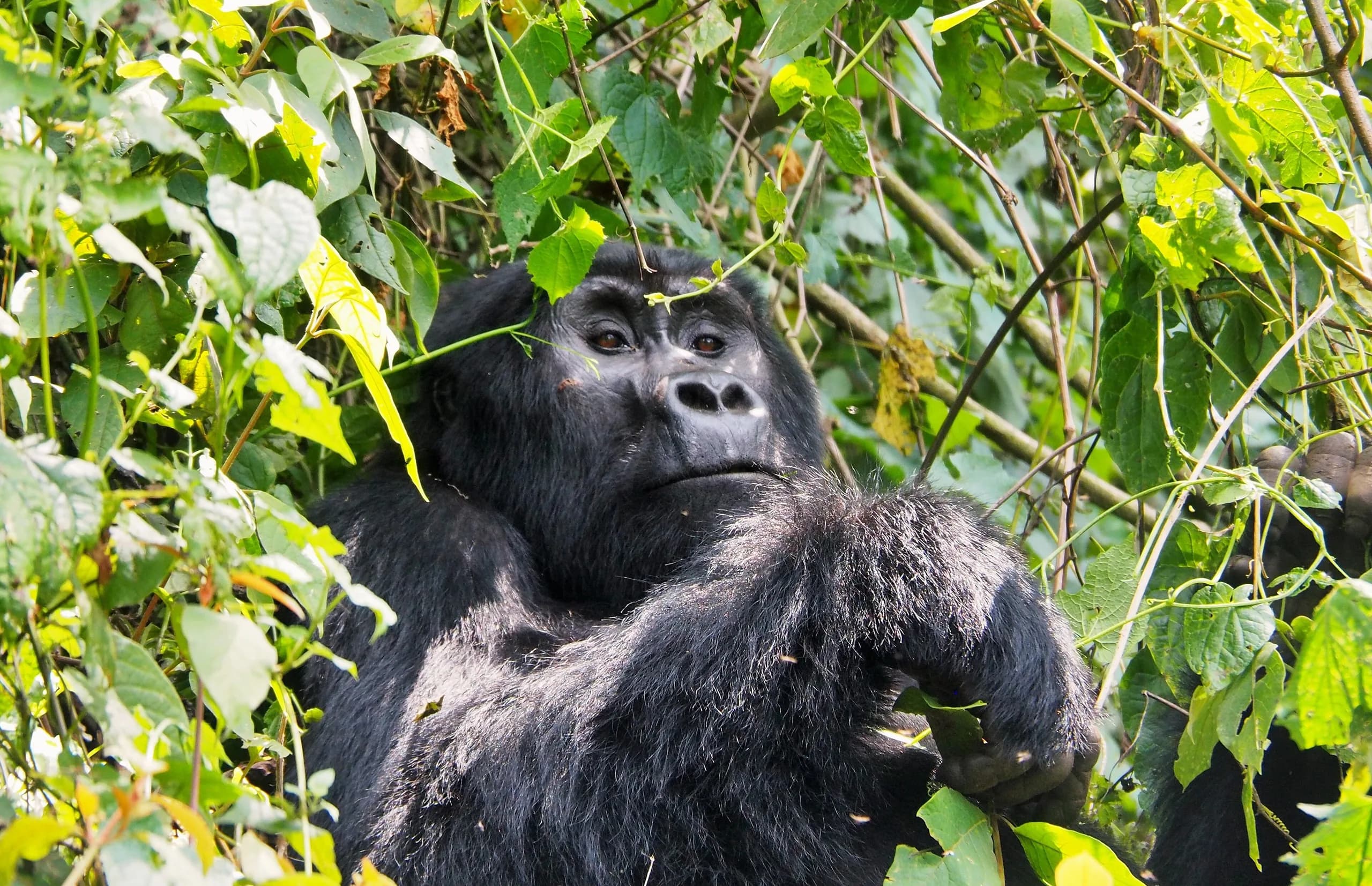
The park holds around twenty habituated gorilla families spread across four trekking sectors, and it is the reason most people come to Uganda. A permit puts eight visitors with one family for one hour. The walk to reach them takes anything from forty minutes to eight hours, and nobody can tell you the night before which it will be.
Bwindi is also one of the best birding forests in Africa, with the Albertine Rift endemics that birders travel specifically for, and it sits at the top of a landscape of tea estates and terraced hills that is worth a day on its own.
Bwindi is trekked from four separate headquarters and they are not interchangeable. Buhoma in the north is the original sector, has the widest range of lodges and the shortest transfer from Kihihi airstrip. Ruhija sits high on the eastern edge at around 2,350 metres, is colder, quieter and the best base for Albertine Rift birding. Rushaga in the south has the most habituated families and is the only sector selling the gorilla habituation experience. Nkuringo, also in the south, has the hardest walking, since you start high on a ridge and descend into the valley, which means the climb comes at the end of the day when you are tired.
Driving between the northern and southern sectors takes three to four hours on rough road, so the sector is decided when the permit is bought, not on the day. If your lodge is in Buhoma and your permit is for Rushaga, someone has made a mistake.
A Uganda gorilla trekking permit is 800 US dollars per person for a foreign non-resident, set by the Uganda Wildlife Authority. It covers park entry, ranger guides, trackers and the single hour with the family. The gorilla habituation experience, sold only in Rushaga and limited to four visitors, is 1,500 US dollars per person and gives four hours with a family that is still being habituated. That habituation rate rises to 1,800 US dollars on 1 January 2027, under a tariff revision the Uganda Wildlife Authority confirmed in February 2026; standard gorilla tracking is unchanged at 800. A low-season gorilla permit costs 600 US dollars in April, May and November, and cannot be rescheduled. Both prices are indicative: the Uganda Wildlife Authority sets and revises them, and the rate on the day of booking is the rate that applies.
Permits are held against a specific date and a specific family. In June to September and December to February they sell out months ahead, and the sensible order is to secure the permit first and build the rest of the trip around the date it is issued for.
Groups leave the sector headquarters at 08:00 after a briefing. Trackers have usually been out since first light and radio back the family position, so the walk is directed rather than exploratory. Altitude runs from about 1,160 metres at the lowest point of the park to 2,607 metres at Rwamunyonyi, and most treks work between 1,500 and 2,300 metres. It is humid, the ground is often wet even in the dry months, and the gradient is the difficult part rather than the distance.
Porters wait at every trailhead and cost around 20 US dollars plus a tip. Hire one whether or not you think you need one. They carry your bag, they physically pull you up the steep sections, and the fee is direct income to people living on the park boundary, several of whom are former poachers. It is the single most useful twenty dollars you will spend in Uganda.
The minimum age is 15. Long trousers, gaiters or long socks, gardening gloves for grabbing vegetation, and boots you have already broken in are the kit that matters. Nettles here sting through thin fabric.
The Munyaga river trail and the waterfall trail from Buhoma are half-day forest walks that most visitors skip and should not. Batwa cultural experiences are run by the communities themselves and are worth doing when they are led by the Batwa rather than performed for a coach party; ask who runs the one you are offered. Birders should give Ruhija two full days for African green broadbill, Grauer’s warbler, handsome francolin and the Ruwenzori turaco.
Resident species, not a promise. Wildlife moves.
June to August and December to February are the drier months and the ones most people choose. Trails are firmer, the walking is shorter and photography is easier. March to May and September to November are the two wet seasons, and in those months the forest is genuinely muddy, treks take longer and afternoon rain is normal. What does not change is the gorillas: they are resident, they do not migrate, and sightings run at very close to 100 per cent in every month. What changes is your comfort, the state of the roads and the price of the lodges, which drop noticeably in April, May and November. If you can tolerate mud, the wet season gives you the forest almost to yourself.
By air, fly Entebbe to Kihihi airstrip for the Buhoma and Ruhija sectors, or Entebbe to Kisoro airstrip for Rushaga and Nkuringo. Both are about ninety minutes in a light aircraft, and the road transfer at the far end is 45 minutes to Buhoma from Kihihi, or 60 to 90 minutes to Rushaga and Nkuringo from Kisoro. By road it is eight to nine hours from Entebbe or Kampala via Mbarara and Kabale, on tarmac until the last stretch. Most people drive one way, breaking the journey at Lake Mburo or Queen Elizabeth, and fly the other. Coming from Rwanda, Kigali to the southern sectors is four to five hours through the Cyanika or Katuna border, which is why many gorilla trips fly into Kigali rather than Entebbe.

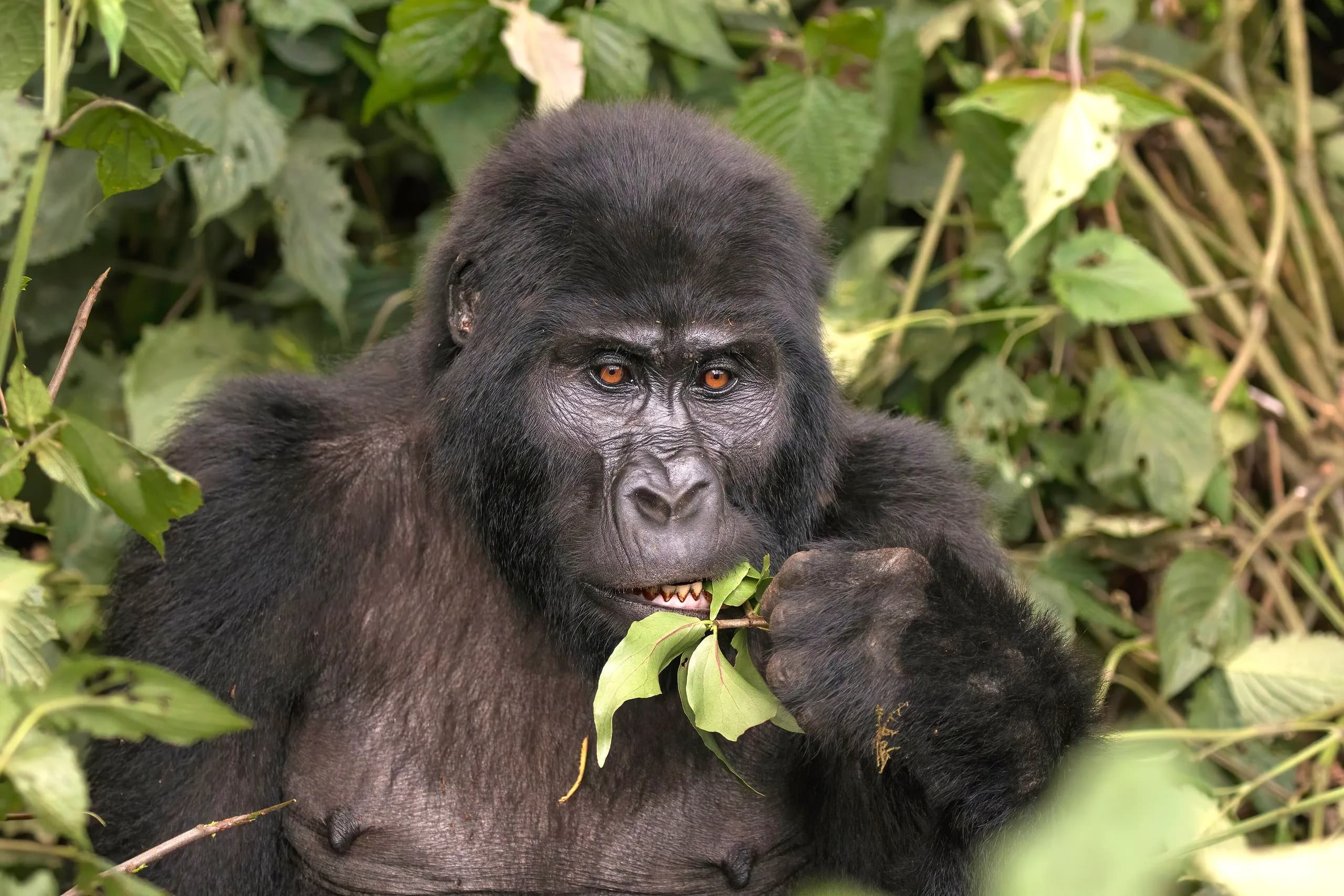
The properties we book here most often. Which one suits you depends on the season, the sector you are trekking and how much walking you want between your room and dinner.
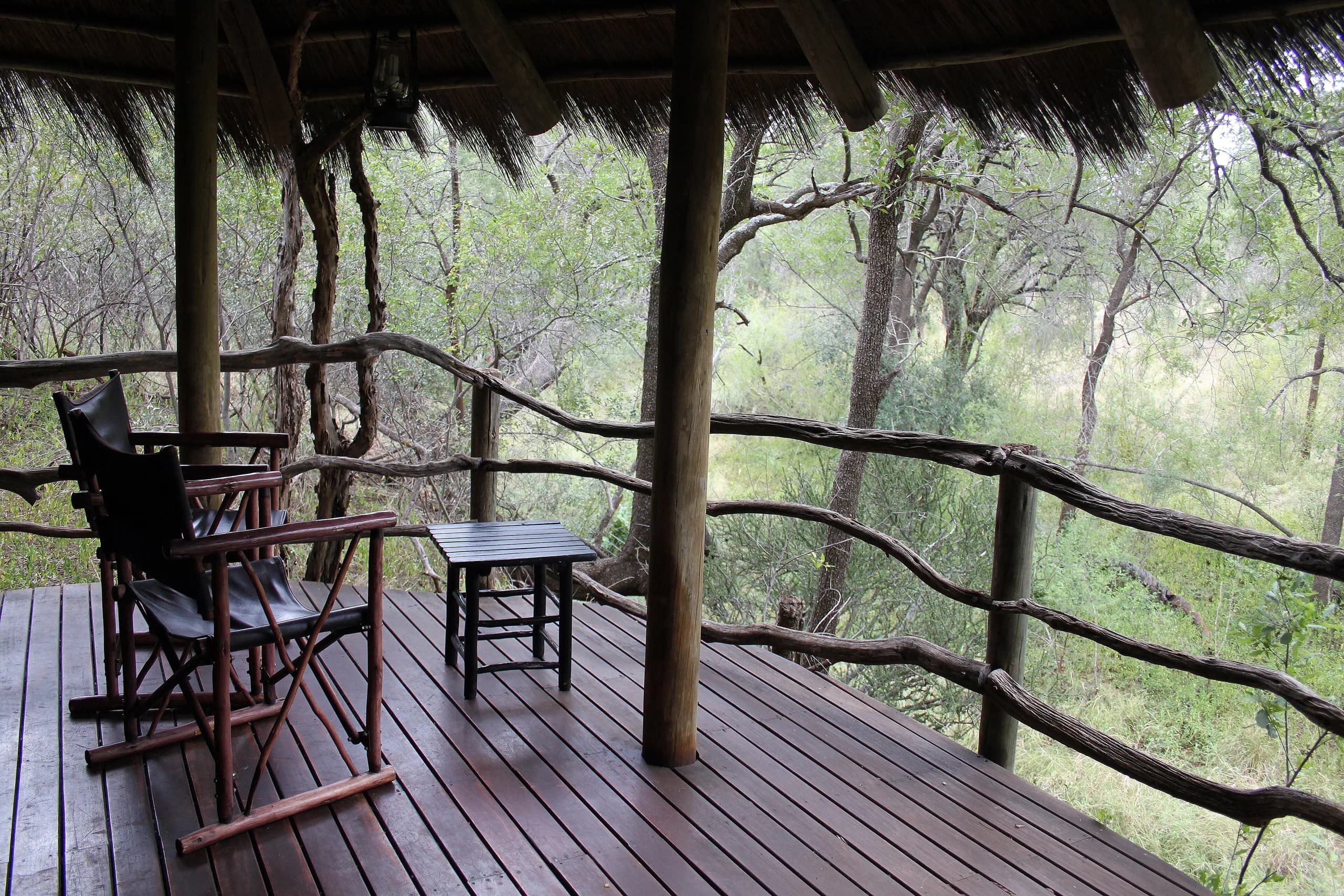
Luxury, 8 rooms
A small Volcanoes Safaris lodge on the ridge directly above Buhoma, so the forest edge is a few minutes from the door and you are not driving before a trek. Bandas are timber and glass with the view pointed at the canopy. It is a genuine luxury standard but it is a forest camp, not a resort: expect gentle warmth rather than air conditioning, and expect rain. The walk between the bandas and the main deck is uphill.
Private bandas with forest-facing decks, Hot water bottles and log fire, Massage and post-trek foot soak
We will say honestly what is available on your dates, what the permits cost and whether the season suits what you want to do in Bwindi Impenetrable Forest.