
Giving
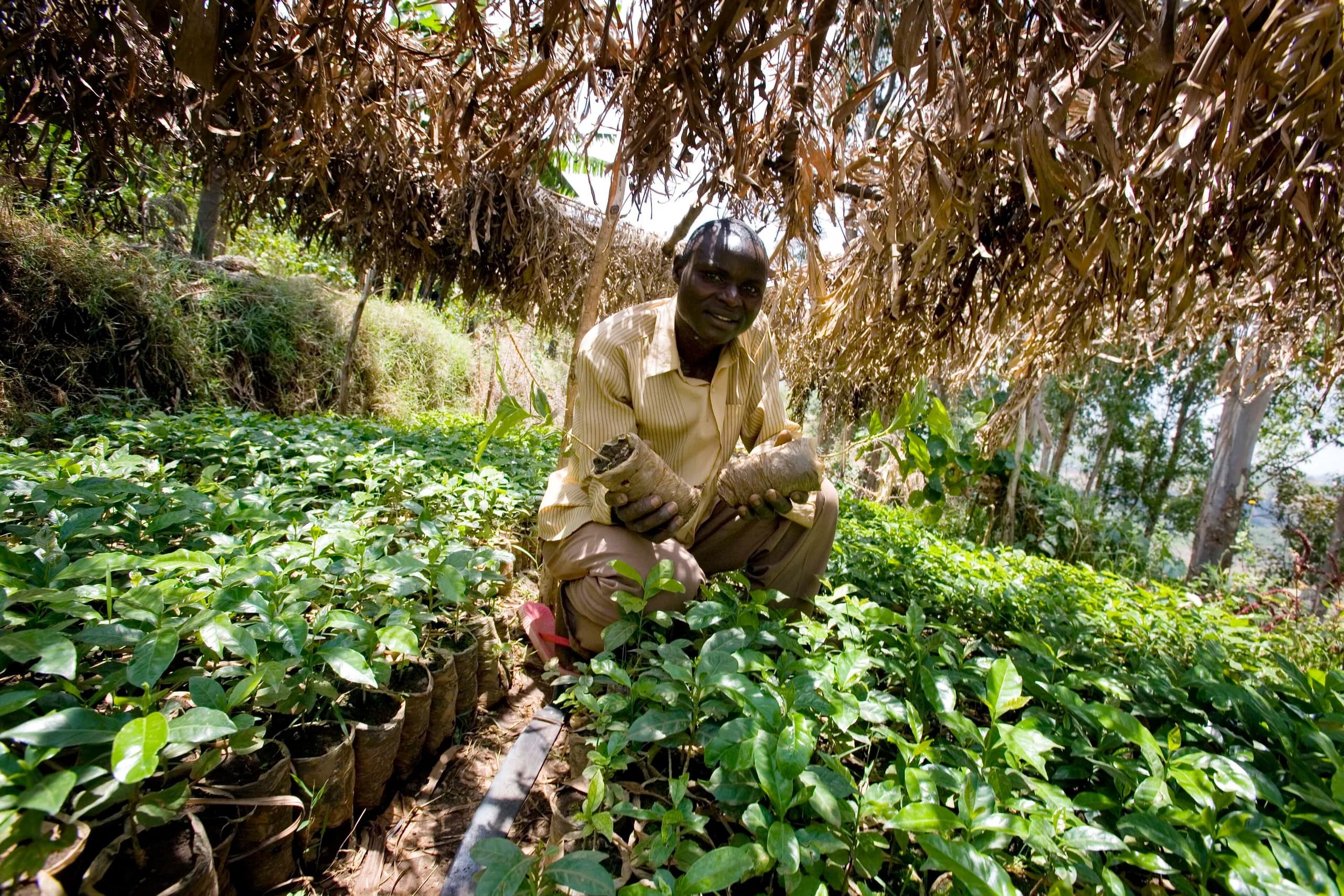
Ten per cent of our profits go to tree planting
That is the commitment, and it is the whole of it. It is new. It has not started paying out yet. As of today we have planted no trees, restored no hectares and signed no partnership agreements. This p
What "10% of profits" actually means
Ten per cent of profit, not revenue. We want to be exact about that, because the two are nowhere near the same thing, and profit is the weaker-sounding promise. It is also the honest one.
A safari operator's revenue is mostly other people's money passing through the account: park entry, gorilla permits, lodges, fuel, guides, vehicles, salaries. Ten per cent of revenue would be a number we could not actually pay, which is exactly why it is an easy number to announce. Ten per cent of what remains after everyone is paid and tax is settled is a number we can pay in every year we earn it.
What is already decided
- The figure is 10% of net profit after tax, calculated per financial year.
- It applies to every financial year in which the company makes a profit, beginning with the first.
- We publish the profit figure and the 10% figure on this page annually — including the years when the answer is zero.
- The money is ring-fenced for tree planting on community and degraded land in Uganda, with survival reported back to us. It is not a general "environment" line we can spend on anything green.
- An accountant from outside the company signs off the profit figure before we publish it.
What is not decided
- Which organisation receives it. We have a shortlist and no agreements. The shortlist is published further down this page so that it is on the record before we choose, rather than announced afterwards.
- Which accountant verifies it. We have committed to independent sign-off; we have not appointed the firm. When we do, we will name it here.
- Whether the sum will be meaningful in year one. A new operator's first profit is small, and ten per cent of a small number is a smaller number. We are not going to pretend otherwise to make this page feel better.
Uganda's forest loss, in the government's own figures. These are not our achievements.
- 24.1%
- Share of Uganda's land under forest in 1990 — 4,933,730 ha. NEMA, National State of the Environment Report 2022
- 9.5%
- The recorded low point, in 2015 — 1,938,990 ha. NEMA, 2022. The National Forestry Authority's own 2015 report states the same fall, as 24% to 9%
- ~122,000 ha
- Average forest area lost per year between 1990 and 2015. National Forestry Authority, State of Uganda's Forestry 2015
- 9,840 ha
- Forest replanted or expanded per year, against 51,092 ha cleared — replanting offsets under a fifth of clearance. Uganda's figures submitted to FAO, 2020
Why we are not quoting Uganda's recovery
Uganda's official figures show forest cover rising after 2015: 12.3% in 2017 and 13.3% in 2019. It would be easy to put that on this page as evidence that planting works. We are not going to, because the government's own report does not read it that way.
NEMA records that the rise to 12.3% was attributed by sceptics to a methodological adjustment — bias-area corrections made for REDD+ reporting. The 13.3% figure it describes as acknowledged on the ground, but tempered by methodological nuances in how percentage cover is calculated. In plain terms: part of that recovery is a change in how the forest was counted, not new forest. Anyone presenting the rebound as an achievement of tree planting is going further than Uganda's own environment authority will.
Two further things worth knowing before you trust any percentage on this subject.
- The definition decides the number. Uganda's reporting to the UNFCCC counts land as forest at a minimum of one hectare, 30% crown cover, and trees able to reach four metres. Move any of those thresholds and the national percentage moves without a single tree changing.
- Two Ugandan government documents disagree about the same year. For 2015, NEMA's table gives 9.5% and the National Forestry Authority says 9%, while the Ministry of Water and Environment's UNFCCC submission gives around 12%. No source we found reconciles them; the differing forest definition is the likely cause. We cite the NEMA series throughout this page and do not mix the two.
The widely repeated FAO and World Bank series is not a set of annual measurements either. The FAO country report states that the entire 1990–2020 series was produced by interpolating and extrapolating from two measured points, 2000 and 2015. That is why its 1990 figure disagrees with Uganda's own mapped one.
We also could not find an official Ugandan forest-cover figure for the current year in any primary source. If you see "Uganda's forest cover is X% today" quoted anywhere, including on a competitor's site, ask where it came from. The most recent figure we can stand behind is 13.3% for 2019.
The loss is happening on people's land, not in the parks
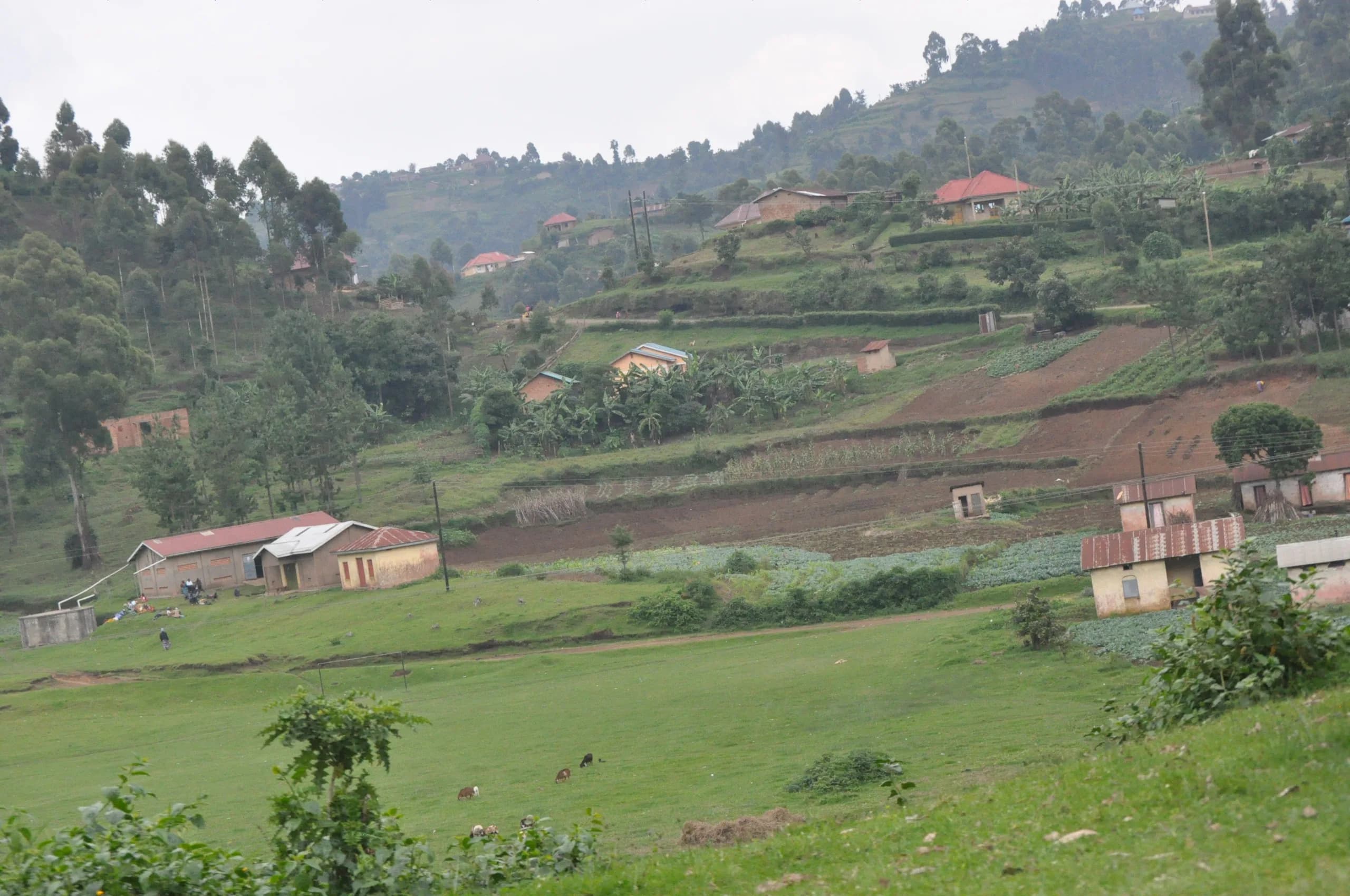
Most of Uganda's forest was not lost inside national parks. It was lost on private, unprotected land: farms, smallholdings, village woodland.
The National Forestry Authority found that forest outside protected areas fell from 68% of the country's total forest area in 1990 to 38% in 2015. Of just over three million hectares lost across those twenty-five years, roughly 2.6 million were outside protected areas and about 418,000 inside them. Almost half of Uganda's unprotected forest went in a quarter of a century.
That is the single reason this money is aimed at community land rather than only at park boundaries. Uganda's UNFCCC submission lists the direct drivers: agriculture expanding into forest and bush, cutting for charcoal, firewood and timber, settlement growth and refugee pressure, free-grazing livestock, wildfire, artisanal mining and oil exploration. Behind those it names population growth, dependence on biomass for energy, land returns that make forestry a poor investment for a household, weak forest governance and policy implementation, climate change, and land tenure.
None of that gets solved by a tour operator. But the list shows where a modest sum has any chance of mattering: with households for whom a standing tree currently earns less than a felled one.
How the money will move
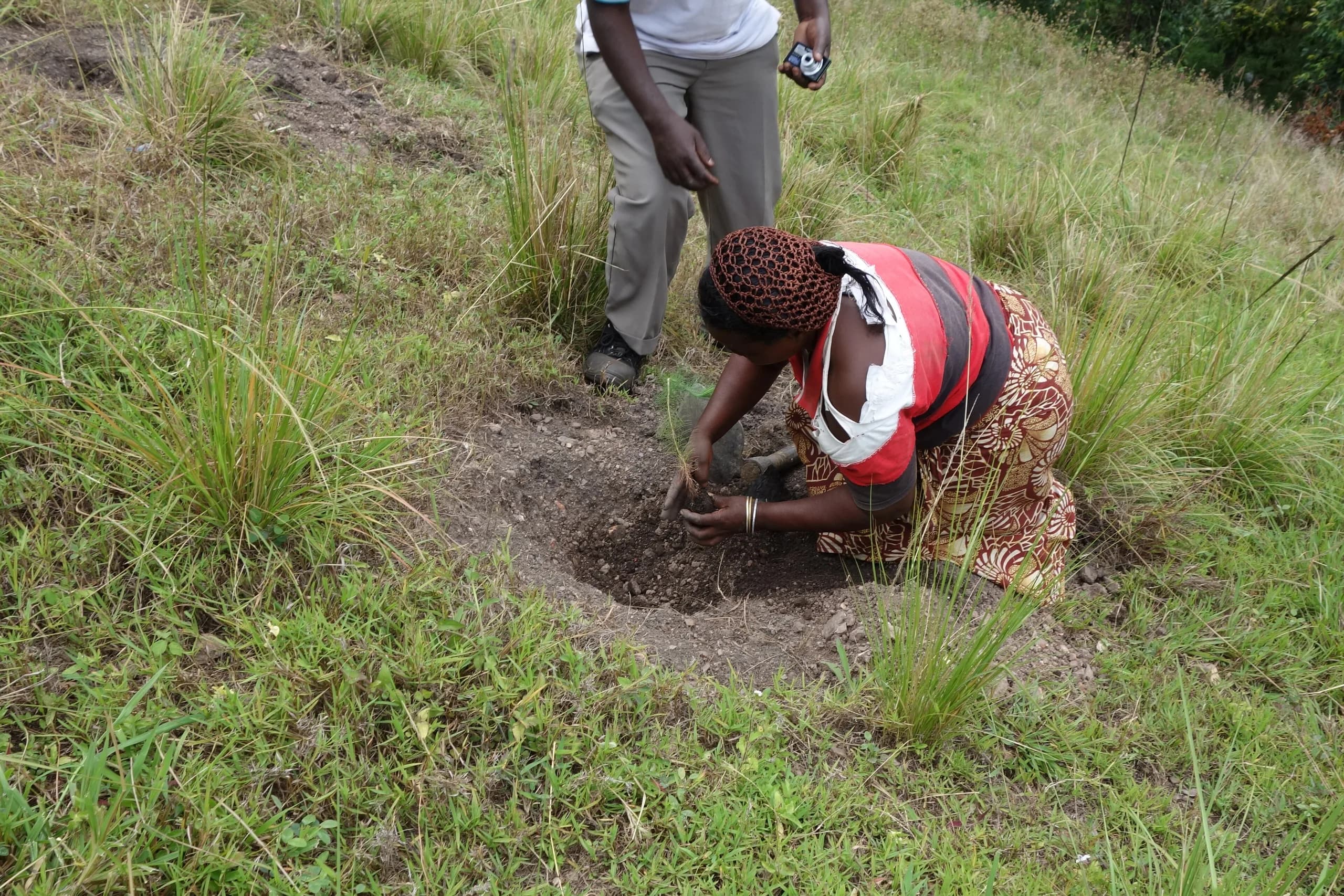
Five steps, in this order, every year. Nothing here has run yet — the first cycle begins with our first profitable financial year.
- We close the books and calculate profit Net profit after all costs and after Ugandan tax, for the financial year. Not a marketing figure, the one in the accounts.
- An independent accountant verifies the figure Someone outside the company checks that the profit stated is the profit earned, and that 10% of it is the sum transferred. We have committed to this; we have not yet appointed the firm, and we will name it here when we do.
- We publish the numbers on this page Profit, the 10% figure, the date, and the recipient. Published whether it is a good year, a bad year, or a loss. A zero is a result and we will show it as one.
- The money goes to a named partner under a written agreement Not a donation into a general fund. A specific agreement naming the site, the species, the number of seedlings, who maintains them, for how long, and what gets reported back to us and when.
- We publish what came back Survival counts at twelve months and at three years, species, location. If the partner does not report, we publish that instead. A missing report is information about the partner, and you are entitled to it.
Trees planted is the wrong number to promise
Any operator can buy seedlings and photograph them going into the ground. Seedlings are cheap. Keeping them alive is not, and the two get conflated on purpose across this entire industry.
Uganda's own plantation practice sets the bar. Replacing dead seedlings — "beating up" — is recommended when survival falls below 90%, which makes 90% the professional target here. A programme that cannot tell you its survival percentage is not measuring one. The only Uganda-specific survival figure we could verify in an authoritative document is the Sawlog Production Grant Scheme's community project, which reported 80% survival across 1,239 hectares.
Peer-reviewed work across 1,773 households in Kenya and Ethiopia identified what actually decides whether a planted tree lives: watering, manure, fencing against livestock and the size of the planting hole in Kenya; mulching, watering and planting niche in Ethiopia. Household and farm characteristics mattered significantly in both — farm size, education, age of the household head, and land tenure. In other words, the aftercare and whether the household has a secure claim on the ground, not the act of planting.
Then there is time. Uganda's forestry guidance puts Maesopsis eminii at 25 to 35 years to useful timber and Terminalia superba at 25 to 40. Indigenous restoration is a multi-decade commitment. Anything reporting a result within twelve months is reporting an activity, not an outcome.
So the figure we will ask for and publish is survival, with species and location, at twelve months and three years. It is a less impressive number than trees planted. It is the only one that means anything.
The wrong tree in the wrong place does harm
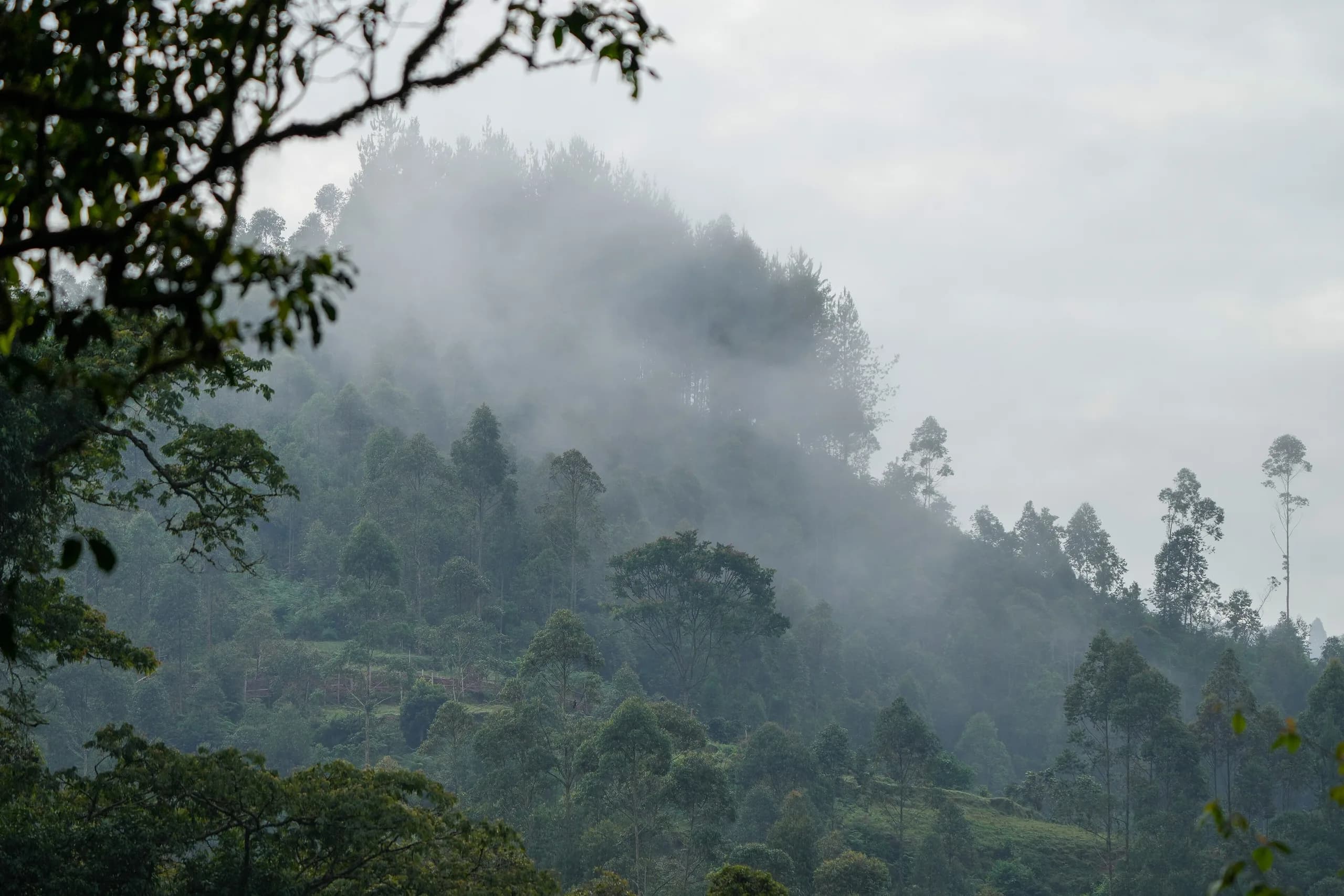
"Trees planted in Uganda" is not the same claim as "forest restored". By the end of 2010, Pinus caribaea made up 54% of private plantation area and eucalyptus 17%; in government plantations pine was 75%. Uganda's planted estate is overwhelmingly exotic timber. That is a legitimate industry and a real livelihood. It is not habitat restoration, and a page that blurs the two is selling you something.
Siting matters as much as species. Uganda's own plantation guidance marks Eucalyptus grandis as unsuitable in the cattle corridor and in the north-east, the Karamoja sub-region — the drier zones. We should be careful here: the broader concerns about eucalyptus, high water use and poor habitat value in monoculture, are documented across the region and elsewhere rather than measured in Uganda specifically, and we will always describe them that way. Uganda's guidance on where not to plant it, though, is Ugandan and unambiguous.
Where indigenous planting has been done and studied in Uganda, the species are on record. In Kibale National Park, degraded land was replanted from 1995 at 400 seedlings per hectare, later phases using Albizia species, Bridelia micrantha, Sapium ellipticum, Celtis durandii and Warburgia ugandensis. Other indigenous species in national use include Maesopsis eminii, Markhamia lutea, Prunus africana, Milicia excelsa, Khaya anthotheca, Albizia coriaria and Terminalia superba.
Our preference is indigenous species matched to the site, and agroforestry that gives a household its own reason to keep the tree standing. When we fund a planting, we will publish the species list — including any exotics, and the reason for them.
What this actually costs
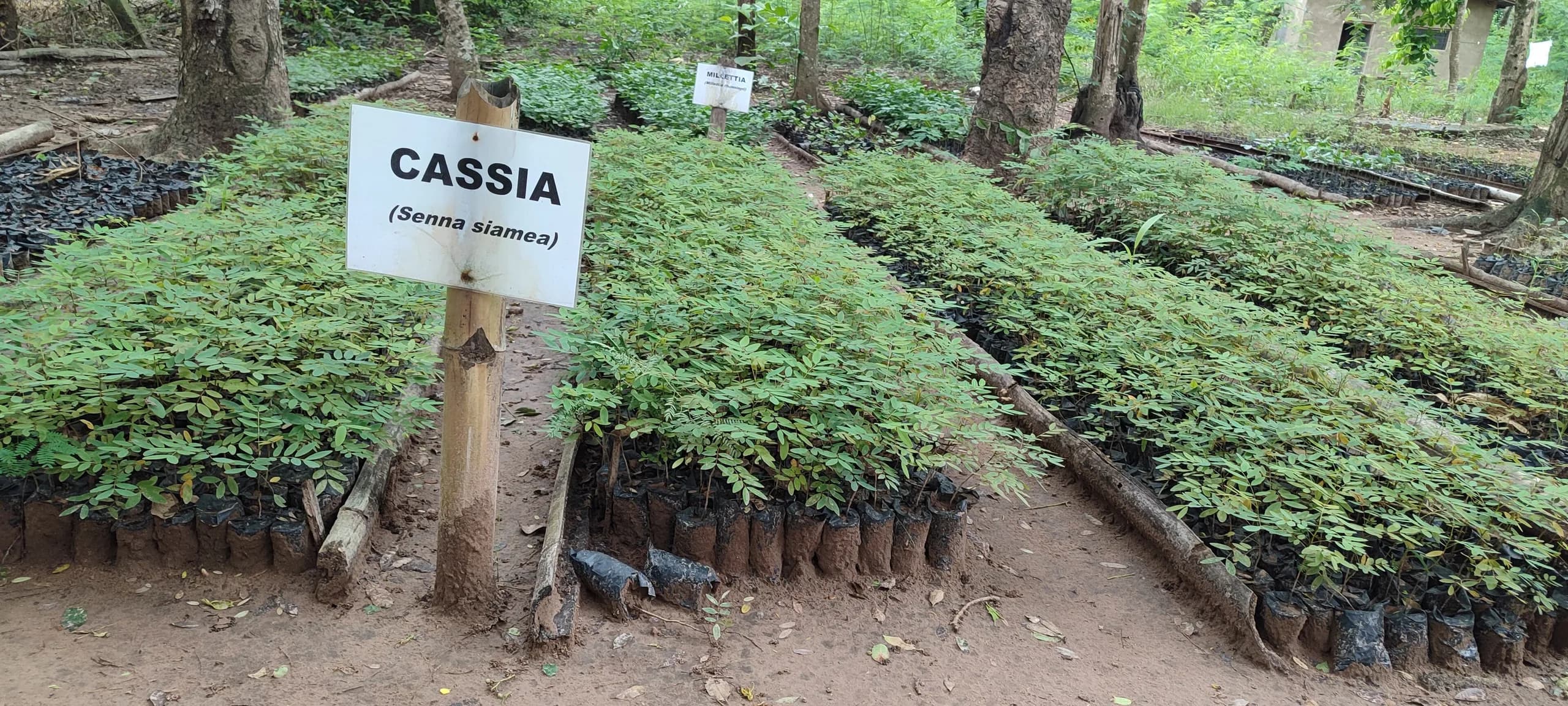
We are not going to print a line like "your safari plants forty trees". Here is the arithmetic behind that decision.
The most credible benchmark we found comes from Trillion Trees, a partnership of BirdLife International, the Wildlife Conservation Society and WWF. It states plainly that one dollar per tree significantly under-estimates the real cost of delivering restoration, and that a project funded at that level has probably not considered what keeping the forest alive requires. Its two East and Central African worked examples are a WCS woodlot project in Tanzania at USD 2.00 per tree, around USD 1,600 per hectare, and natural forest restoration at Nyungwe in Rwanda at USD 3.75 per tree, around USD 3,000 per hectare. About 1,000 trees per hectare is typical in the tropics.
The wider literature range is enormous and worth seeing: from roughly USD 14 per hectare at an absolute minimum, through about USD 1,400 per hectare for natural regeneration, up to USD 34,000 per hectare for large-scale active restoration, with a recent global average near USD 2,328 per hectare. Farmer-managed natural regeneration in parts of Africa has been costed at USD 14 to 153 per hectare, in cases where farmers supply the labour unpaid. The same source cautions that these generally cover establishment only, not the years of management that follow.
Two caveats we will not bury. Those are East and Central African figures, not Ugandan ones — we could not find a credible Ugandan cost-per-tree-to-survival in any authoritative source, and we would rather say so than borrow a number from a neighbouring country and call it local. And a per-tree price is a poor unit in the first place, because the expensive part is the decade after the hole is dug.
What that means in practice: until we have a signed partner and a real quoted cost, we will publish the sum we gave and what it bought, and let you do the division yourself.
“One dollar per tree significantly under-estimates the actual cost.”
 Trillion Trees (BirdLife International, WCS and WWF), Defining the Real Cost of Restoring Forests, 2022
The organisations we are approaching
We have no partners. Nothing is signed. Nobody on this list has agreed to work with us, and some of them may say no. This is the shortlist from our own research, published before we choose rather than announced after — so that if we end up somewhere unexpected, you can see the change.
| Organisation | What they do | Where |
|---|---|---|
| ECOTRUST (The Environmental Conservation Trust of Uganda) | Ugandan not-for-profit founded in 1999. Runs Trees for Global Benefits, a Plan Vivo-certified scheme started in 2003 that pays smallholder farmers performance-based instalments to plant and maintain trees, using Maesopsis eminii and mixed native species. | 14 districts across the Albertine Rift and Mount Elgon landscapes |
| National Forestry Authority | The government body mandated to manage Uganda's Central Forest Reserves, established under the National Forestry and Tree Planting Act and launched in 2004. Around 506 reserves covering 1,262,090 ha. Sells tree seed and seedlings with nursery and plantation technical support. | Nationwide; head office Kampala |
| Uganda Wildlife Authority | Government agency managing Uganda's national parks and wildlife reserves, and a long-running restoration partner, including at Kibale and Mount Elgon. The natural counterparty for an operator whose guests visit those parks. | Nationwide, including the parks on our itineraries |
| Face the Future | Restoration and carbon project developer working with the Uganda Wildlife Authority since 1994 on rehabilitating degraded land in Kibale. Reports 7,152 ha restored — 4,559 ha by planting native species and 2,593 ha through facilitated natural regeneration — under independent VCS and CCB certification. | Kibale National Park |
| International Tree Foundation | UK registered charity funding community-led planting through named local partners rather than operating directly. Uganda work includes degraded land around Bwindi, river catchments in the Rwenzori, and Mount Elgon. | Bwindi, Rwenzori Mountains, Mount Elgon |
| Mount Elgon Trees Growers Enterprise (METGE) | Community tree-growers enterprise named as the on-the-ground implementing partner for restoring 100 ha of degraded land inside Mount Elgon National Park, alongside the International Tree Foundation and UWA. Contact is via those partners. | Mount Elgon, eastern Uganda |
| Kijani Forestry | Social enterprise in Gulu running village-level nursery hubs that supply smallholders with seedlings, training and market access at no upfront cost, aimed at reducing charcoal pressure on natural woodland. | Northern Uganda |
The questions we are putting to each of them
- What is your seedling survival rate at twelve months and at three years, and who measured it?
- Which species, and why those species on that particular site?
- Who owns the land, and what happens to the trees if the household's circumstances change?
- How long are you funded to maintain the planting, and how long is the grower contracted to keep it? Are those the same number of years?
- May we see your most recent third-party verification report?
Two things we found while researching, which we would rather say now
ECOTRUST's Trees for Global Benefits is among the longest-running schemes of its kind in Uganda and an obvious first call. It is also the subject of an August 2026 investigation by the Danish newspaper Politiken, reported via REDD-Monitor, in which former project coordinators and farmers describe trees being felled before contracts ended. That reporting notes that farmers are paid across ten years while contracted to maintain trees for twenty-five, and that a 2018–2022 third-party verification had not been released. We have not verified any of that ourselves and we are not repeating it as established fact. We are raising it with ECOTRUST directly, and we will publish what we are told.
Kijani Forestry publishes large totals on its own website — millions of trees, tens of thousands of farmers, thousands of nursery hubs. Those are company-reported figures and we have not seen independently monitored survival data behind them, so we will not repeat them as verified. We are asking for third-party monitoring before we would fund anything.
We are not singling these two out. They are simply the two where our own research turned something up, and it would be dishonest to list them without it.
The questions a sceptic should ask
Is this carbon offsetting?
Why 10% of profit rather than 10% of revenue, or a fixed amount per booking?
What if you make no profit?
Can I donate directly through this page?
How many trees will my safari plant?
Why tree planting specifically, rather than schools, water or wildlife?
Does any of my trip money reach local people apart from this?
What happens if a partner turns out to be underperforming?
How will I know you have actually done any of this?
Hold us to it
<p>Every figure on this page comes from a Ugandan government report, a peer-reviewed study, or a named conservation organisation, and where the evidence was thin or contested we have said so instead of rounding it into something more convincing.</p><p>The way this commitment gets funded is straightforward: we take people on safari, the business makes a profit, and a tenth of that profit goes into the ground. If you would like to ask us something before any of that happens, we would rather have the conversation than not.</p>