9 daysTanzania
9-Day Tanzania Northern Circuit
Baobabs and elephant at Tarangire, the crater floor at Ngorongoro, and three nights in the Serengeti
From$7,600 per person
Tanzania, conservation area
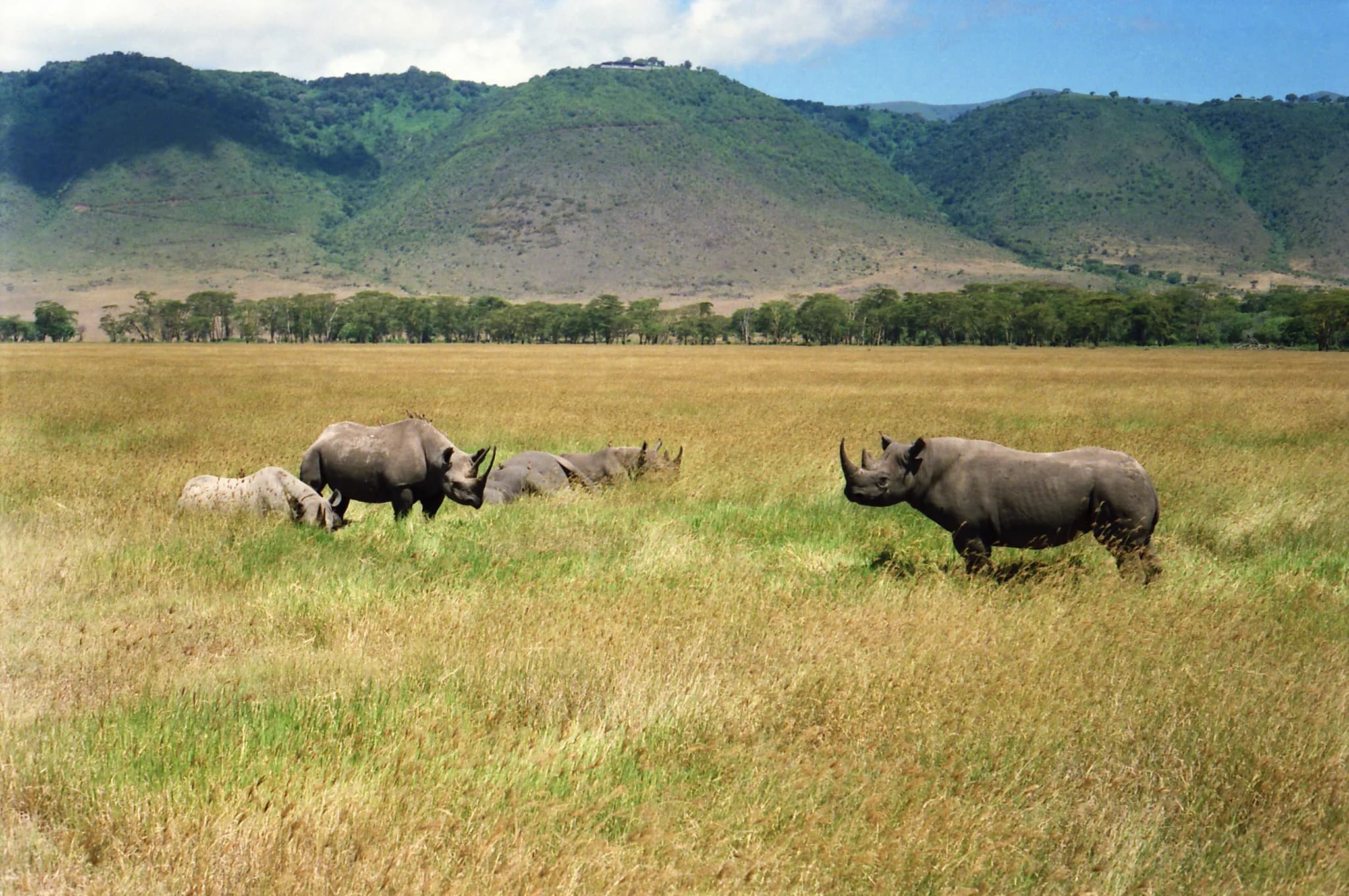
A collapsed volcano with its own resident wildlife, black rhino included
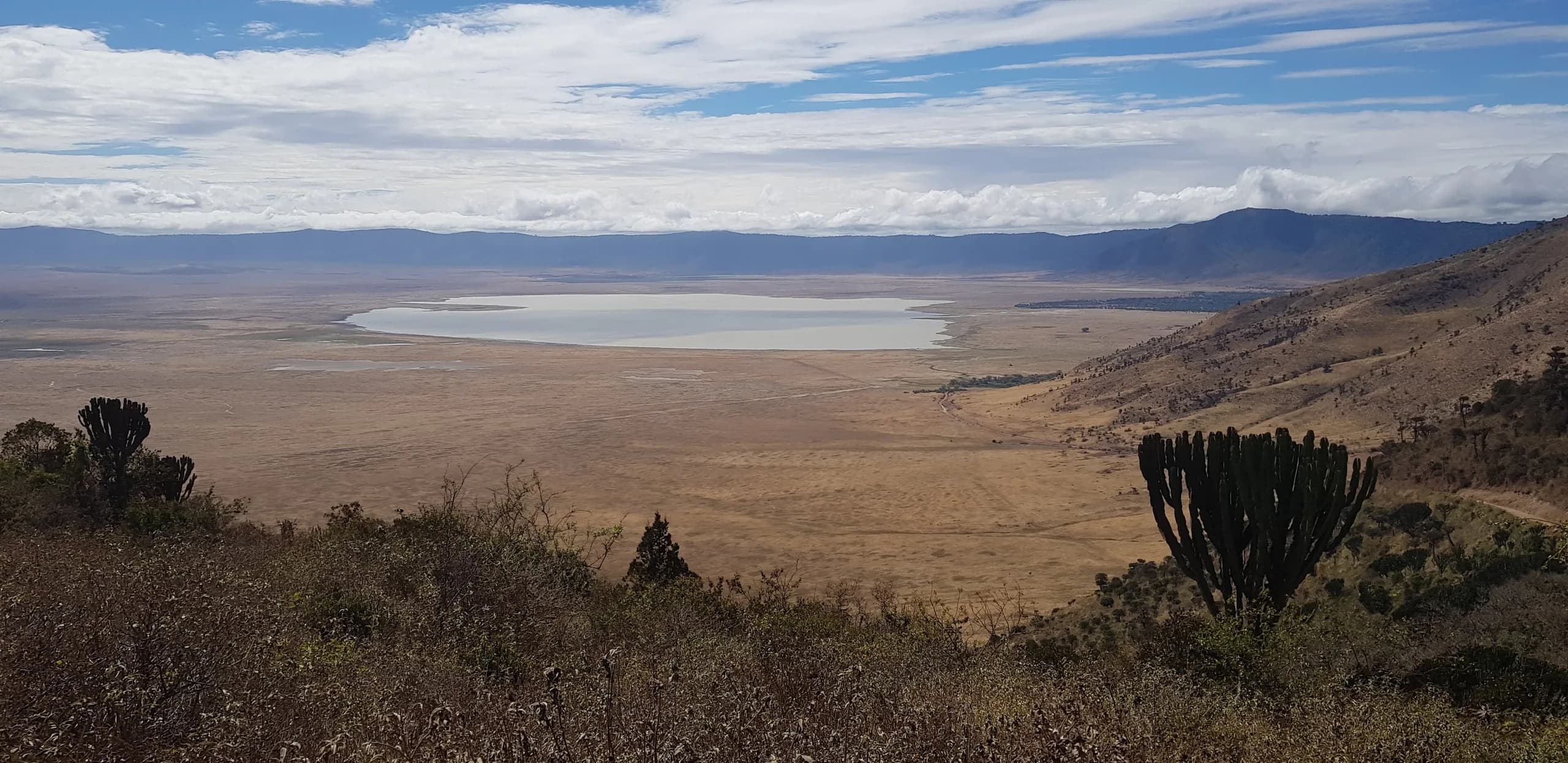
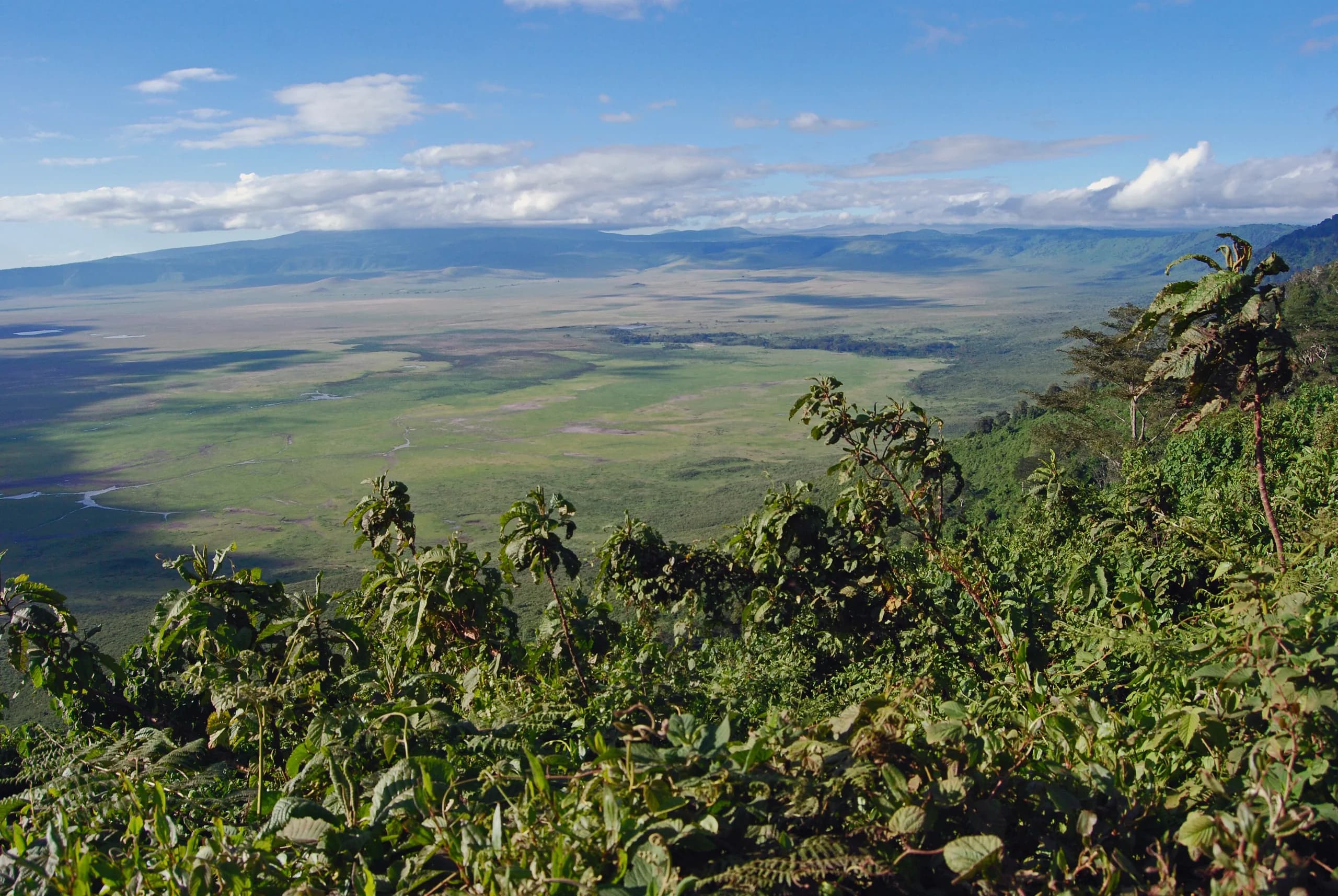
Ngorongoro is a caldera: a volcano that blew itself out and collapsed inwards, leaving a floor of around 260 square kilometres enclosed by walls four to six hundred metres high. From the rim road at about 2,300 metres you look down onto grassland, a soda lake, a fever tree forest and a swamp, and on a clear morning you can pick out the herds with the naked eye before you have had breakfast.
Because the walls are steep and the floor holds water and grazing all year, most of the animals here do not leave. There is a permanently resident population of lion, elephant, buffalo, wildebeest and zebra, and a small, closely watched group of black rhino that is one of very few left in northern Tanzania. It is the most reliable single day of game viewing on the northern circuit, which is precisely why it is also the busiest.
The crater is one part of the Ngorongoro Conservation Area, which covers around 8,300 square kilometres and takes in Oldupai Gorge, the Empakaai and Olmoti craters, the Ndutu short grass plains and the highland forest. Unlike a national park it is also a place where Maasai families live and graze cattle, and that arrangement is currently under serious strain.
Conservation area entry runs at roughly 70 to 80 US dollars per adult non-resident per 24 hours, set by the Ngorongoro Conservation Area Authority. On top of that there is a separate crater descent fee charged per vehicle per descent, in the region of 250 to 300 US dollars, valid for a single six-hour visit to the floor.
That second fee is the one that surprises people, because it is per vehicle rather than per person. It lands heavily on a couple travelling privately and barely registers when it is split across a full car, and it is the single most common query we get on a Tanzania invoice. Vehicle fees, concession fees and any lodging or camping inside the conservation area are charged again on their own scales. Every figure here is indicative and the authority revises them on its own schedule.
Your descent permit is good for six hours on the floor, and the clock is enforced. The way to use it is to be at the gate before it opens, go down the Seneto road on the western rim, which is descent only, work the floor from west to east through the morning, and come back up the Lemala road on the eastern side. Lerai is the third road. Vehicles that leave the lodge after breakfast arrive on the floor with the rest of the circuit and spend their six hours in company.
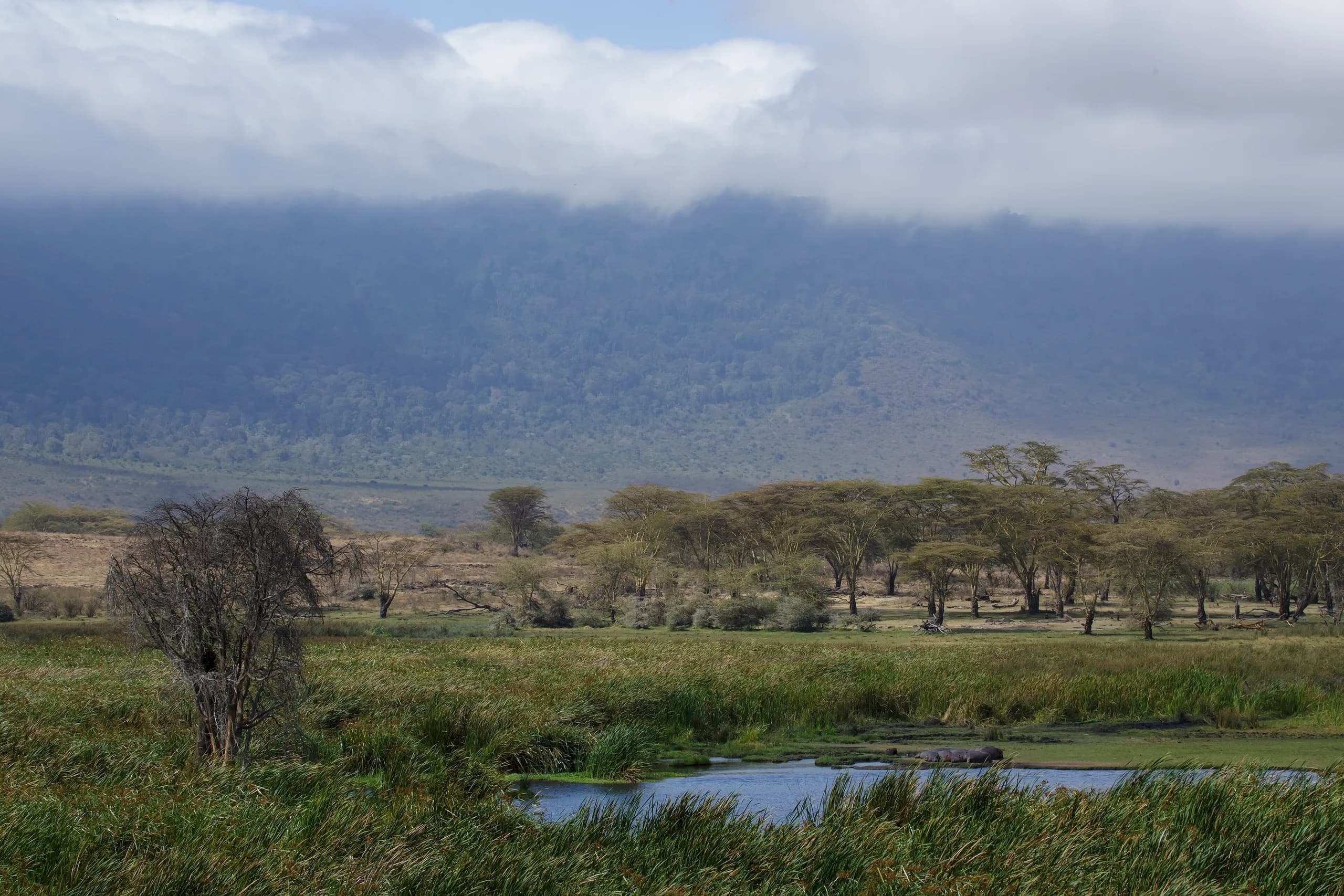
The Ngoitokitok springs picnic site on the eastern side is where almost everyone stops for lunch, hippo in front of you and black kites overhead that will take food out of your hand if you eat outside the vehicle. That is not folklore; it happens several times a day.
Lake Magadi is the soda lake in the middle and holds flamingo in numbers that rise and fall with the water. The Lerai fever tree forest in the south is where the big elephant bulls stand, and it is bulls rather than families, because the breeding herds mostly stay in the highland forest. The Gorigor swamp and the Munge stream hold buffalo, hippo and the lion prides that work the edges.
The rhino are the thing people ask about and the thing worth being honest about. They are usually distant, usually crossing open ground in the early morning, and usually seen through binoculars rather than in a photograph. A monitoring team tracks them daily. Turning up expecting a close encounter is how you end a good day disappointed.
The crater floor is one day and the conservation area is much larger than that. Empakaai, north-east of the rim, is a smaller crater with a soda lake at the bottom and a steep ranger-led walk down to it that most visitors never do. Olmoti is a shorter walk to a rim and a waterfall. Oldupai Gorge and its museum sit on the road west to the Serengeti and are worth an hour if you have any interest in why this landscape matters to human evolution. The Shifting Sands, a black volcanic dune that moves measurably across the plain each year, is nearby. These are how you get away from the traffic on the crater floor.
The conservation area was created in 1959 on the understanding that Maasai displaced from the Serengeti would go on living and grazing here. Restrictions on cultivation, limits on grazing and a government resettlement programme to Msomera in Handeni have made that understanding contested, and it is a live political argument rather than a historical footnote. You will drive past bomas and cattle on the rim road and between the craters. It is worth knowing what the argument is about before you photograph it.
Resident species, not a promise. Wildlife moves.
The crater works in every month, which is unusual, because the resident game does not leave. June to October is dry, cold on the rim and the busiest. December to March is green, the rim is often in cloud, and it is when Ndutu on the western side of the conservation area holds the calving herds. April and May are the long rains: the floor is at its greenest, the lodges are quiet, rates drop and the descent roads get slippery without normally closing. Whatever the month, the crater floor is warm and the rim at 2,300 metres is genuinely cold before sunrise, so you are packing for two climates on the same day and the early start is the cold part.
By road from Arusha it is three and a half to four hours west on tarmac through Makuyuni and Mto wa Mbu, then up the rift escarpment to Lodoare gate and out onto the rim. From Lake Manyara it is a little over an hour. From Seronera in the Serengeti it is five to six hours east across the plains past Oldupai Gorge, which is the way the northern circuit is normally driven. Flying does not help much here, because the nearest strips are Lake Manyara and Ndutu and you still need a vehicle waiting on the rim, so almost everybody drives this leg. The crater vehicle has to be a proper 4x4 with a roof hatch, and the descent roads are closed to two wheel drive.
The properties we book here most often. Which one suits you depends on the season, the sector you are trekking and how much walking you want between your room and dinner.
Luxury, 8 rooms
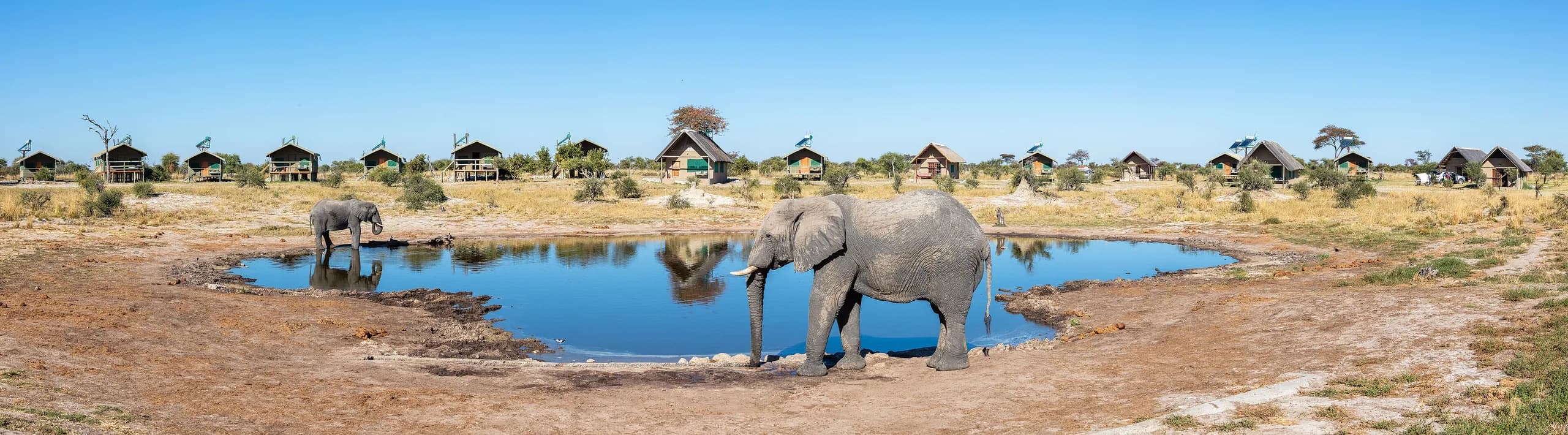
Eight geodesic domes on the flank of Olmoti volcano, north of the crater rim and well away from the cluster of large hotels on the rim road. It is roughly an hour from the crater descent gate, so crater days start early, but the reward is silence, a wood stove in each dome and access to Olmoti and Empakaai on foot. At around 2,800 metres it is genuinely cold at night.
Insulated domes with wood-burning stoves, Guided walks to Olmoti and Empakaai craters, Maasai boma visits arranged directly with neighbours
We will say honestly what is available on your dates, what the permits cost and whether the season suits what you want to do in Ngorongoro Crater.