10 daysUganda
10-Day Uganda Grand Circuit
Rhino on foot at Ziwa, the Nile at Murchison, chimps at Kibale, the Kazinga Channel and gorillas in Bwindi
From$7,200 per person

14 days, Kenya and Tanzania
The Mara river from both banks, the northern Serengeti, Seronera and the Ngorongoro crater floor
Full days in a vehicle plus walks of one to three hours over uneven ground.
Per person sharing
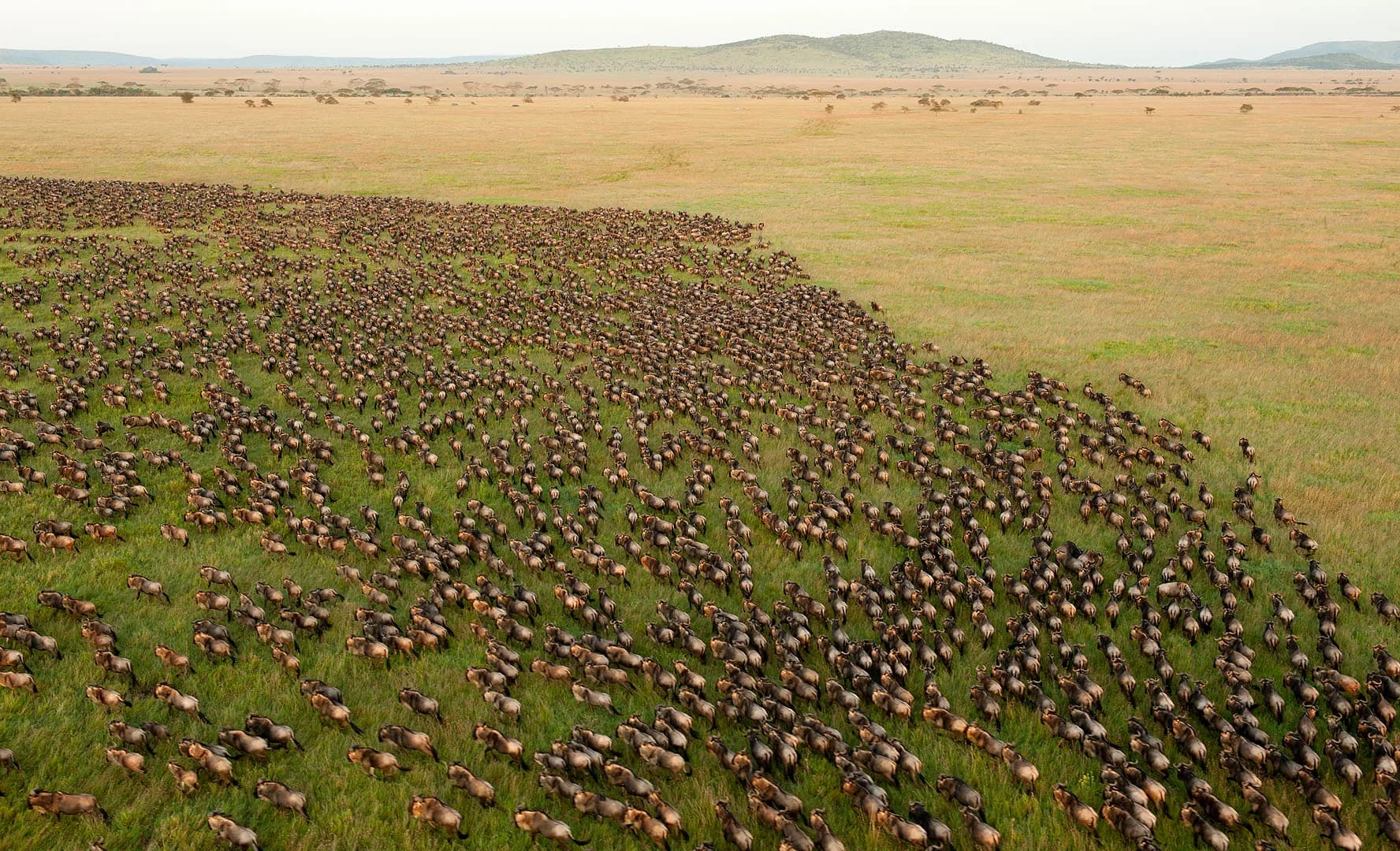
The Mara river is a border as well as a river, and the herds cross it in both directions depending on the month and on rain that nobody can forecast. Camping on only one bank is a gamble. This route puts you four nights on the Kenyan side above the Mara Triangle and three nights at Kogatende on the Tanzanian side, which covers the same stretch of water from both ends and roughly doubles your chances of standing at a crossing point when something happens.
What we will not do is promise you a crossing. The herds move on grass and weather, a crossing can build for six hours and then dissolve, and any operator guaranteeing one is selling you something they do not control. What this route does guarantee is time: nine nights spread along the migration corridor between late June and October, with guides who spend the season on that river. After the north you drop south to Seronera for the resident lion and leopard, which are there in every month regardless of where the herds are, and finish with a full day on the Ngorongoro crater floor.
Rated moderate for the transfers rather than for any walking. Day six crosses an international border by three separate aircraft and takes most of the day, and the Serengeti to Ngorongoro leg is four to five hours on corrugated gravel. The crater rim sits at about 2,300 metres and the nights up there are cold. Nothing on this trip requires you to be fit, but several days require you to be patient.
Met at Jomo Kenyatta and driven out to the Karen side of the city, forty minutes on a clear run and longer in the evening. Nothing is scheduled beyond dinner and sleep, because tomorrow starts with a domestic flight. Your Kenya guide comes to the hotel to introduce himself and go through the first week.
The morning flight from Wilson takes about an hour and may touch two other airstrips before yours. You land on the Oloololo escarpment and descend into the Triangle for the first afternoon drive, which takes twenty-five minutes of switchbacks and is worth doing slowly. The Triangle is the third of the reserve west of the river, managed separately, and it is where the crossings on the Kenyan side happen.
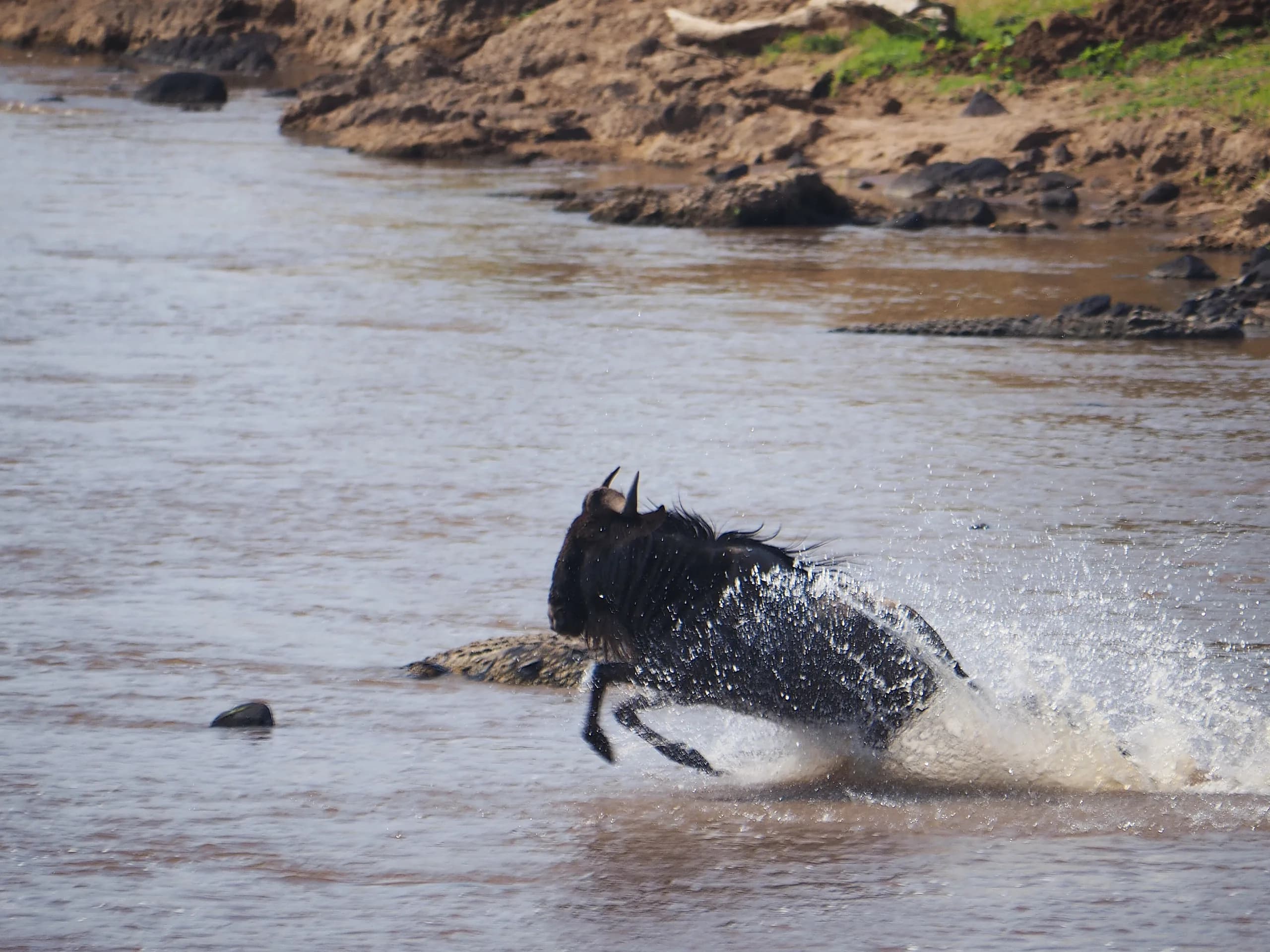
Out before first light with a packed breakfast, down to the river and then a long wait, because that is what this is. Herds build on the bank for hours, then turn away, then come back. Your guide will be in radio contact with other vehicles along the river and will move you if something starts building at a different point. When it happens it takes minutes.
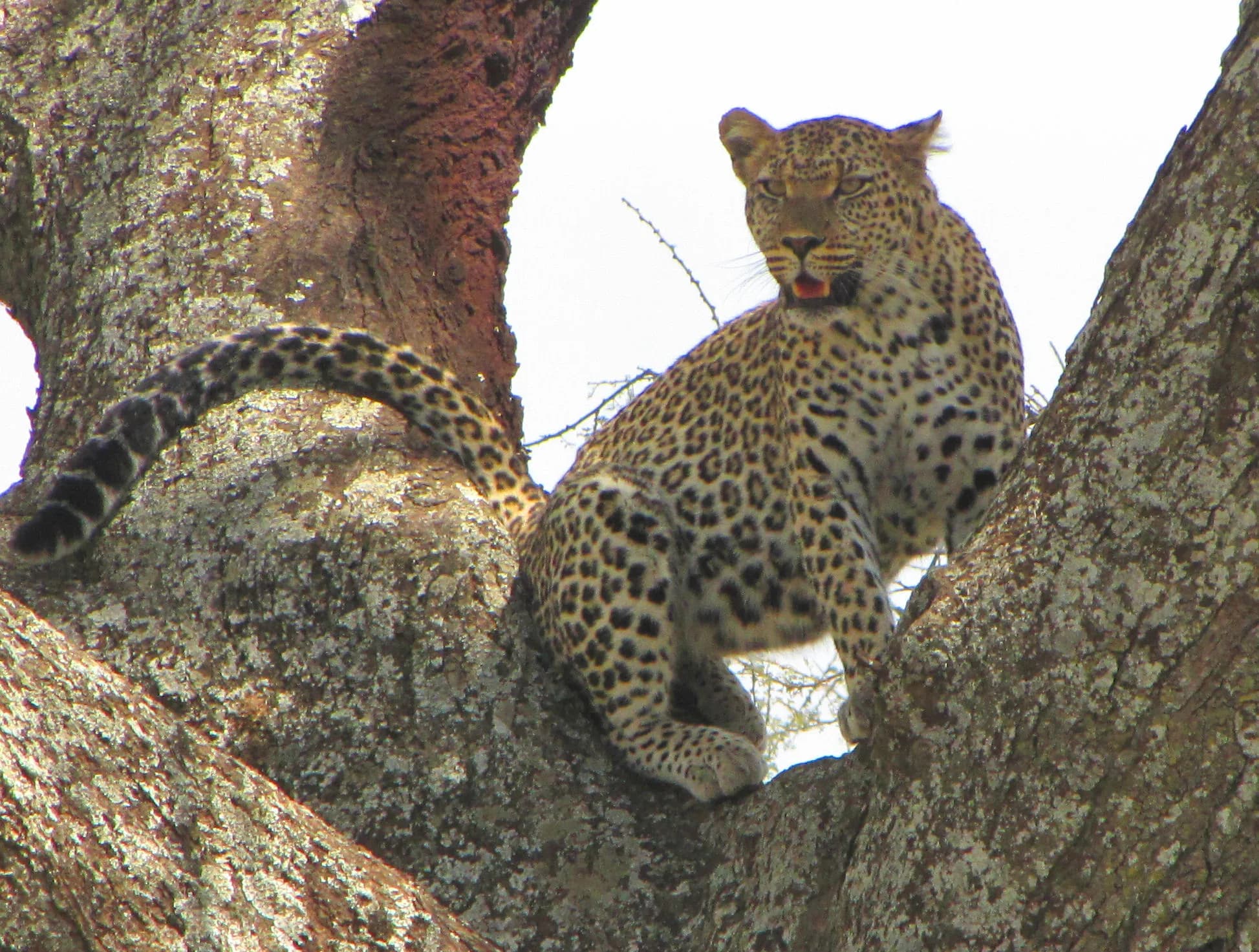
A day away from the river for the cats. The Triangle holds resident lion prides that are habituated to vehicles without being harassed by them, cheetah on the open ground toward the border, and leopard in the riverine bush. Off-road driving is not permitted here and the number of vehicles at a sighting is enforced, which is why the animals behave the way they do. Late afternoon there is a walk on the escarpment ridge with a Maasai guide.
The balloon lifts off from the Triangle floor before sunrise and lands about an hour later for breakfast in the grass, and from the basket you see the shape of the herds in a way you never do from a vehicle. The rest of the day is spent back at the river, because five days here means you can afford to spend three of them waiting.
A transfer day and there is no way to make it a short one. The Mara to Wilson leg is about an hour, the cross-city transfer to Jomo Kenyatta needs ninety minutes in traffic, and the flight to Kilimanjaro takes another hour with immigration at the far end. You are at Arusha for a late afternoon and a proper bed at 1,400 metres. Your Tanzanian guide meets you at the lodge before dinner.
The morning aircraft from Arusha to Kogatende in the far north of the Serengeti takes about two hours, usually with one stop. From the strip it is a short transfer to camp on the Mara river. The afternoon drive goes straight to the river to find where the herds are sitting, which is the piece of information the next three days are built around.
The northern Serengeti has a fraction of the vehicles the Kenyan side carries, and the crossing points here are spread over a long stretch of river, so a morning can be spent alone at a bank with several thousand wildebeest deciding whether to commit. Crocodile sit in the pools below the crossings and do not need to hurry. Between crossings the woodland holds elephant, and the kopjes hold lion.
The Lamai wedge is the ground between the Mara river and the Kenyan border, and it is the last of the Serengeti before the Mara begins. Herds hold here for weeks at a time and the resident predators do very well out of it. A full day with a picnic lets you cover the wedge properly, and the light on the kopjes in the last hour is the reason photographers ask for this camp specifically.
A morning drive, then the short flight from Kogatende down to Seronera, which takes under an hour and shows you the scale of the park on the way. The central Serengeti is a different proposition from the north: sausage trees along the watercourse, resident prides that never leave, and leopard at a density few places match. The afternoon drive works the valley.
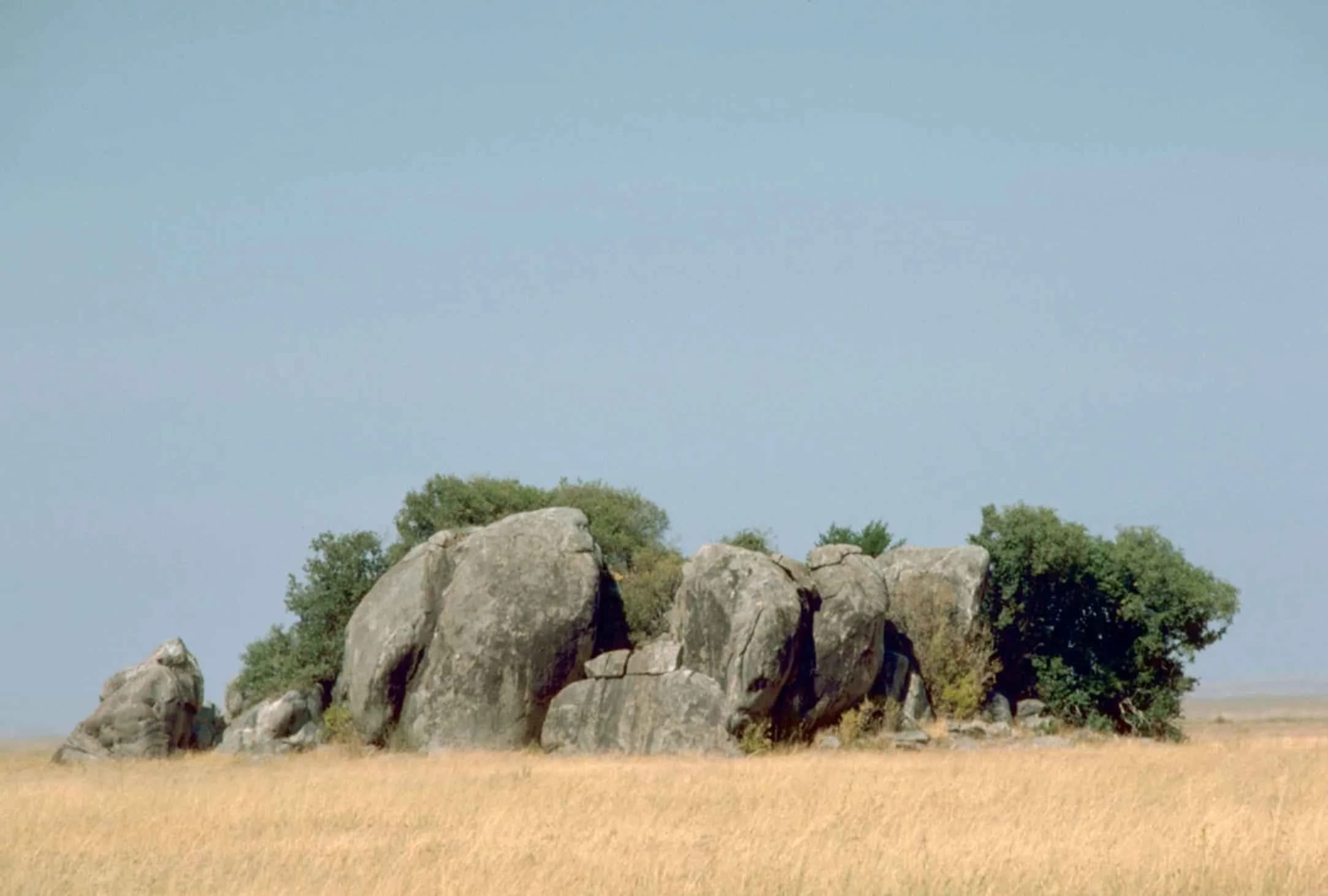
South-west to Moru, granite outcrops standing out of the grass with their own lion pride, a protected rhino population and Maasai rock paintings on a sheltered overhang, along with the gong rock that rings when struck. It is a full day and the drive out is as good as the destination. Cheetah work the open ground on the way back in the late afternoon.
East across the short grass plains, through Naabi Hill Gate where you climb the kopje while the paperwork is done, and on into the Ngorongoro Conservation Area. Four to five hours on corrugated gravel with the Olduvai Gorge turning on the way. The road climbs into cloud forest and out onto the rim at around 2,300 metres, and the camp on the flank of Olmoti is another twenty minutes north of that.
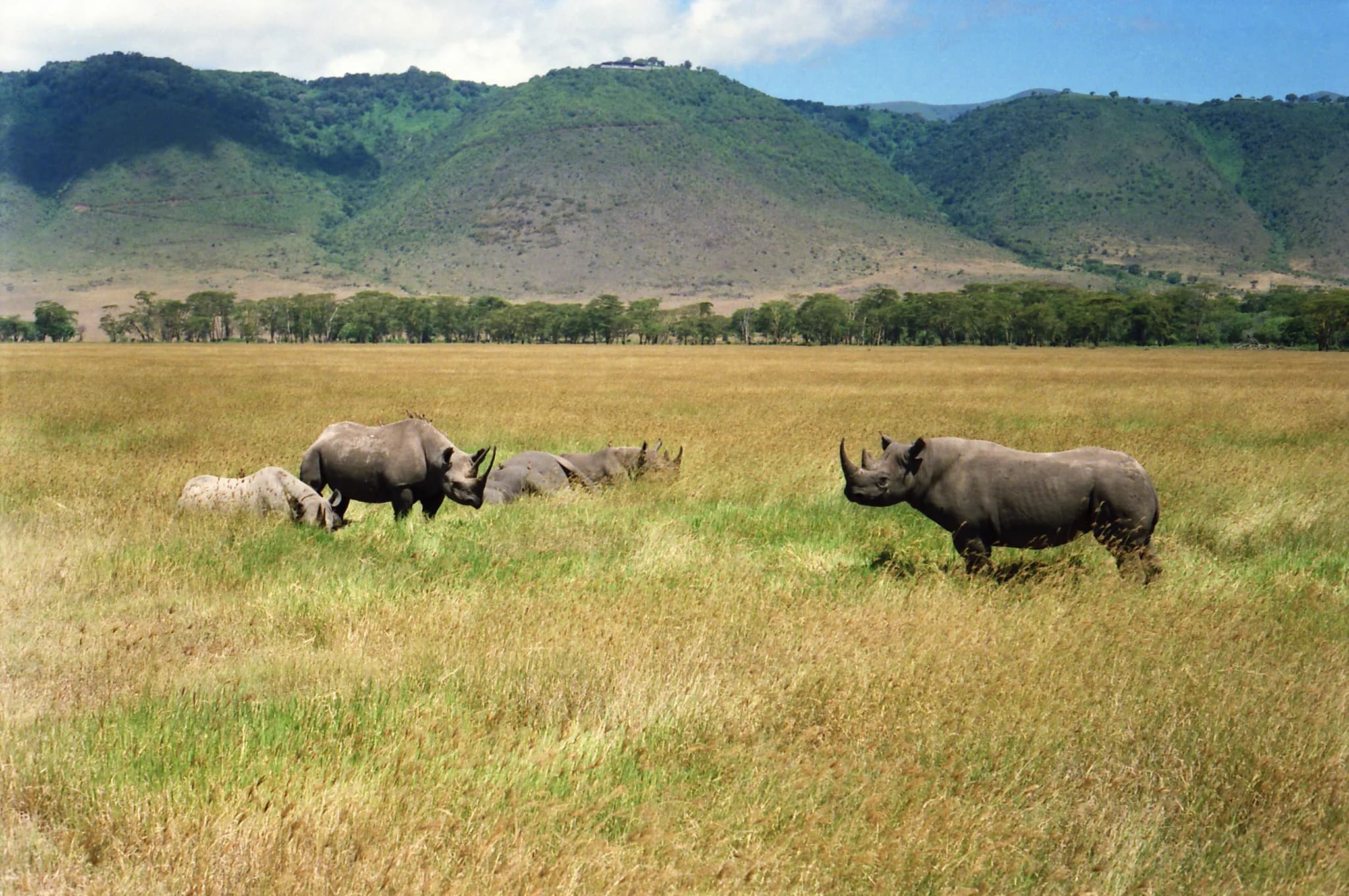
An early start because the camp is about an hour from the descent gate and the floor is at its best in the first three hours. Roughly 260 square kilometres inside walls six hundred metres high, holding a resident population that mostly does not leave, which is why you can see lion, elephant, buffalo and black rhino in a single morning. Lunch is a picnic at the Ngoitokitok springs, and you climb out mid afternoon.
A slow breakfast on the rim, then the drive down the escarpment to Lake Manyara airstrip, which takes about two hours and gives you the rift wall one last time. The flight to Arusha or Kilimanjaro takes under an hour. If you are carrying on to Zanzibar rather than flying home, this is the day the extension picks you up.