10 daysUganda
10-Day Uganda Grand Circuit
Rhino on foot at Ziwa, the Nile at Murchison, chimps at Kibale, the Kazinga Channel and gorillas in Bwindi
From$7,200 per person
Uganda, national park
The highest density of primates in Africa, and the most reliable chimpanzee tracking anywhere
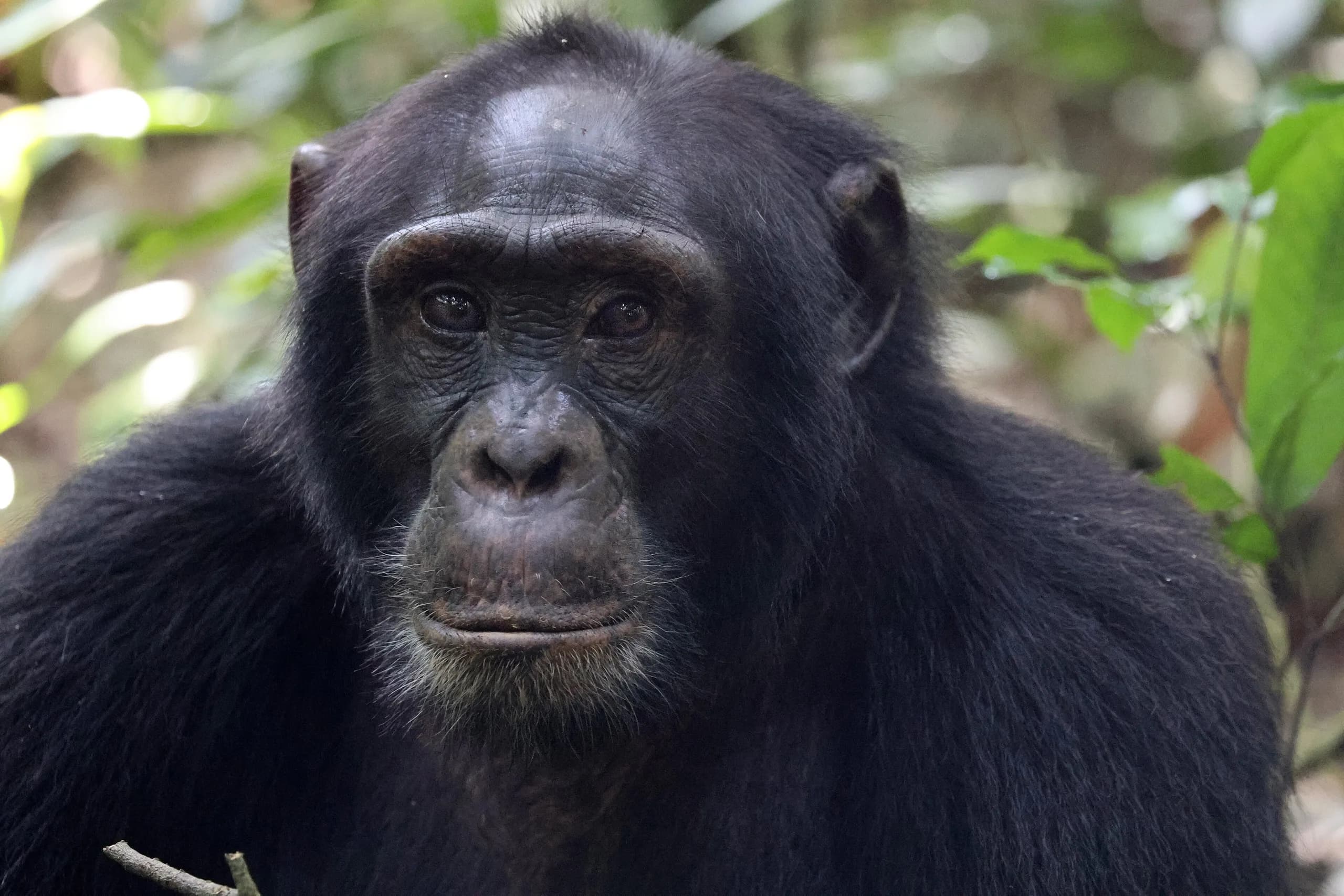
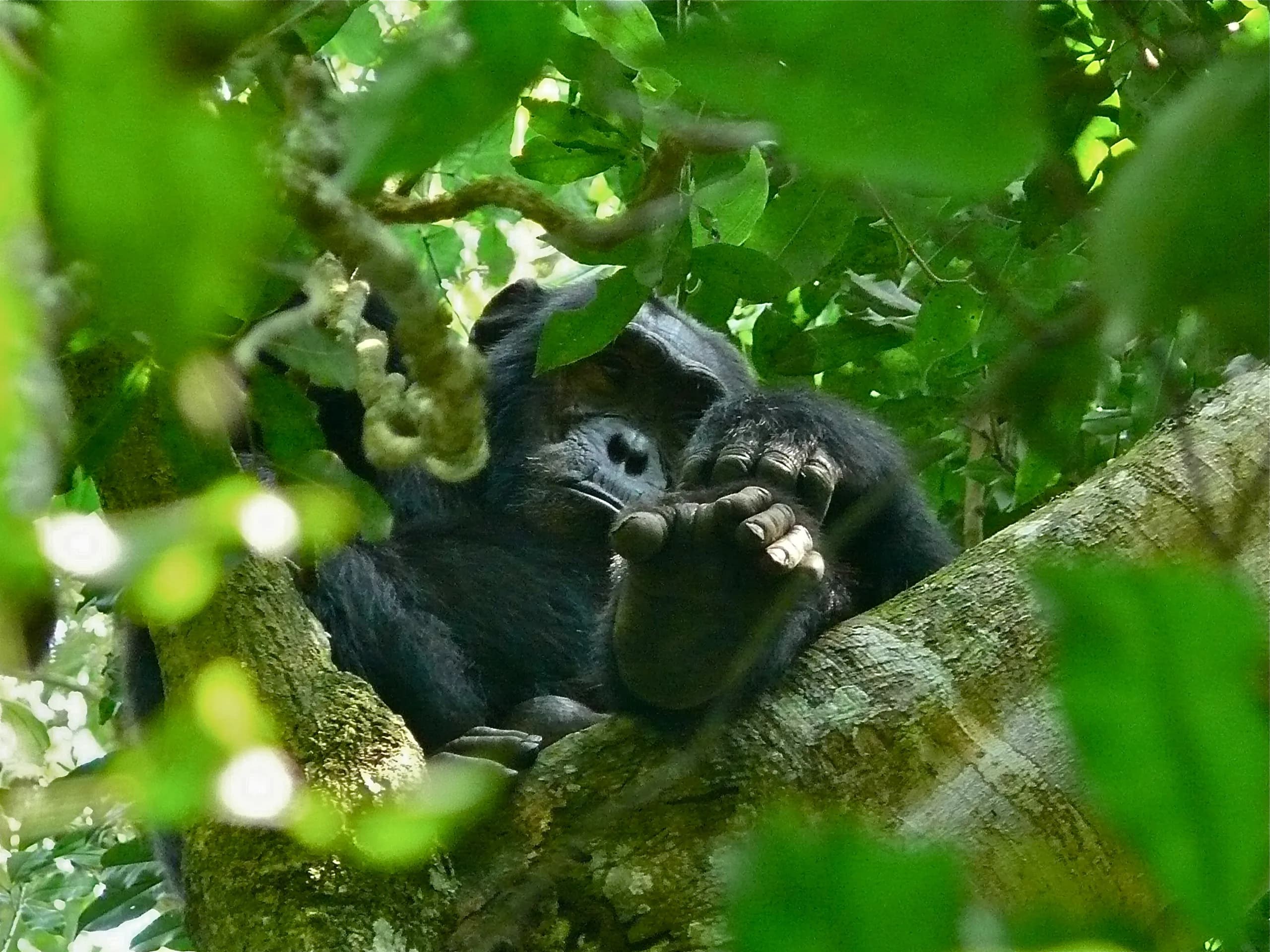
Kibale is 795 square kilometres of tall, mid-altitude rainforest holding thirteen primate species and around 1,500 chimpanzees. The community tracked from Kanyanchu has been habituated since 1993, which is why the sighting rate here sits above 90 per cent while newer sites elsewhere sit far below it.
A morning here is not a quiet forest walk. Chimpanzees are loud, they move fast, and a party crossing the trail overhead sets off pant-hoots that carry a kilometre. When they come down to feed on the ground you are standing a few metres from animals that share almost 99 per cent of your DNA and are not remotely interested in you.
The forest also holds red colobus, L’Hoest’s monkey, grey-cheeked mangabey and the largest population of the endangered Uganda red colobus. Bigodi Wetland, on the park boundary, is community-run and one of the best-value walks in the country.
Standard chimpanzee tracking leaves Kanyanchu at 08:00 and 14:00, in groups of six with a ranger, and gives one hour with the community once they are found. The permit is 250 US dollars per person for a foreign non-resident, set by the Uganda Wildlife Authority and indicative rather than fixed. It rises to 300 on 1 January 2027, and drops to a low-season 200 in April, May and November. Finding them usually takes between thirty minutes and two hours; the terrain is flat to gently rolling and much easier than Bwindi.
The chimpanzee habituation experience is the better option if you have the time and the legs. You leave at 06:00 to be at the nests when the chimps wake, stay with the researchers all day and leave when they build new nests in the late afternoon. It costs around 300 US dollars, is capped at a handful of people, and is only sold in the low seasons of March to May and November. You see behaviour that a one-hour slot never shows you: grooming, hunting, patrols, and the long boring stretches that make up most of a chimpanzee day.
Beyond the chimpanzees, look for Uganda red colobus, black and white colobus, red-tailed monkey, blue monkey, grey-cheeked mangabey, olive baboon, L’Hoest’s monkey and, on a night walk, potto and Thomas’s galago. The density here is the highest recorded anywhere in Africa. A good guide will find you five or six species in a single morning without trying hard.
The Bigodi Wetland Sanctuary is managed by the Kibale Association for Rural and Environmental Development, and the fees fund a secondary school and community projects in the parishes around the park. The three-hour boardwalk and trail circuit turns up great blue turaco, papyrus gonolek and eight primate species, and the guides are locally trained and genuinely good. It costs a fraction of a park activity and is the best hour-for-hour value in the region.
The Ndali and Kasenda crater field south of the park is a landscape of dozens of near-perfect explosion craters, most of them holding lakes, several with lodges on the rim. It makes the drive from Kibale down to Queen Elizabeth one of the most scenic in Uganda, and the Top of the World viewpoint above Lake Nyabikere is worth the ten-minute detour. Fort Portal, half an hour north, is a working tea town and a reasonable place to buy anything you forgot.
Resident species, not a promise. Wildlife moves.
Chimpanzees are tracked all year and the sighting rate stays high in every month. The drier windows of December to February and June to September make the trails easier and the forest floor less slippery, and those are the months permits sell out first. March to May and September to November bring more rain, but they also bring fruiting: when the figs are heavy the chimps stay lower and closer to the trails, and tracking can be shorter rather than longer. The chimpanzee habituation experience is only offered in the low seasons, so if that is what you want you are going in March to May or in November by definition. Mornings are cool at 1,500 metres and the afternoons are humid.
By road it is five to six hours from Kampala via Mubende to Fort Portal, then thirty to forty minutes south to Kanyanchu on tarmac. Coming from Queen Elizabeth it is two hours north through the crater lakes. Coming from Murchison Falls the direct route via Hoima takes about five hours. By air, Aerolink flies Entebbe to Kasese airstrip in about an hour, followed by a ninety-minute road transfer, which only makes sense if you are already flying the rest of the circuit.
We will say honestly what is available on your dates, what the permits cost and whether the season suits what you want to do in Kibale Forest.