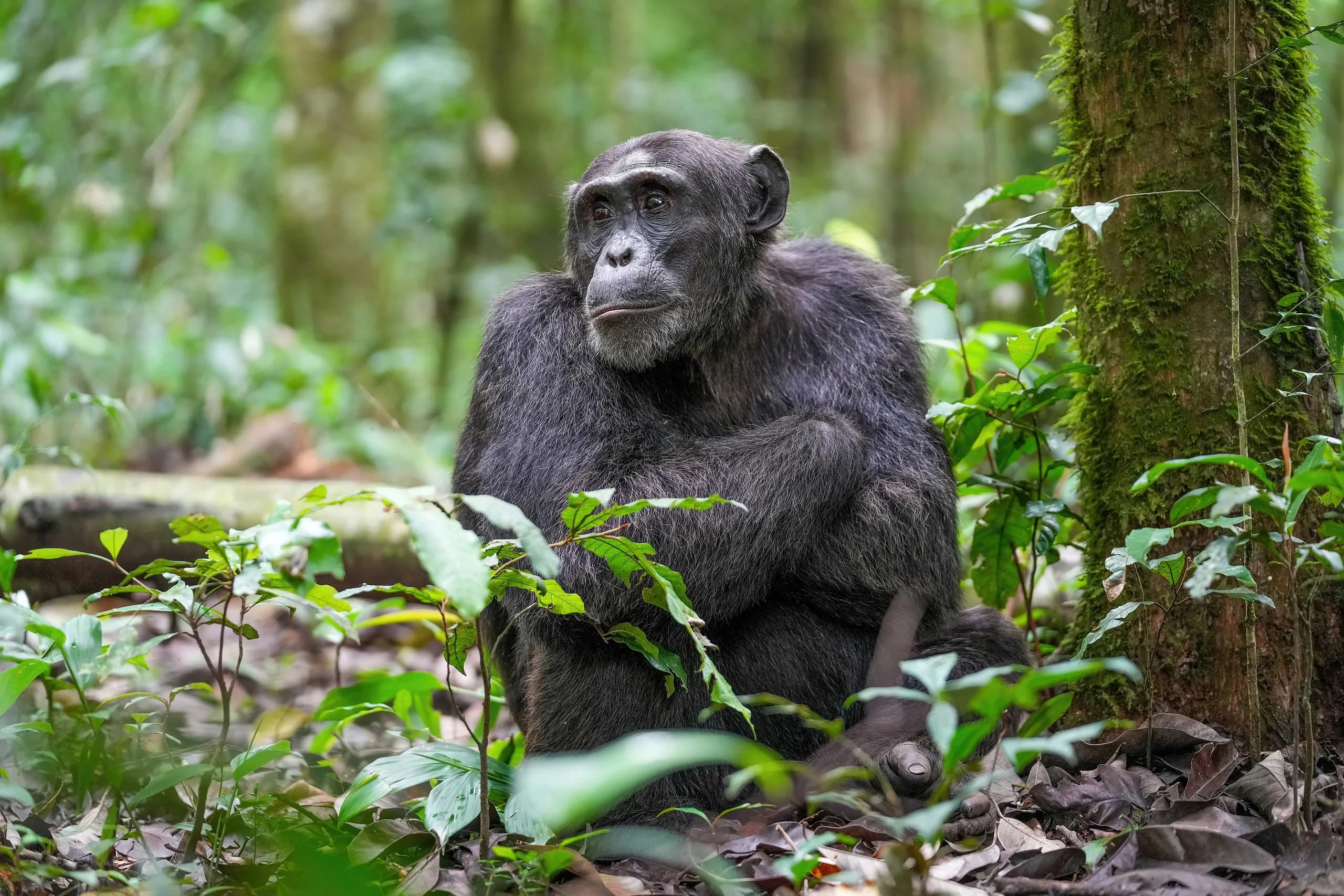
A Kibale chimpanzee tracking permit costs USD 250 for a foreign non-resident, dropping to USD 200 in April, May and November, and rising to USD 300 on 1 January 2027. That price includes park entrance and a guide. You get a maximum of one hour with a habituated chimpanzee community, and the Uganda Wildlife Authority reports an over-90% sighting success rate.
Kibale sits between Fort Portal and Queen Elizabeth National Park. Below is what the permit actually buys, what the published rules say the day looks like, and the conditions attached to the cheaper months.
What does a Kibale chimpanzee permit cost in 2026?
All the figures below are set by the Uganda Wildlife Authority (UWA) and published in its Conservation Tariff for July 2024 to June 2026, which UWA still serves as its current rates document, and in the Executive Director's tariff circular of 26 February 2026. Two things about that booklet are worth knowing. Its printed validity ended on 30 June 2026 and no successor has been published, and its cover states that fees may change without prior notice. UWA's rates page still links to it and the February circular schedules the next changes for 1 January 2027, which is why these remain the working figures.
| Experience | Where | Time with chimps | Permit, foreign non-resident | From 1 Jan 2027 |
|---|
| Chimpanzee tracking | Kibale National Park | 1 hour maximum | USD 250 (USD 200 in April, May, November) | USD 300 |
| Chimpanzee habituation experience | Kibale National Park | 4 hours maximum | USD 300 | USD 400 |
| Chimpanzee tracking | Kyambura Gorge, Queen Elizabeth NP | 1 hour maximum | USD 100 (park entrance not included) | USD 200 |
Two details matter more than the headline number:
- The Kibale permit includes park entrance fees and the guide fee, and UWA's tariff also notes it includes a nature walk on the day of tracking. The Kyambura permit does not include entrance, so Queen Elizabeth's entrance fee of USD 40 per adult per 24 hours sits on top of it.
- The low-season rate is a real saving with a real string attached. The February 2026 circular introduced USD 200 chimpanzee tracking for April, May and November, and states plainly that low-season permits cannot be rescheduled. If your dates are at all uncertain, the standard permit is the safer buy.
One caveat worth stating plainly: the circular says only "Chimpanzee Tracking" without naming a park. USD 200 sits below Kibale's standard rate but above Kyambura's, so whether Kyambura is affected is genuinely ambiguous on the face of the document. We confirm the applicable figure with UWA before quoting rather than guessing.
What actually happens on a Kibale chimp trek?
UWA's Kibale page lists treks departing Kanyanchu at 08:00, 11:00 and 14:00, lasting two to five hours, with groups capped at six people. The national tracking guidelines describe chimpanzee tracking starting at 8:00am or 2:00pm, and the four-hour habituation experience starting at 6:30am. Kanyanchu and Buraiga are the two designated entry points inside Kibale.
Those rules set the shape of the day. A briefing at the visitor centre, then a walk into the forest behind a UWA guide and trackers who work from where the community last fed and nested. Every group is accompanied by UWA guides and trackers; tracking without them, or from an undesignated entry point, is an offence rather than a shortcut. Once you reach the chimpanzees the clock starts, because UWA measures viewing time from the moment you reach them and caps it at one hour.
Plan for pace rather than gradient. Chimpanzees move quickly and often at ground level, so expect part of your hour to be spent walking after them rather than standing still and watching.
What will you see, and how likely is a sighting?
UWA publishes an over-90% sighting success rate for Kibale, with no seasonal qualifier attached to it. That is high enough that the month you choose is a question of comfort, not of whether you see chimpanzees.
What varies is the quality of the encounter rather than its existence. The community may be on the ground, feeding and grooming in clear view, or high in the canopy, where you are looking up through leaves at silhouettes and facing a very different photographic proposition. Both count as a sighting.
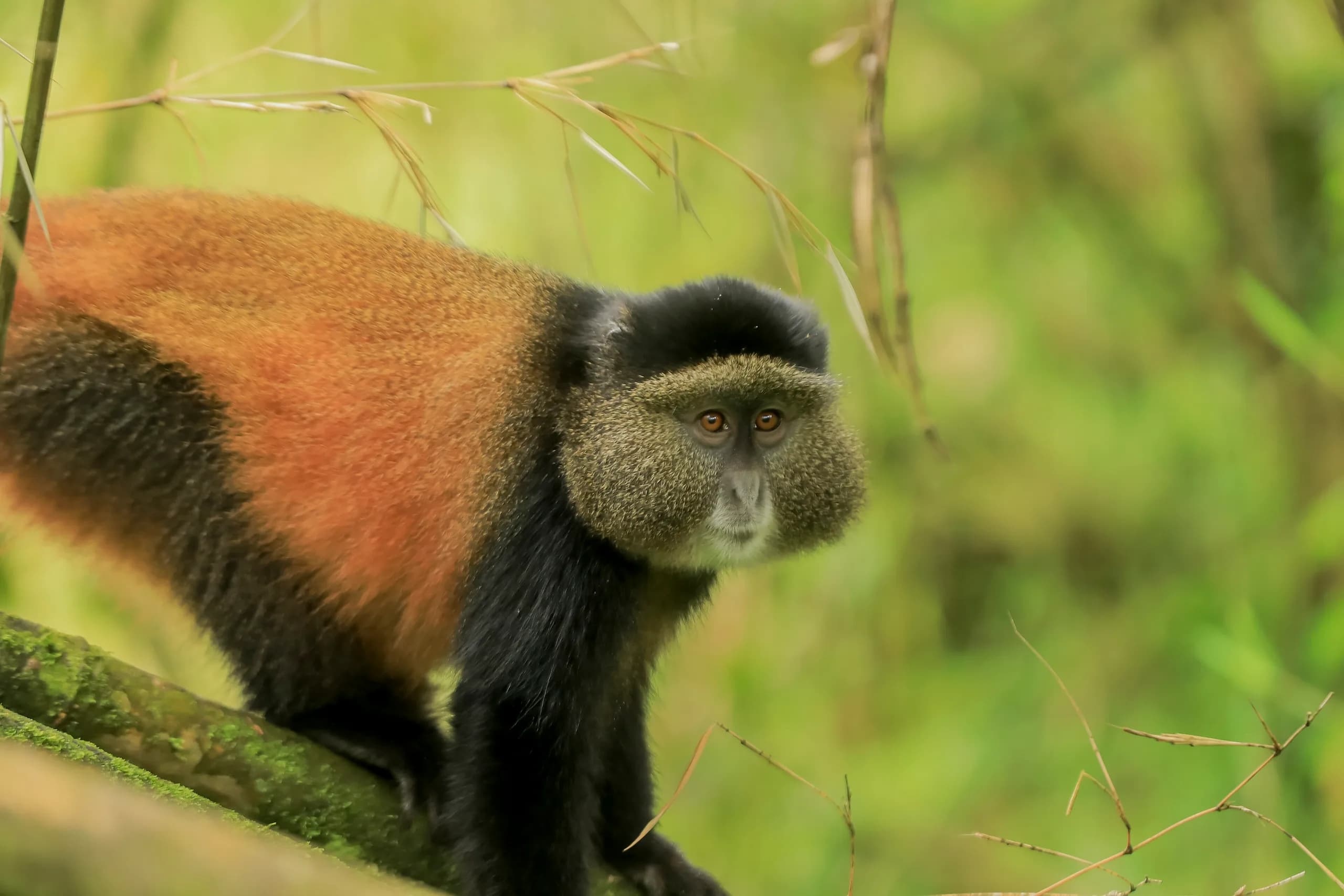
Kibale is a forest walk as much as a chimpanzee appointment, and other primates and forest birds share the same trails. If you want the encounter to be the centrepiece of a photographic trip rather than a single hour, see our photographic safaris and plan for more than one tracking slot.
Is the four-hour habituation experience worth USD 300?
The Chimpanzee Habituation Experience gives a maximum of four hours instead of one, for USD 300 instead of USD 250 in standard season, rising to USD 400 on 1 January 2027. In plain arithmetic that is four times the viewing time for USD 50 more.
It is not the right choice for everyone. It starts at 6:30am, it puts you alongside trackers working a community that is still being accustomed to human presence, and the day is longer and less predictable. Consider it if you are a photographer, a repeat visitor, or someone who found one hour with gorillas frustratingly short. Choose standard tracking if this is one activity inside a fuller itinerary, or if anyone in the group would struggle with a long morning on foot.
When is the best time to track chimps in Kibale?
Kibale has a bimodal climate. A 26-year field record from the rain gauge near the Makerere University Biological Field Station inside the park gives roughly 1,646 mm of rain a year, rains in March to May and September to November, dry seasons in December to February and June to August, and monthly temperatures between about 15C and 29C.
| Months | Pattern | Permit price note |
|---|
| December to February | Dry season | Standard USD 250 |
| March to May | Rains | USD 200 in April and May, non-reschedulable |
| June to August | Dry season | Standard USD 250 |
| September to November | Rains | USD 200 in November, non-reschedulable |
Operators, this one included, recommend the dry months for trail conditions and comfort. That is a preference, not a published finding: no authority states a best month for Kibale, and UWA's over-90% figure carries no seasonal qualifier. Anyone quoting you a higher sighting rate in July than in April is quoting an opinion.
The practical trade is straightforward. April, May and November are wetter and muddier, and they are USD 50 cheaper per permit with no option to move the date. For a fixed-date trip that is a good deal. For a flexible one it rarely is.
Who can book a Kibale permit, and how far ahead?
Foreign non-residents cannot buy chimpanzee or gorilla permits directly. UWA sells them only through tour operators licensed by the Uganda Tourism Board, states that it has no agents inside or outside Uganda, and requires all gorilla and chimpanzee payments to be handled through its Kampala headquarters. If a website offers to sell you a permit as an individual, that is not how the system works.
Since 1 March 2026 there is also no free hold. UWA suspended the seven-day reservation window, and the booking system now secures a permit only on full payment at the time of booking. No deposits, and no partial bank settlement. Permits can be reserved and paid in full for tracking dates up to a year ahead, so a firm decision on dates comes earlier in the planning conversation than it used to.
The same payment change applies to gorilla permits, which cost USD 800 for a foreign non-resident, or USD 600 in April, May and November, and which are not among the rates rising on 1 January 2027. Low-season gorilla permits also cannot be rescheduled. The detail is in Uganda gorilla permits: cost and booking.
On minimum age, UWA's own two sources differ: the 2024 tracking guidelines set 12 years for chimpanzee tracking, while the UWA Kibale park page states 16. We confirm the age applied to your booking with UWA reservations rather than publishing one number and hoping. If you are travelling with teenagers, raise it early — see family safaris.
What are the rules once you are with the chimpanzees?
These are UWA's published rules, not house policy, and guides enforce them:
- Keep at least 10 metres from the chimpanzees at all times.
- One hour maximum, timed from the moment you reach them.
- Do not enter the forest if you are sick. A visitor showing signs of illness before tracking will not be allowed to go, and is referred to a health facility at their own cost. Where a visitor already in the park is declared unfit to track through illness, or through an accident sustained in the park, UWA's guidelines provide for a refund of 50% of the permit value, less incidental costs, authorised by the Executive Director.
- No flash photography.
- No smoking, eating or drinking during tracking.
- Do not mimic chimpanzee vocalisations and do not chase them.
- Carry out your litter; human waste is buried 30 cm deep.
What if you cancel, or the chimps do not show?
UWA's guidelines set the terms, and they are stricter than most travel bookings:
- Rescheduling: a maximum of two per permit. The first is free, the second attracts a 25% surcharge. Requests are due at least 14 days before the tracking date; later requests depend on availability and also attract 25%. New dates must fall within 12 months of the original, and a reschedule can only move the date within the same conservation area and for the same activity. Low-season permits cannot be rescheduled at all.
- Cancellation: within 14 days of the tracking date, no refund. 15 to 45 days, 25%. 46 to 60 days, 50%. 61 days or more, 75%. All less bank charges and government taxes.
- If you track all day and see nothing: UWA may authorise tracking again the following day, or, where no slot exists, cancel with a 60% refund on the warden's certification.
- Money paid for one activity cannot be moved to another, and a permit that has already been rescheduled cannot be refunded.
This is the main argument for building the trek into a wider itinerary rather than flying in for it. If the forest has a bad day, a trip with three other things in it absorbs that; a two-night trip does not.
How does Kibale fit into a Uganda itinerary?
Kibale sits on the line between Kampala and the southwest, which makes it easy to combine. A common shape is Kibale for chimpanzees, then south to Queen Elizabeth National Park for game drives and the Kazinga Channel, then on to Bwindi for gorillas — the leg our Uganda Grand Circuit follows. The crater lakes south of the park and the tea country around Fort Portal are both a short drive away and make a good soft day either side of the trek.
More on the park itself is on our Kibale Forest page, and the activity in detail on chimpanzee tracking.
Permits are paid in full at booking, and the Kibale rates rise on 1 January 2027, so dates are worth settling early. Tell us your window and group size and we will confirm current availability and the exact figure that applies — start at plan your safari or get in touch.