A walking safari at Lake Mburo is arranged with the park before you travel and goes out on foot with a ranger rather than from a vehicle. You pay Uganda Wildlife Authority's park entrance fee, and the walk is charged on top of it — UWA's tariff states that entrance fees are independent of package activities. The entrance figure is published and quoted below. The current walk fee is not a line in the tariff document we work from, so we confirm it with the park at the point we quote.
That is the short answer. The longer one is worth having, because a walk is not simply a game drive with the roof taken off, and the reasons people love it are not the reasons the brochures usually give.
What actually happens on a Lake Mburo walking safari?
You meet your ranger at the park, get a briefing on how the walk will be run and what to do if an animal comes close, and then you walk — slowly, in a small group, at the ranger's pace and on the ranger's route.
Much of the walk is spent not moving. The ranger reads the ground: tracks in the dust, dung, a broken branch, an alarm call somewhere ahead. You stop for things a vehicle drives past without noticing — a dung beetle rolling its ball across the track, a bird you would never have identified at 30 kilometres an hour, the smell of a place where animals lay up overnight.
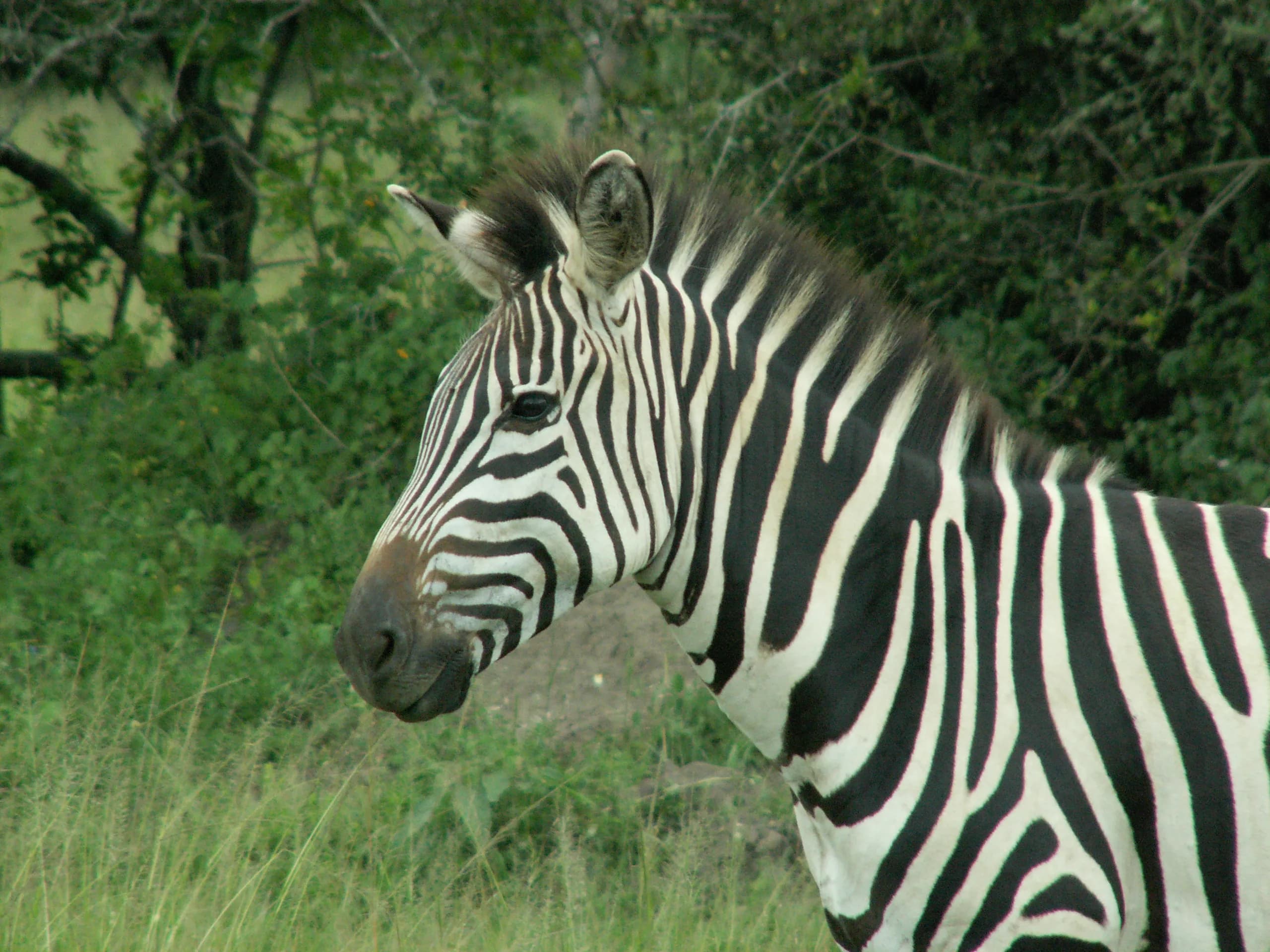
When you do come on animals, the encounter is different in kind. Grazing plains game learn that a vehicle is furniture. A person on foot is not furniture. They lift their heads, they hold their ground or they move off, and you are in the exchange rather than watching it through glass. That is the whole point of walking, and it is the part no photograph conveys.
Be clear about what you give up. You cover a tiny fraction of the ground a drive covers, so you see fewer species, and nothing is guaranteed. The ranger decides the route, decides when to turn back, and decides whether to approach at all. Departure times, the length of the walk and any group-size limits are the park's to set, and we confirm them for your dates when we book.
Why is Lake Mburo the park associated with walking?
Because UWA decides which activities run where, park by park, based on what lives there and where. In Murchison Falls and Queen Elizabeth, the standard way a visitor sees wildlife is from a vehicle. At Lake Mburo, walking is the activity the park is known for. That does not make going on foot unavailable elsewhere in Uganda — it makes it the thing people come to Mburo for.
You will read a folk explanation for this — that Lake Mburo has no dangerous game. Treat it with caution. What is in a park changes over the years, and the current position is a question for the authority and for the ranger briefing you on the morning, not for an article. Ask on the day. The ranger's answer is the one that counts, and it is the reason the walk is guided in the first place.
What does a walking safari at Lake Mburo cost?
Two things are charged separately. UWA's tariff states plainly that entrance fees are independent of package activities, so an activity sits on top of your entry rather than inside it.
| What you pay at Lake Mburo | Published figure | Set by |
|---|
| Park entrance, foreign non-resident adult | USD 40 per adult per 24 hours | UWA |
| Park entrance, child | USD 20 for children, with the youngest exempt; we confirm the current age bands when we book | UWA |
| Boat trip on Lake Mburo | USD 30 per person, approximately two hours | UWA |
| Small-boat minimum charge | USD 120 per boat regardless of party size, with a four-person minimum applied at Lake Mburo | UWA |
| Guided walk | Not a line in the published tariff document we work from; we confirm the current fee with the park when we quote | Arranged with the park |
Lake Mburo sits in UWA's Category A entrance band, alongside Queen Elizabeth, Kibale, Kidepo Valley, Bwindi Impenetrable and Mgahinga. Entrance is charged per 24 hours from the time you enter, so an early start on your second morning is worth planning around.
On currency of figures: the rates document UWA publishes is the Conservation Tariff covering July 2024 to June 2026, which UWA still serves as its current rates document although the printed validity window has passed and no successor booklet has appeared. Its cover notes that fees are subject to change without prior notice, and UWA has scheduled its next set of tariff adjustments for 1 January 2027. We reconfirm every figure at the point we quote rather than working from a page we wrote months ago.
One thing worth knowing if you have read about Uganda's low season: the discounted April, May and November rates UWA introduced in February 2026 apply to gorilla and chimpanzee permits, not to park fees. A gorilla permit in those three months is USD 600 for a foreign non-resident against USD 800 in the standard season, and UWA states that low-season permits cannot be rescheduled. Chimpanzee tracking is discounted in the same months. No equivalent low-season discount is published for park entrance or for boat trips.
Payment routes differ too. In Uganda, UWA sells gorilla and chimpanzee permits to foreign non-residents only through licensed tour operators. Lake Mburo's entrance, boat trips and other services are not in that category — UWA allows them to be paid at the reservations office or at park gates. We book them with the rest of your itinerary so nobody is queuing at a gate on holiday.
Walking, driving or on the water — which is worth your time?
If you have two nights, you can do all three. If you have one, this is the honest comparison.
| How you see the park | What it gives you | The trade-off |
|---|
| On foot with a ranger | Scale, sound, tracks and the small things a vehicle passes; animals read you differently when you are not in a car | Very little ground covered and a shorter species list; long grass and rain can spoil it |
| From a vehicle | Distance, better odds across the park, shelter from weather, easier with young children | Everything happens at windscreen distance |
| By boat on the lake | The shoreline, the water's edge and whatever comes down to drink | UWA's USD 120 small-boat minimum means a couple pays the floor, not USD 30 each |
How fit do you need to be, and can children come?
The country is open and rolling rather than steep, and the walk is paced by the ranger, not by the fittest person in the group. It is closer to a long, frequently interrupted stroll than to a hike. Sun and heat do more to shape how it feels than gradient does — Uganda's national meteorological authority records February as the hottest month of the year — so an early departure and enough water matter more than training.
On children: any minimum age or group limit for the walk is the park's to set, and we confirm the current position for your party rather than quoting a number that may have moved. What is worth saying plainly is that a walk asks for a specific kind of patience — long stationary stretches, quiet voices, no negotiating — and that suits some children very well and others not at all. One workable split is to do the boat and a game drive together, and send one adult and an older child on the walk. Our notes on travelling with younger children are on the family safaris page.
We give no medical advice. If you have a health condition that bears on walking in heat, or you are unsure about vaccinations for the trip, speak to a travel clinic and to the official health guidance for Uganda before you travel.
When is the best time to walk at Lake Mburo?
Uganda's national meteorological authority describes two rainfall seasons — March to May, and September through December — and states that December to February is typically dry across the country. Northern and parts of eastern Uganda receive substantial rain in June to August; the south, where Lake Mburo sits, generally keeps a drier mid-year window that the north loses.
Walking is more weather-sensitive than driving. After good rain the grass is high, which cuts visibility at eye level and makes the ground harder to read, and a wet morning simply cancels the pleasure of the thing. So the drier stretches are the better bet for this particular activity, even though the park is worth visiting year-round.
Do not over-plan on that basis. The longest nearby instrumental record we can point to comes from Ruhija in Bwindi — a montane forest station at 2,400 m, wetter and far higher than Mburo, so not a rain gauge for this park. It still makes the general point: a dry-season July delivered heavy rain, and in drought years the two-season pattern collapses toward a single peak. A dry month is a tendency, not a promise. Our fuller month-by-month view is in best time to visit Uganda.
How does Lake Mburo fit into a Uganda itinerary?
Geographically it sits on the southwestern road, which makes it a natural first or last stop on the circuit that runs down towards Bwindi. We build it in for one or two nights rather than around it, and that is the right instinct — it is a change of register, not a headline act.
That change of register is exactly why we push for it. A week of game drives blurs. Time on foot, with a ranger explaining what a set of tracks means, is a different kind of memory. It also sits at a very different price point from the primate permits that dominate a Uganda budget, so it adds texture without adding much cost.
You can see how we place it in the Uganda grand circuit and in primates and savannah, and read the park's own page at Lake Mburo National Park. If you are still working out how many nights the whole trip needs, start with how many days for a Uganda safari.
When you are ready for real numbers rather than published ranges, tell us what you have in mind or get in touch. We will confirm the current UWA figures and the walk fee for your dates, and build the walk into the itinerary properly, with the timings that make it worth doing.