Bring two camera bodies, a telephoto zoom in the 100 to 400 or 200 to 600 range, a fast standard zoom around 24 to 70 mm, a beanbag, and considerably more memory cards and battery capacity than you think you need. That is the whole essential list. Two bodies matter more than a third lens, because changing lenses in an open vehicle in fine dust is how sensors are ruined and how the shot is missed. The beanbag matters because a tripod is useless in a vehicle and a monopod is awkward, while a beanbag on the window rail is rock solid and costs almost nothing. Everything else is refinement. And on a gorilla or chimpanzee trek the priorities invert completely: the long lens stays in the vehicle and a fast wide zoom does all the work, because the animals are close and the forest is four stops darker than you expect.
Which lenses actually earn their place?
| Subject | Focal length | The real problem |
|---|
| Savannah predators and general game | 100 to 400 mm or 200 to 600 mm | Heat haze destroys detail across open ground after about 09:30 |
|---|
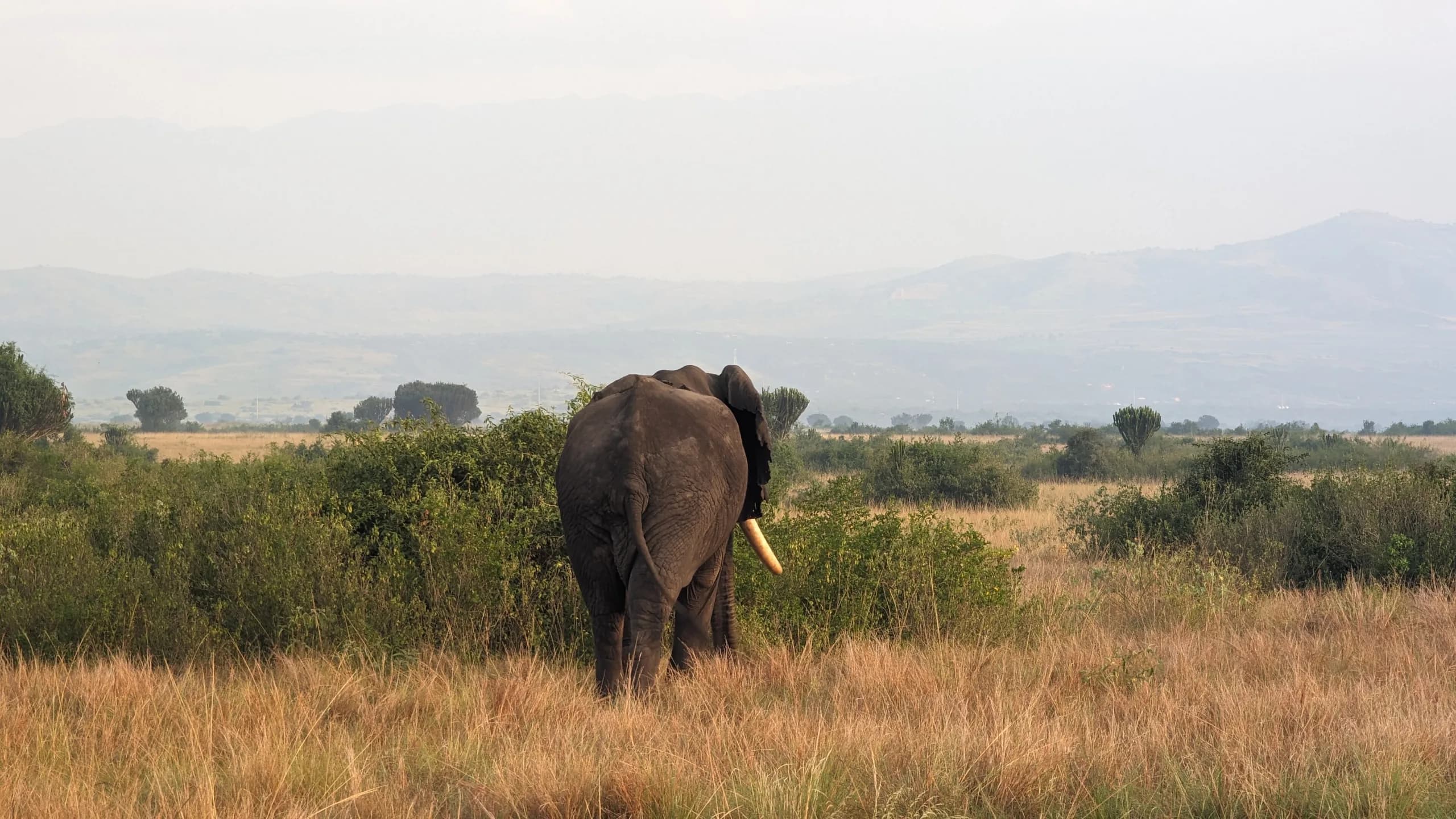
| Elephant, giraffe and animals in landscape | 24 to 105 mm | Getting the mountain and the animal in one frame without a cluttered foreground |
|---|
| Gorillas and forest primates | 24 to 70 mm, fast, plus a fast prime | Very low light, black fur, no flash permitted, one hour only |
|---|
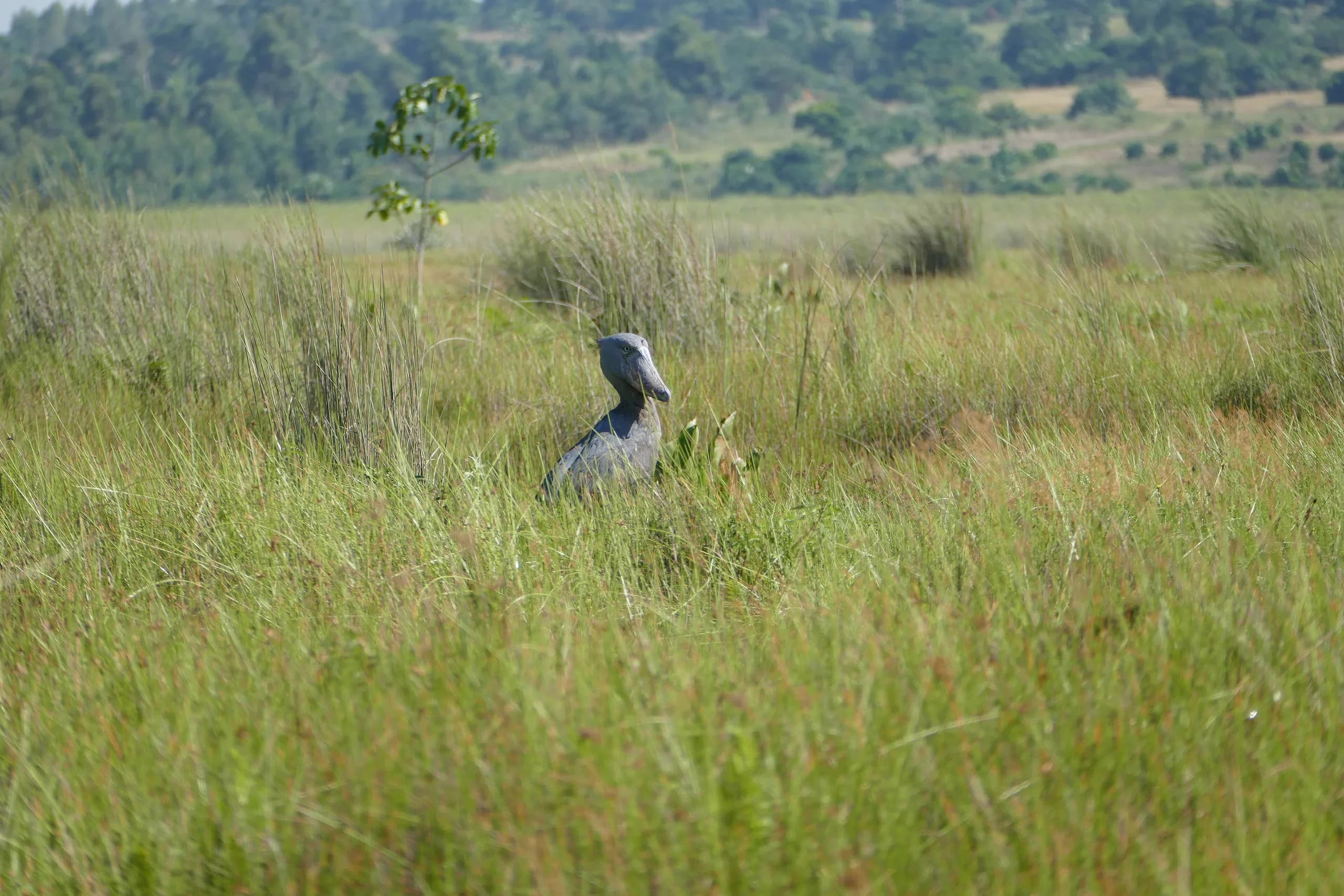
| Birds, including in flight | 400 mm and above | Autofocus tracking against cluttered backgrounds |
|---|
| Camp, people and detail | 35 mm or 50 mm prime | Nothing. This is the lens people are gladdest they brought |
|---|
| Night drives, conservancies only | Fast prime, wide open | Filtered spotlight, extremely high ISO, no flash at animals |
|---|
If you can bring only one lens, make it a 100 to 400. It covers most of a game drive, it is light enough to hold up for a long sighting, and its close focus is better than a prime for the moment an elephant walks past the vehicle.
Why not a tripod?
Because you will never use it. You are shooting from a vehicle that you are not allowed to get out of in a national park, the legs have nowhere to go, and by the time it is set up the cheetah has moved.
What works, in order: a beanbag on the window rail or roof edge, then the door frame with a folded jacket, then your own elbows. Bring an empty beanbag cover and fill it with rice or beans on arrival, which saves you carrying the weight through an airport.
What settings should I start from?
- Shutter priority or manual with auto ISO. Motion is what ruins safari photographs, not noise.
- 1/1000 second minimum for anything moving, faster for birds in flight. 1/500 for a stationary animal on a stable rest.
- Set a maximum auto ISO far higher than feels comfortable. A sharp noisy frame beats a clean blurred one every time, and modern noise reduction is very good.
- Back button focus, if you already use it. Do not learn it on the trip.
- Underexpose slightly in bright savannah light. Recovering shadow is easier than recovering a blown highlight on white fur or a bright sky.
- Shoot raw, and shoot in bursts. Behaviour happens in fractions of a second.
How do I photograph gorillas and chimpanzees?
Differently from everything else, and it is worth preparing before you enter the forest.
Set your camera up at the trailhead, not at the sighting. Choose a wide aperture, set auto ISO with a very high ceiling, and set a minimum shutter speed around 1/250. The gorillas are close, often closer than the seven metre minimum because they walk where they like, so a long lens will not focus and will not frame. A fast 24 to 70 does almost everything.
Three specifics. Flash is banned, so do not bring it out. Humidity will fog glass that came from an air-conditioned vehicle, so carry several cloths and let the lens acclimatise on the walk in. And black fur against green shade fools most meters, so expect to add exposure compensation rather than trusting the first frame.
You get one hour. Spend part of it watching rather than shooting.
What accessories are actually essential?
- More cards than you plan for. Raw bursts consume a card faster than anyone expects.
- Batteries, and a way to charge them. Camps run on solar and generators, and power is often on a schedule. A power bank and a vehicle inverter solve it.
- A rain cover, or a dry bag and a rubber band. Works fine and costs nothing.
- A blower and a lens cloth. Fine dust in the Serengeti and the Mara is the real enemy of your sensor.
- A portable backup drive. Camps have power but rarely reliable internet, so cloud backup is not a plan. Copy every card every night.
- A soft bag, not a hard case. Light aircraft to the airstrips have strict weight limits and often require soft luggage.
What limits should I check before booking flights?
Internal flights to bush airstrips in this region typically impose a total baggage allowance in the region of fifteen kilograms per person including hand luggage, and frequently require soft-sided bags. Camera equipment is heavy and this catches photographers out constantly.
Tell your operator what you are carrying at the time of booking. Extra weight can often be purchased, or a seat bought for the equipment, but it has to be arranged in advance rather than negotiated at the airstrip.
What makes the biggest difference of all?
Not the gear. The guide and the vehicle.
A guide who anticipates that the cheetah will move to the far termite mound, who positions the vehicle so the sun is behind you before you ask, and who reverses fifty metres to open the background, will get you better photographs than any lens upgrade. So will a vehicle with half the seats sold, because then you can move to whichever side the light is on.
Ask for those two things when you book. They cost less than a lens and they matter more.