

Uganda, wildlife sanctuary
Ziwa Rhino Sanctuary
The only place in Uganda to track white rhino on foot, three hours out of Kampala
About Ziwa Rhino Sanctuary
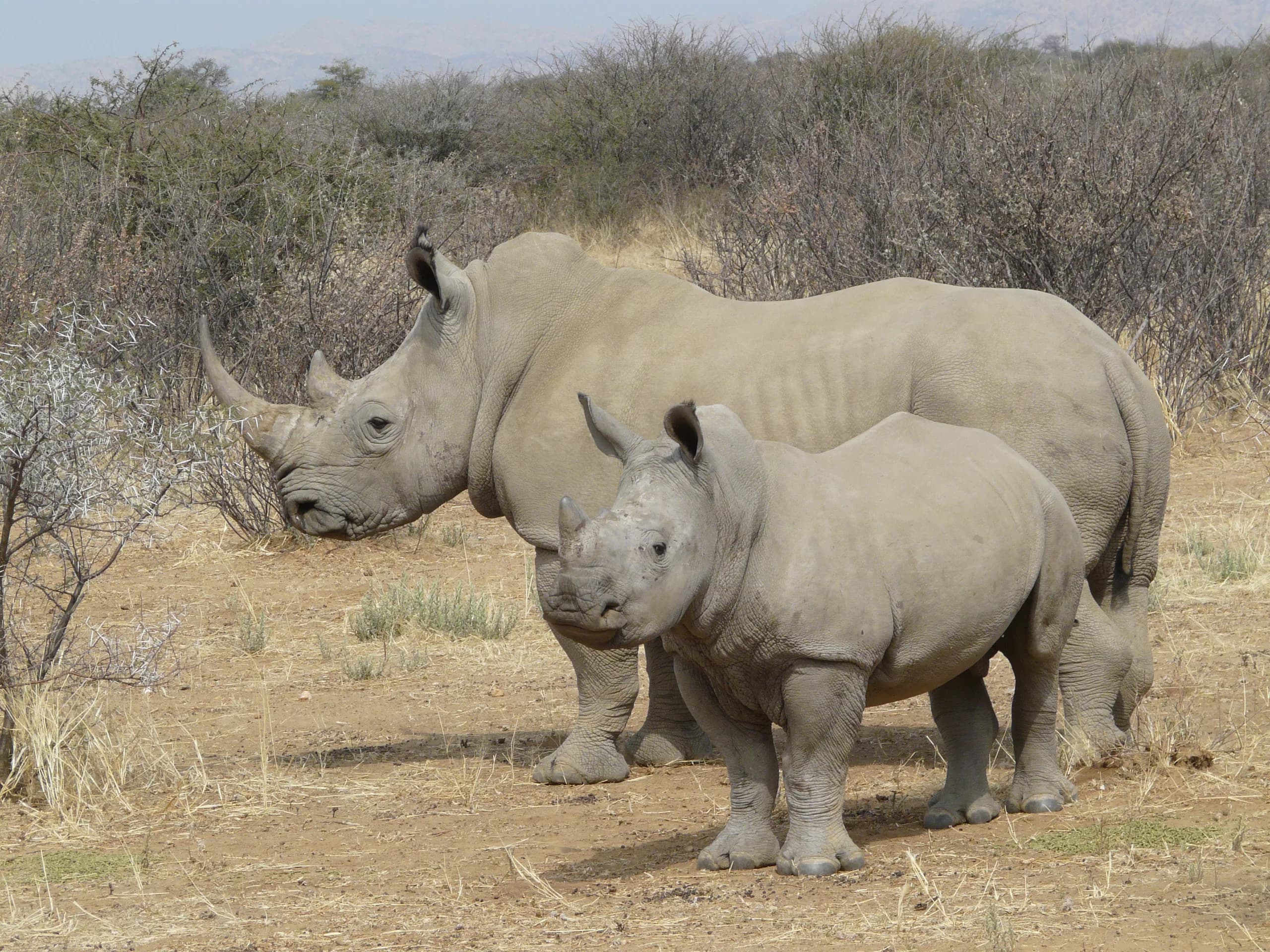
Uganda lost its rhino. Both the black and the northern white were shot out during the conflicts of the 1970s and early 1980s, and by the middle of that decade there was nothing left in the wild anywhere in the country. Ziwa is the answer to that, a fenced sanctuary of about seventy square kilometres of savannah and swamp in Nakasongola district, set up in 2005 by the Rhino Fund Uganda in partnership with the Uganda Wildlife Authority, and stocked with southern white rhino.
The founding population was six animals: four brought from Kenya and two donated from a zoo in Florida. They have bred, and the herd has grown steadily every year since. The first calf born at Ziwa arrived in 2009 and was named Obama, because his mother came from Kenya and his father from the United States.
What makes it worth stopping is that you track them on foot. Rangers find the animals in the morning, you drive to a point nearby and then walk in, and you end up standing on the ground perhaps ten metres from a white rhino with nothing between you and it. It is the only place in Uganda where that is possible, it takes an hour or two, and it sits three hours north of Kampala on the road to Murchison Falls, which is why almost every Murchison itinerary stops here.
Tracking on foot
Rangers and trackers locate the animals at first light and stay with them, so by the time you arrive somebody already knows where they are. You are briefed at the headquarters, driven to a point within reach and then walk in, usually for twenty minutes to an hour depending on where the rhino have moved to. The ground is flat, the walking is easy and the whole thing is well within the reach of anyone who can manage a slow hour on level grass. The last approach is quiet and on foot, and you stand at around ten metres with a ranger between you and the animal.
They are wild animals inside a fence rather than tame ones. The rangers know each individual by name and by temperament, they position you upwind and on the open side, and the rules they give you at the briefing are worth following exactly. Departures run through the day, but the first slot of the morning is cooler for you and for the rhino and is the one to ask for.
Fees, and who sets them
Ziwa is not a national park and its prices are not Uganda Wildlife Authority prices. The sanctuary sets its own tariff and revises it on its own schedule. Rhino tracking for a foreign non-resident sits somewhere around 50 US dollars per adult, with lower rates for residents, citizens and children. The shoebill canoe trip and the guided night walk are charged separately and each add a smaller amount. Every figure here is indicative and should be confirmed when you book rather than taken from a page.
The shoebill, and the rest of the sanctuary
The Lugogo swamp inside the sanctuary boundary holds shoebill, and the canoe trip out to look for them leaves before dawn and takes two to three hours. It is a genuine chance at the bird rather than a token one, and it is far easier logistically than the Mabamba or Murchison delta options. A night walk with a spotlight turns up bush pig, white-tailed mongoose and nightjars, and the bird list across the sanctuary is long enough that birders stay a night rather than passing through.
Beyond the rhino the sanctuary holds bushbuck, oribi, duiker, warthog, bush pig, vervet and a small number of hippo in the swamp. Nobody comes for those, but they fill out a morning.
Staying, or not
Most people do this as a two-hour stop on the way north and that works. Staying a night works better if you want the shoebill canoe at dawn or the night walk, and there is a lodge inside the sanctuary as well as simple bandas at the headquarters. Breaking the Kampala to Murchison drive here turns a six-hour day into two comfortable halves, which is the real argument for it.
The honest part
Ziwa is a fenced breeding sanctuary, not a wild population. The long-term intention has always been to reintroduce rhino into a national park once the numbers support it, and the question of where they go and who controls them has been the subject of a public disagreement between the Rhino Fund and the wildlife authority over land, lease and custody. It is unresolved in the sense that arrangements have shifted more than once. None of that changes what you see on the morning you visit, but it is worth asking your operator what the current arrangement is when you book, because it has affected access before.
It is also worth being clear that these are southern white rhino. The northern white rhino, which is the subspecies that once lived in Uganda, is functionally extinct with two females left alive in Kenya. What is being rebuilt here is a rhino population, not the one that was lost.
What people come here for
- Tracking southern white rhino on foot, the only place in Uganda where this is possible
- Standing at around ten metres from a wild rhino with a ranger rather than a vehicle
- A dawn canoe trip into the Lugogo swamp for shoebill
- A guided night walk for bush pig, white-tailed mongoose and nightjars
- Three hours from Kampala, which splits the long drive to Murchison Falls in half
- A breeding programme that began with six animals in 2005 and has grown every year since
What lives here
Resident species, not a promise. Wildlife moves.
- Southern white rhino
- Bushbuck
- Oribi
- Common duiker
- Warthog
- Bush pig
- Hippopotamus
- Vervet monkey
- Shoebill
- Grey crowned crane
Best time to visit
Tracking runs every day of the year and the rhino do not move far, so there is no bad month. December to February and June to September are the drier windows, the tracks inside the sanctuary are firm and the walk in is easy. March to May and October to November bring rain, the grass grows long and the walking is wetter but not difficult, and the birding is at its best with migrants in from November to April. The first tracking slot of the morning is the coolest and the animals are more active in it. If the shoebill in the Lugogo swamp is part of the reason you are coming, the drier months make the canoe route through the papyrus more reliable.
Getting there
By road it is about 176 kilometres and three hours north of Kampala on the Gulu highway, with the turning at Nakitoma and a short murram run to the headquarters. That places it almost exactly halfway to the southern sector of Murchison Falls via Masindi, which is the reason it is on so many itineraries. Coming south from Murchison it is two and a half to three hours. There is no airstrip and no sensible flying option; if you fly to Murchison you skip Ziwa, which is a real argument for driving one leg of that trip. Fuel and food are available at Nakasongola and Luweero on the highway rather than at the sanctuary gate.
Around Ziwa Rhino Sanctuary
Tell us when you want to be here
We will say honestly what is available on your dates, what the permits cost and whether the season suits what you want to do in Ziwa Rhino Sanctuary.