
Uganda, waterfalls
Sipi Falls
Three falls off the western wall of Mount Elgon, and the arabica that grows between them
About Sipi Falls
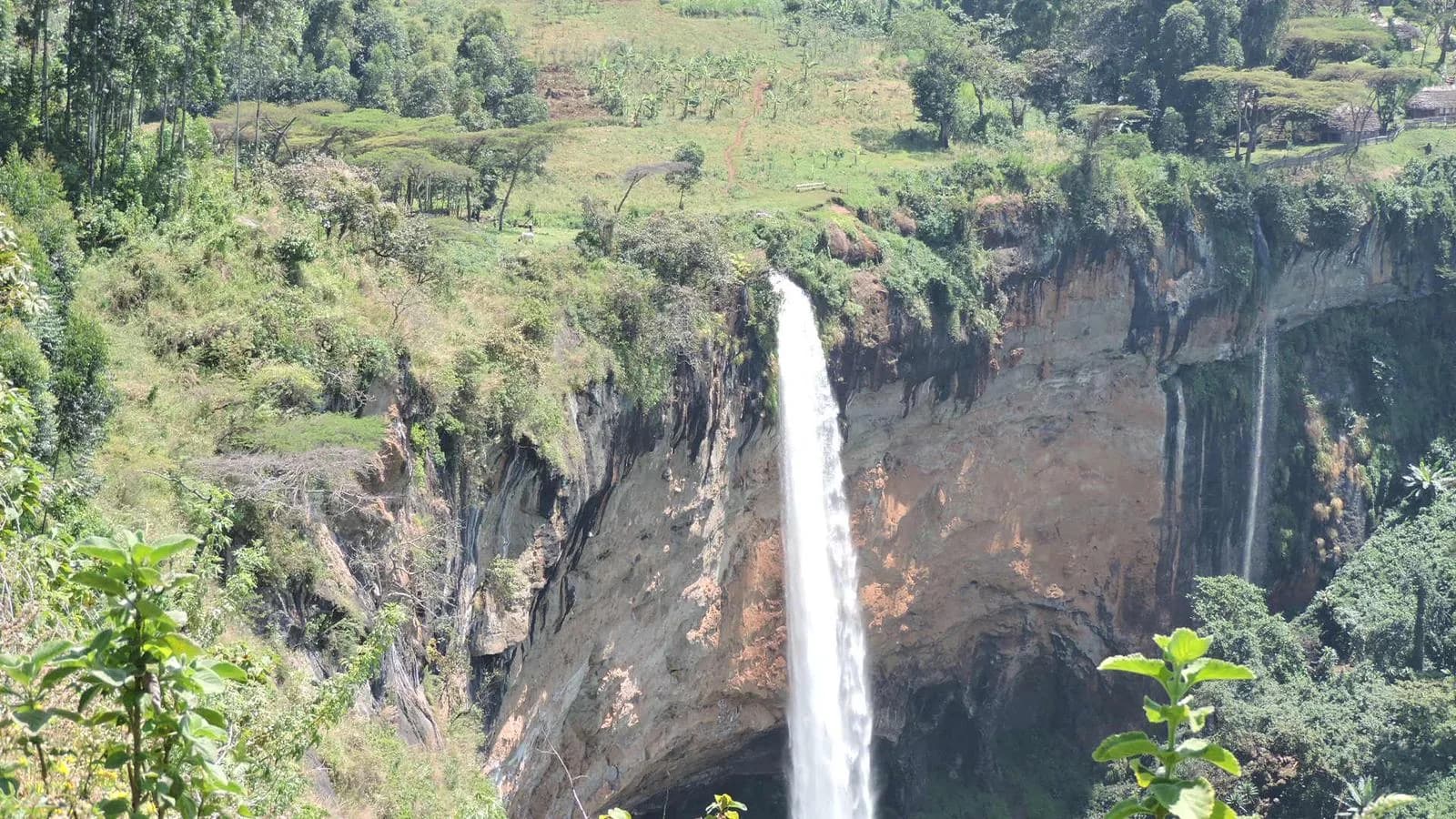
Sipi is three separate waterfalls on the Sipi river as it comes off the escarpment of Mount Elgon above Kapchorwa. The main one drops about 100 metres in a single unbroken line onto a rock apron and is the one every photograph shows. The other two sit lower down the same river, are shorter and harder to reach, and most people who only see the main fall from the road have missed the point.
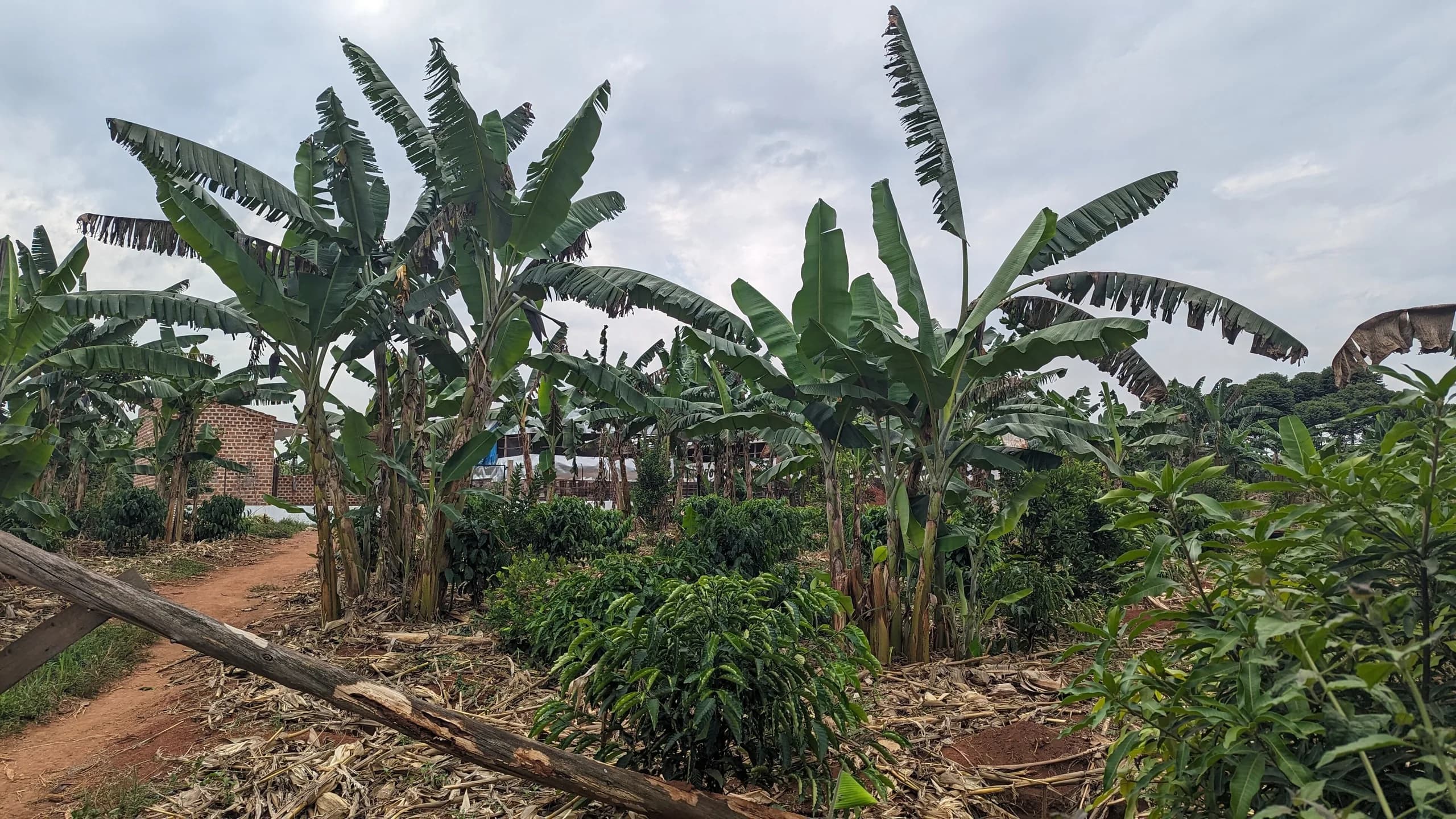
The point is the walk that links all three. It takes three to four hours with a local guide, it crosses banana shambas, coffee plots and somebody’s footbridge, and in places it is a genuinely steep scramble on wet red clay. This is not a boardwalk and it is not a national park. It is farmland at around 1,750 metres with waterfalls running through it, and the people whose land you are walking across are the people who guide you.
The second reason to come is the coffee. The arabica grown on these slopes between roughly 1,600 and 2,000 metres is some of the best in Uganda, and a farm tour here means picking, pulping, drying, roasting in a pan over a fire and grinding by hand, in that order, with the family that owns the trees. Above all of it Mount Elgon rises to 4,321 metres at Wagagai, and the Sipi trailhead into the park starts a short drive up the road at Kapkwai.
The three falls, and the walk between them
The main fall, the one at the top of the sequence and closest to Sipi village, is the roughly 100-metre single drop. You can view it from the lodges and viewpoints on the opposite side of the valley, walk to the base of it, and in the dry months walk behind it into the undercut. The middle and lower falls are shorter, sit further down the gorge, and take you through farmland and a stretch of forest to reach.
Done as a circuit, all three take three to four hours at a walking pace with stops. The distance is modest; the gradient and the surface are what make it work. Sections are steep enough to want your hands, the clay holds water for days after rain, and there are two or three places where a slip matters. Boots with grip rather than trainers, and be honest with your guide about knees and balance before you set off rather than halfway down.
Guides and fees
Sipi Falls sits outside Mount Elgon National Park, on community and private land, so there is no Uganda Wildlife Authority gate and no park entry fee. Guides are arranged in Sipi village through the local guides association, the rate is set locally, and it is modest: for a foreign visitor the three-falls circuit usually works out at the equivalent of a few US dollars per person, with the guide taking the fee directly. One or two of the best viewpoints sit on private land and charge a small separate amount at the gate. Both figures are indicative and set by the community and the landowners rather than by any authority, and both are worth paying without haggling. Tip the guide separately at the end.
Abseiling down the main fall is offered by one of the lodges at Sipi, is priced by that operator rather than locally, and needs booking the day before rather than on the morning.
Coffee, and why it is worth a morning
The coffee off these slopes is arabica and it is sold abroad under the Bugisu name or as Sipi Falls. Kapchorwa is Sabiny country; the Bagisu farm the slopes south and west of here, and the marketing name covers both. A farm tour is arranged through the same village association as the walks, takes two to three hours, and follows the whole chain from the tree to the cup on one smallholding. It is the best value thing to do here and the money stays on the farm.
Harvest on the Elgon slopes runs roughly from October into February depending on altitude, and a visit in those months means you see picking and pulping rather than a demonstration.
Mount Elgon above you
Elgon is an extinct shield volcano, dead for millions of years, with a caldera at the top roughly 40 kilometres across and Wagagai peak at 4,321 metres on the Ugandan side. The Sipi trail into the park starts at the Kapkwai Forest Exploration Centre, about a forty-minute drive above Sipi village, and is one of the routes to the caldera on a three to four day trek. Park entry and trekking fees at Kapkwai are set by the Uganda Wildlife Authority and are separate from anything you pay in the village, and they are indicative like every other authority tariff.
Even without the trek, the day walks from Kapkwai through the forest and up to the caves and the viewpoint are the best birding in the area and are quieter than the falls.
What Sipi is honestly like
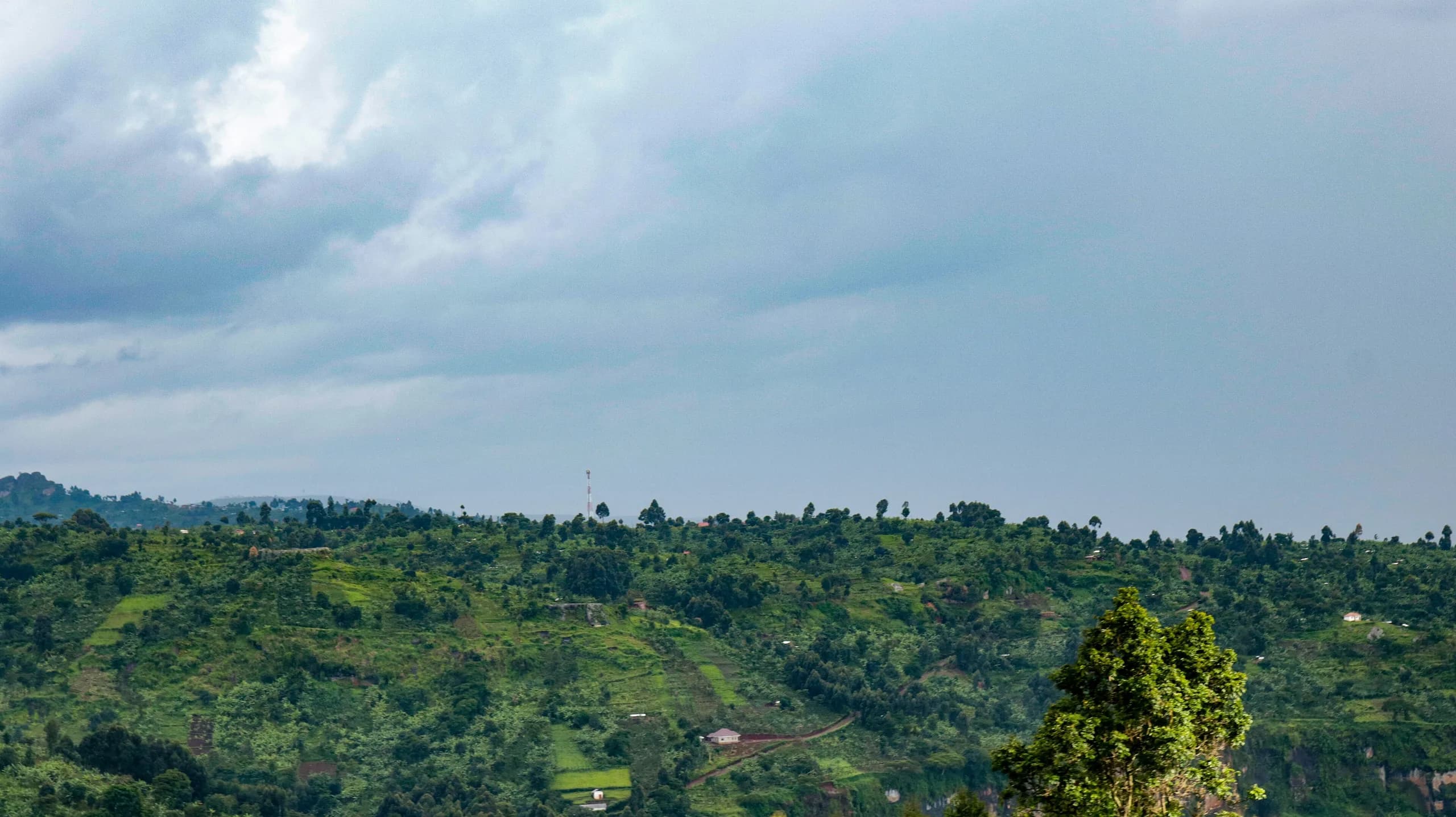
This is a working landscape with a lot of people in it. There are children on the paths, there are men selling carvings at the viewpoints, and the trails run between houses. Some visitors arrive expecting a wilderness and are disappointed; the ones who enjoy it treat it as a walk through a farming community that happens to have three waterfalls in it. Sipi also works badly as a day trip and well as two nights: the drive from Kampala eats most of a day at each end, and the falls, a coffee farm and a morning at Kapkwai fill the middle comfortably.
What people come here for
- The main fall, a single unbroken drop of about 100 metres, and the walk behind it in the dry months
- The three-falls circuit on foot, three to four hours through farmland with a village guide
- A smallholder coffee tour from picking through pan roasting to a hand-ground cup
- Abseiling the main fall, booked the day before through one of the lodges
- Day walks and birding from the Kapkwai Forest Exploration Centre above the village
- The Sipi trail into Mount Elgon National Park, a three to four day route to the caldera
- The view west off the escarpment across the Karamoja plain in the early morning
What lives here
Resident species, not a promise. Wildlife moves.
- Black and white colobus
- Blue monkey
- Rock hyrax
- Bushbuck
- Hartlaub’s turaco
- Ross’s turaco
- Cinnamon-chested bee-eater
- Mountain wagtail
- Tacazze sunbird
- Augur buzzard
Best time to visit
June to August and December to February are the drier windows and the ones to walk in, because the clay on the steep sections holds water for days. The two wet seasons run roughly March to May and August into November, and in those months the falls are at their heaviest and most photogenic and the walking is at its worst, which is the trade every visitor here has to make. Coffee harvest on the Elgon slopes runs from about October into February, so a visit in that window means you see the crop being worked rather than described. Mornings are clear more often than afternoons in every month, and the escarpment builds cloud from late morning, so the walk starts early or it starts wet.
Getting there
By road it is four to five hours from Kampala in good conditions and closer to six if you leave in the morning traffic: about 230 kilometres of tarmac east through Jinja, Iganga and Mbale, then 45 kilometres north-east up the escarpment from Mbale to Sipi on a tarmac road that climbs steeply. Kapchorwa town is a further ten to fifteen minutes up the same road. From Jinja it is about three hours, which is why Jinja and Sipi pair naturally as the two stops on an eastern loop. There is no airstrip at Sipi; the nearest scheduled option is Soroti, which is two and a half hours away by road and rarely worth the connection. Coming from Kidepo on the eastern route through Moroto, allow a long and rough day.
Around Sipi Falls
Tell us when you want to be here
We will say honestly what is available on your dates, what the permits cost and whether the season suits what you want to do in Sipi Falls.