

12 daysUganda and Rwanda
12-Day Uganda and Rwanda Combined
Two gorilla treks in two countries, chimpanzees twice, and the Cyanika border crossing in between
From$11,400 per person

Rwanda, national park
Old montane rainforest, thirteen primates and a walkway hung across a ravine
Nyungwe covers just over a thousand square kilometres of montane rainforest along the ridge that separates the Congo and Nile basins, in the far south-west of Rwanda. It is old forest that was never cleared, which is why the canopy runs almost unbroken from the Burundi border towards Lake Kivu and why the species list is as long as it is: thirteen primates, close to three hundred birds and a very large number of orchids.
Most people come for two things. Chimpanzee tracking, which starts before dawn and is hard walking on steep, wet ground, and the canopy walkway at Uwinka, a suspended bridge across a ravine that puts you level with the tops of the trees. The walkway is the photograph. The chimpanzees are the reason to stay two nights rather than one.
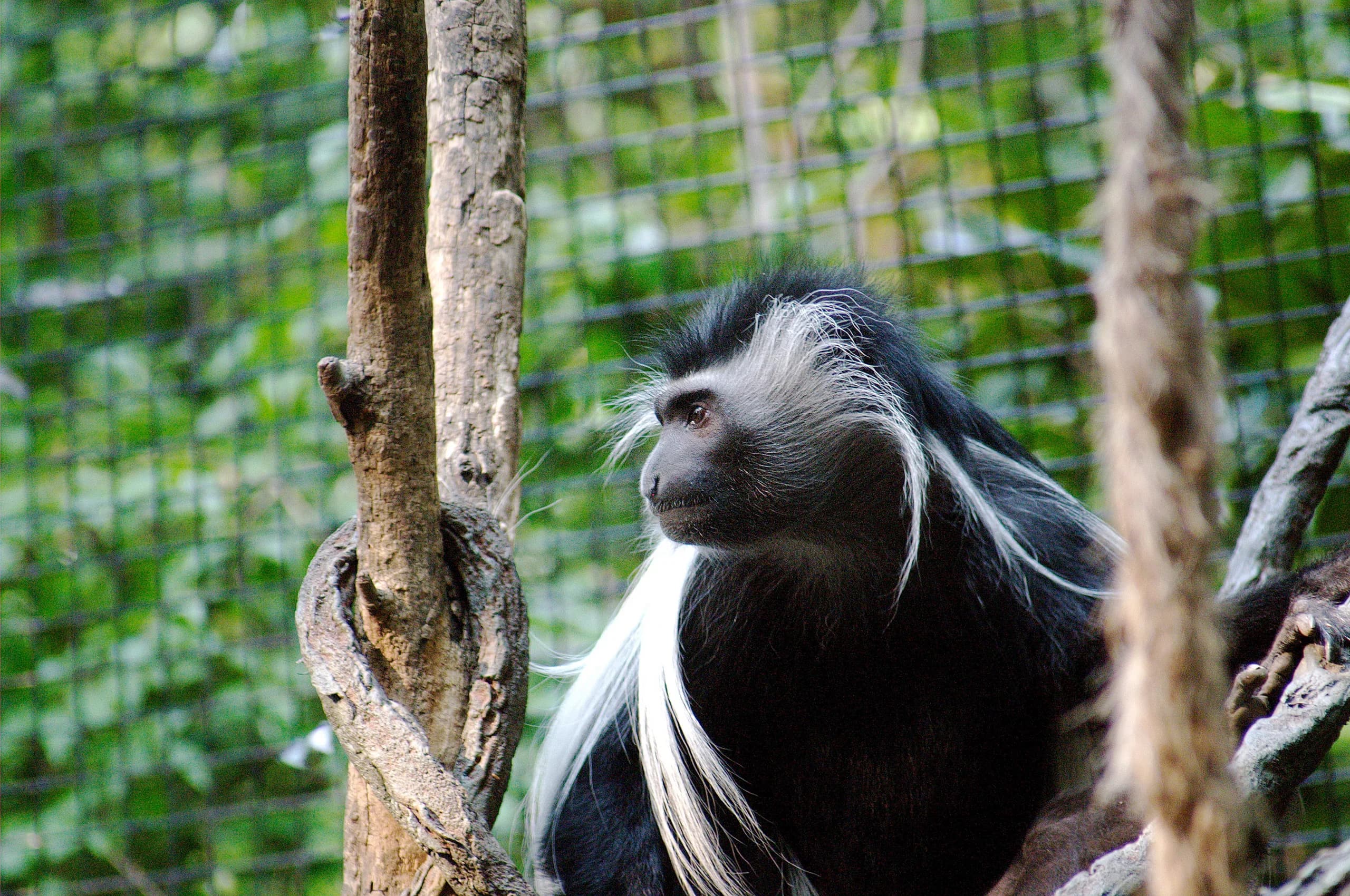
The forest is also where the Angolan colobus troops live, moving in numbers that are unusual for an arboreal monkey anywhere, and where the Albertine Rift endemic birds that serious birders travel for can be found from the road that cuts through the park. African Parks has managed Nyungwe alongside the Rwanda Development Board since 2020, and the trails, the signage and the guiding have all improved since.
Nyungwe sells chimpanzee tracking in two places and they are not equivalent. Cyamudongo is a small, separate block of forest about two hours west of the main Uwinka reception, near Rusizi, and it holds a smaller community in a smaller area, which is why the success rate there is the higher of the two. The main forest community, tracked from Uwinka or Gisakura, ranges over far more ground and is genuinely harder work.
Either way you leave at around 05:00 to be under the nesting trees when the chimpanzees wake and start calling. The walking is steep and the ground is wet more often than not. Be clear with yourself before booking: Nyungwe does not deliver the sighting rate that Kibale in Uganda does, and if seeing chimpanzees is the single point of the trip then Kibale is the better answer. What Nyungwe gives you instead is a much better forest.
The walkway sits on the Igishigishigi trail from Uwinka. It runs roughly 160 metres across a ravine on suspended steel, high enough above the valley floor that the whole structure moves under you, and it puts you at the level of the crowns where the turacos and hornbills actually are. Departures run in the early morning, late morning and afternoon, the round trip takes about two hours including the trail down and back, and there is a minimum age that the guides do enforce. Take the first slot if you can, because cloud comes up the valley later in the day and takes the view with it.
Everything here is priced by the Rwanda Development Board and every figure below is indicative. Chimpanzee tracking runs at around 100 US dollars per person for a foreign non-resident. The canopy walk is roughly 60 US dollars. The other guided trails, including the colobus trek, generally sit somewhere in the 40 to 90 US dollar band depending on which trail and how long it takes. A guide is included in the trail fee and is not optional, which is no hardship, because the good ones here are very good and this is not a forest to be walking alone in.
The Angolan colobus at Gisakura move in troops that can run to several hundred animals, which is unusual for an arboreal monkey anywhere, and they are the most reliable primate sighting in the park. Beyond them the list runs through L’Hoest’s monkey, grey-cheeked mangabey, Dent’s mona monkey, red-tailed monkey, silver monkey, olive baboon, vervet and the rarely seen owl-faced monkey, which lives at the higher altitudes and which almost nobody gets.
Birders come for the Albertine Rift endemics, of which Nyungwe holds somewhere around twenty-nine, and several of them are easiest along the main road through the forest rather than on a trail. Red-collared mountain babbler, Rwenzori turaco and Grauer’s warbler are the ones people ask about by name.
The trail network runs to well over a hundred kilometres and most visitors see the first kilometre of it. Kamiranzovu is the big high-altitude marsh and is best in the early morning for the marsh birds and the mist. The Isumo waterfall trail drops steeply through tea estate and forest to the fall and then makes you climb back out, which is three hours well spent. Bigugu, at around 2,950 metres, is the highest point in the park and gives a view down towards Lake Kivu on a rare clear day.
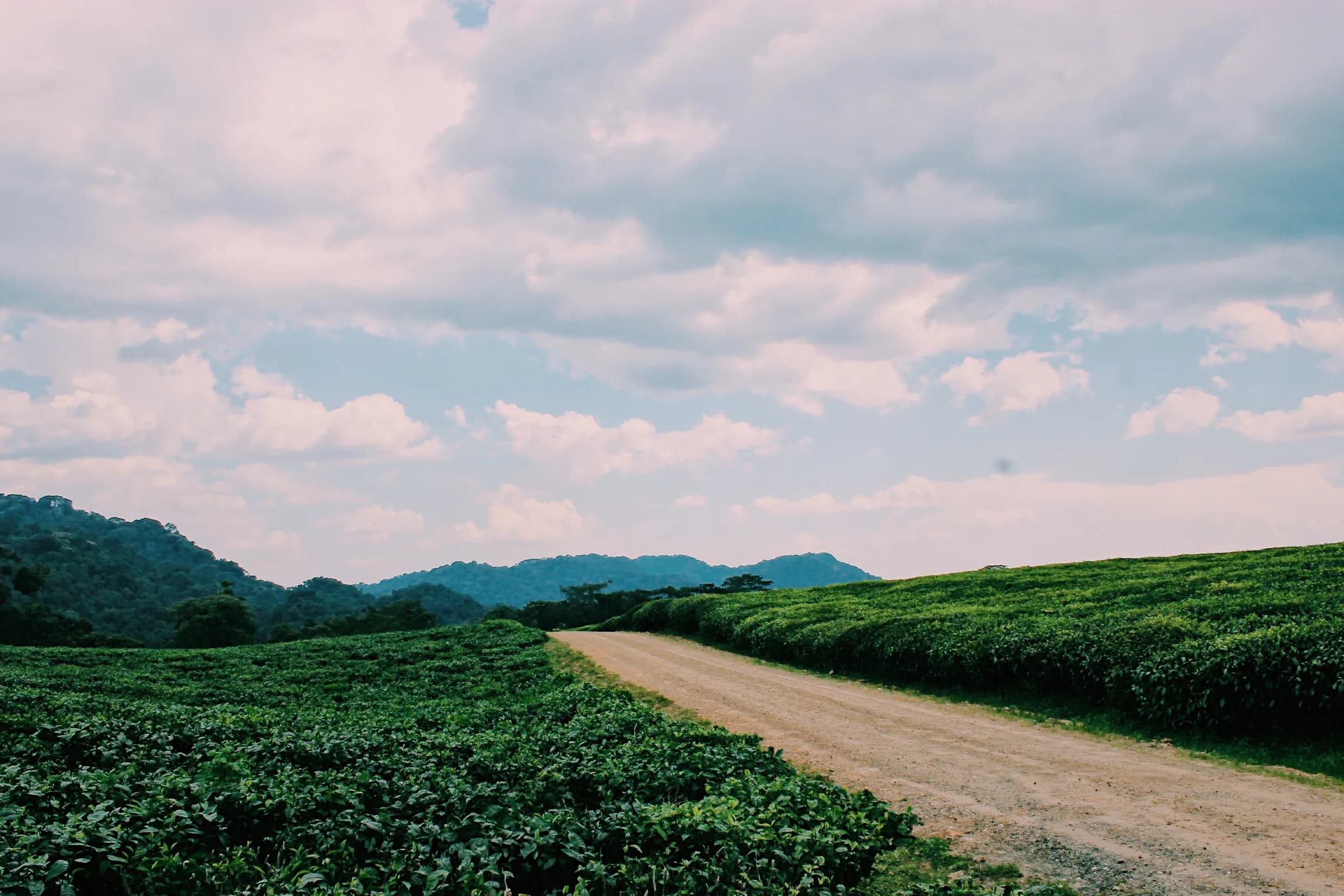
The Rukarara headwater on the eastern side of the forest was identified by a 2006 expedition as the most distant source of the Nile. The claim is contested and the park signs repeat it cheerfully. Nyungwe was inscribed on the UNESCO World Heritage list in 2023, and the tea estates at Gisakura run right up to the forest edge, which makes the boundary here one of the sharpest lines you will see anywhere in East Africa.
Resident species, not a promise. Wildlife moves.
June to mid-September is the long dry season and the easiest walking. Mid-December to February is the short dry window and is also good. The long rains from March to May are heavy here, and Nyungwe is one of the wettest places in Rwanda in any month, so plan for rain at some point whatever your dates. The wet months help in one specific way: when the figs are fruiting the chimpanzees stay low and closer to the trails and the tracking is shorter. The dry months make the trails safer underfoot and the canopy walk far more pleasant. Nights at 2,000 metres and above are cold, and there is no month in which a fleece is wasted.
By road from Kigali it is five to six hours south-west on tarmac through Huye and Nyanza, and it is a good drive rather than an endurance test. From Rusizi on Lake Kivu the western end of the park is about an hour, and Cyamudongo is far closer to Rusizi than to Uwinka, which matters if chimpanzees are your priority. From Gisenyi and the Kivu shore road, allow four to five hours south. RwandAir flies Kigali to Kamembe airport at Rusizi in about forty minutes, and Kamembe to the Gisakura reception is roughly an hour. Coming from Volcanoes National Park, the drive is the whole length of the country at seven to eight hours, so break it in Kigali or on the lake rather than doing it in one push.

The properties we book here most often. Which one suits you depends on the season, the sector you are trekking and how much walking you want between your room and dinner.
Luxury, 22 rooms
Set in a working tea estate on the edge of Nyungwe, with the forest boundary a short drive from the rooms. It is the most comfortable base for chimpanzee tracking in Rwanda, and it needs to be, because tracking starts before dawn and the return is often muddy. The estate setting means open views and sunshine, which the forest interior rarely gives you.
Tea estate suites and villas, Heated pool and spa, Guided tea plantation walk
We will say honestly what is available on your dates, what the permits cost and whether the season suits what you want to do in Nyungwe Forest.