
Uganda, national park
Mgahinga Gorilla National Park
Three Virunga volcanoes, one gorilla family, and golden monkeys in the bamboo
About Mgahinga Gorilla National Park
Mgahinga is the Ugandan corner of the Virunga massif and the smallest national park in the country at about 34 square kilometres. Three of the eight Virunga volcanoes stand inside it: Muhabura at 4,127 metres, Gahinga at 3,474 and Sabyinyo at 3,669, whose summit ridge is the point where Uganda, Rwanda and the Democratic Republic of Congo meet. You can stand in three countries at once, which is the only claim made about this park that is literally true.
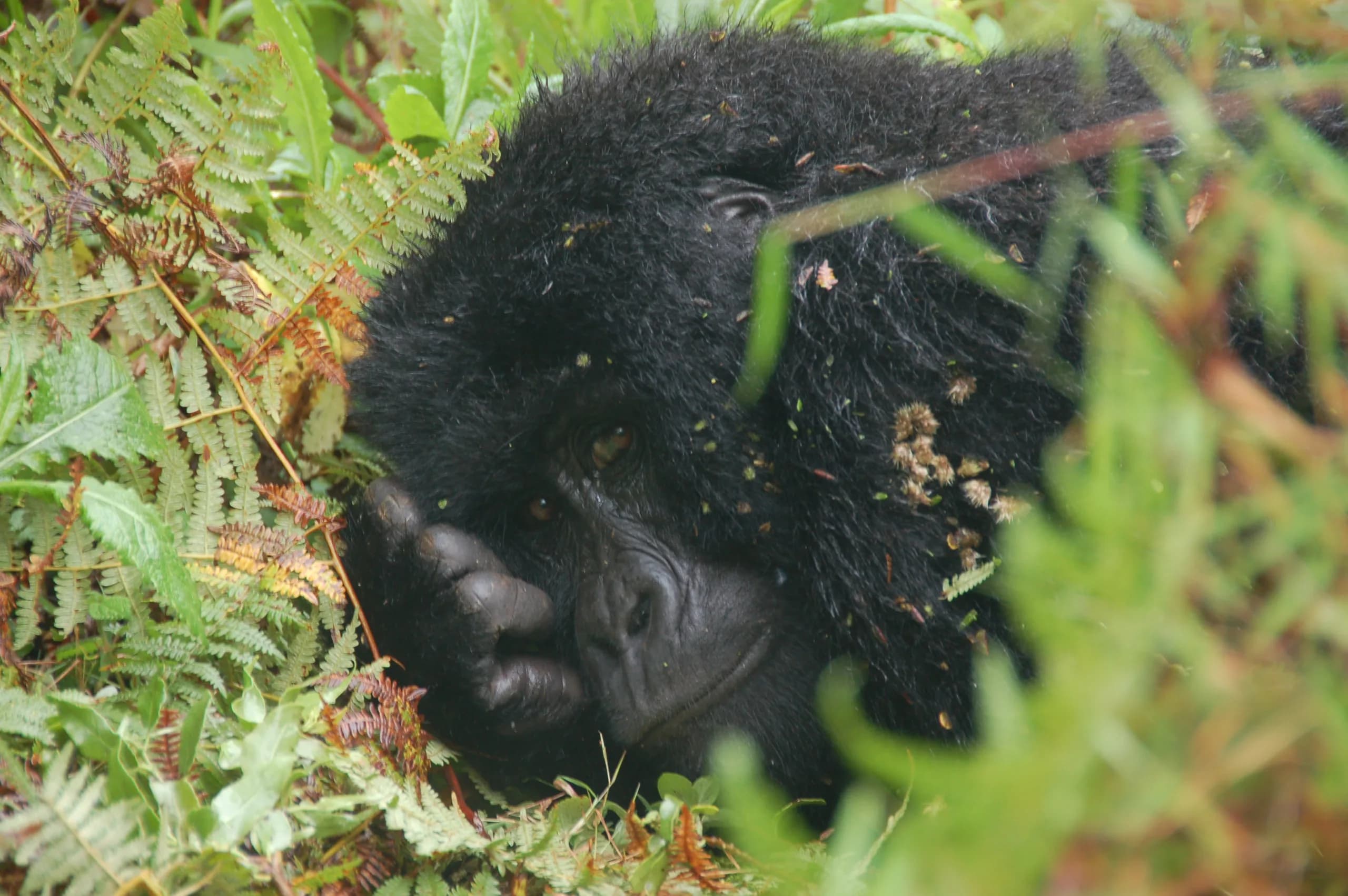
One habituated gorilla family lives in the park, the Nyakagezi group, and eight permits a day are sold for it. That scarcity works in your favour rather than against you: because there is only one group and because Bwindi absorbs almost all the demand, Mgahinga permits are frequently available at short notice when Bwindi has been sold out for months.
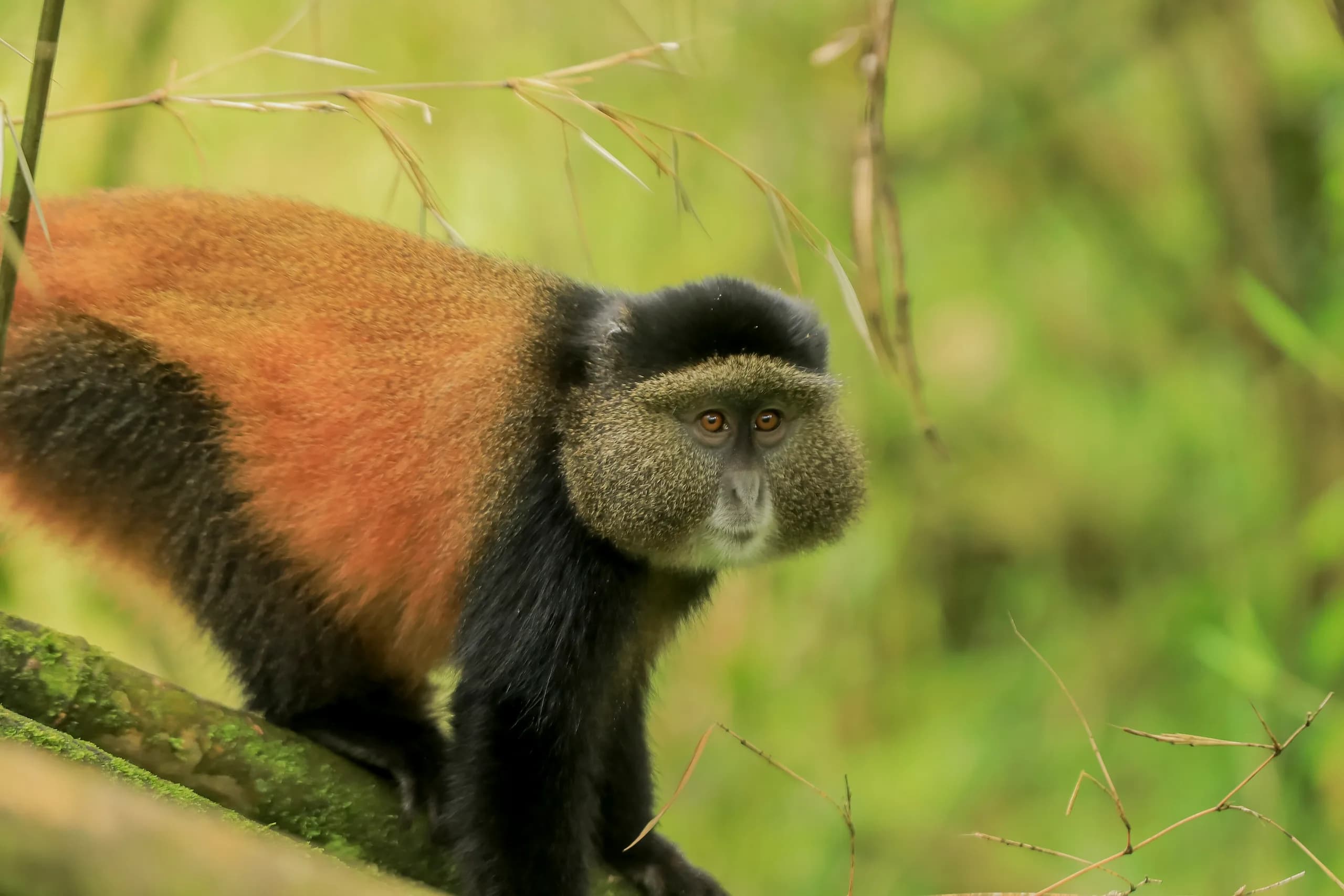
The other reason to come is the golden monkey, which lives only in the Virunga volcanoes and the forests on the Rwanda and Burundi border and nowhere else on earth. Tracking them in the bamboo zone is short, mostly level walking, costs a fraction of a gorilla permit, and delivers a fast-moving troop of bright chestnut monkeys at very close range.
Thirty-four square kilometres, and three volcanoes
Mgahinga is small enough to see in three days and steep enough that you will not be bored. Muhabura, at 4,127 metres, is the hardest of the three climbs and takes about eight hours return from Ntebeko, with a small crater lake at the summit and views across the whole Virunga chain on a clear day. Gahinga at 3,474 metres is six hours return and its crater holds a swamp rather than a lake. Sabyinyo at 3,669 metres is eight hours, involves ladders bolted onto the ridge, and finishes at the tripoint. Each is charged at roughly 80 US dollars per person by the Uganda Wildlife Authority, ranger included, and the figure is indicative.
Near the top of all three you are in Afro-alpine vegetation, with giant lobelia and scarlet-tufted sunbirds working the flower spikes. It is cold up there in every month.
The Nyakagezi group, and the caveat
A Uganda gorilla trekking permit is 800 US dollars per person for a foreign non-resident, the same as Bwindi, set by the Uganda Wildlife Authority and indicative. It buys one hour with the Nyakagezi family in a group capped at eight, with rangers and trackers, from the Ntebeko headquarters.
The caveat is worth stating plainly. Nyakagezi spent years crossing the border into Rwanda and Congo and back, and there were periods when the group simply was not in Uganda and permits had to be moved or refunded. It has been settled on the Ugandan side for a long stretch now and treks run normally, but this is a wild family living on an international boundary in a park you can walk across in a morning. The risk is small and it is not zero. If gorillas are the single reason for your trip, Bwindi with its twenty-odd families is the safer purchase; if you are already in the far south-west, Mgahinga is the better day.
Golden monkeys
Golden monkey tracking costs around 60 US dollars per person and the four-hour habituation experience about 100, both set by the wildlife authority and both indicative. The walking is through bamboo on gentle ground, usually an hour or less to find a troop, and the troops here run to dozens of animals. They move constantly and photography is genuinely hard, which is the honest warning: bring the fast lens and accept that half the frames will be of bamboo. The species is endangered and its entire range is the Virunga volcanoes and a few forests immediately south, so this and Volcanoes National Park in Rwanda are essentially the two places to see it.
The Batwa Trail and Garama Cave
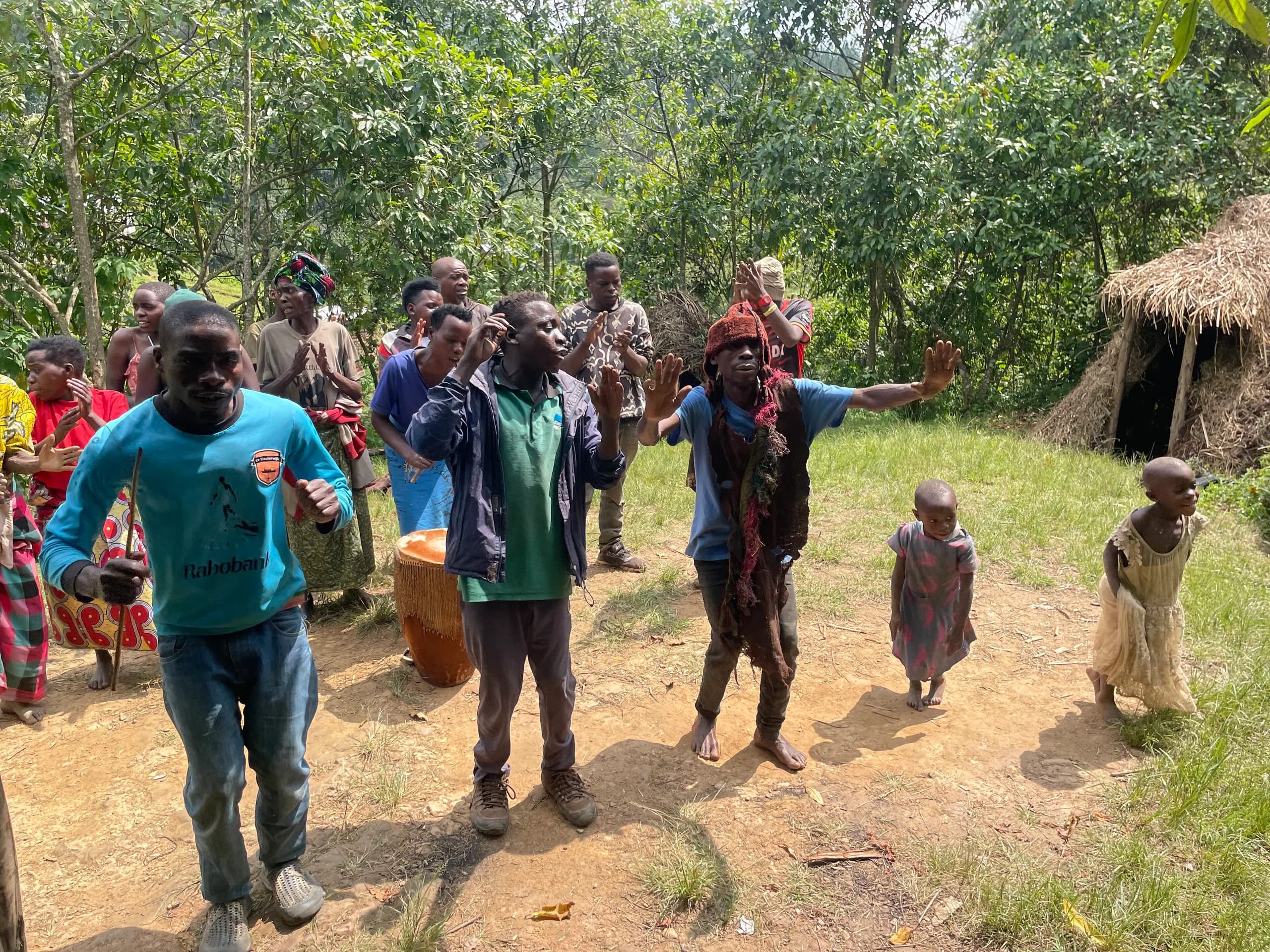
The Batwa lived in this forest as hunter-gatherers until the park was gazetted in 1991, at which point they were evicted. Most received no land and no compensation, and the Batwa communities around Kisoro today are among the most marginalised people in Uganda. The Batwa Trail is a full-day walk led by Batwa guides from Ntebeko up into the park and down to Garama Cave, a lava tube of a few hundred metres that the community used as a refuge and, historically, as a base. It costs around 80 US dollars per person, a defined share goes to the Batwa community, and it is led rather than performed.
It is the most substantial cultural experience in the south-west and it is also uncomfortable in the correct way, because the guides are walking you through what they lost in order to earn a living from the people who benefited. Book it knowing that. Ask what proportion of the fee reaches the community and expect a straight answer.
Practicalities
The Ntebeko headquarters is 14 kilometres from Kisoro on murram, about 45 minutes, and Kisoro is where the lodges, the fuel and the phone signal are. Ntebeko sits at around 2,600 metres and it is cold at night in every month of the year. For the volcano climbs you need boots, layers and rain gear regardless of season, and porters are available at the headquarters and are worth taking on all three.
What people come here for
- One hour with the Nyakagezi gorilla family, from a park that sells only eight permits a day
- Golden monkey tracking in the bamboo, and the four-hour habituation experience
- The Batwa Trail to Garama Cave, led by Batwa guides, with a share of the fee going to the community
- The climb to the summit ridge of Sabyinyo, where Uganda, Rwanda and Congo meet
- Muhabura at 4,127 metres, eight hours return, with a crater lake at the top
- Giant lobelia and scarlet-tufted sunbirds in the Afro-alpine zone on all three volcanoes
- Permits that are often available at short notice when Bwindi has been sold out for months
What lives here
Resident species, not a promise. Wildlife moves.
- Mountain gorilla
- Golden monkey
- Forest buffalo
- Bushbuck
- Black-fronted duiker
- Giant forest hog
- Side-striped jackal
- Rwenzori turaco
- Handsome francolin
- Scarlet-tufted sunbird
Best time to visit
June to August and December to February are the drier windows and the sensible ones for the volcano climbs, where wet rock on the Sabyinyo ladders and the Muhabura scree is the difference between a hard day and a dangerous one. March to May and September to November bring heavy rain, and this is a wet mountain in any month. Gorillas and golden monkeys are resident and do not migrate, so the season decides how muddy your walk is rather than whether you find them. There is one seasonal effect worth knowing: when the bamboo is shooting in the wet months both the gorillas and the golden monkeys drop lower to feed on it, and the walking gets shorter even as the ground gets worse.
Getting there
Kisoro is the hub. By air, Aerolink flies Entebbe to Kisoro airstrip in about ninety minutes, and the transfer from the strip to Ntebeko is 45 minutes on murram. By road from Kampala it is nine to ten hours via Masaka, Mbarara and Kabale, which almost nobody does in one push; break it at Lake Mburo or Lake Bunyonyi. From Kigali the Cyanika border is about three hours and Cyanika is ten kilometres from Kisoro, so Kigali to Ntebeko is three and a half to four hours, and this is by far the most common way in. From the southern Bwindi sectors at Rushaga and Nkuringo it is one and a half to two hours, and from Lake Bunyonyi about ninety minutes.
Around Mgahinga Gorilla National Park
Tell us when you want to be here
We will say honestly what is available on your dates, what the permits cost and whether the season suits what you want to do in Mgahinga Gorilla National Park.