

8 daysKenya
8-Day Kenya Masai Mara and Amboseli
Elephant under Kilimanjaro, then four nights on the Oloololo escarpment above the Mara Triangle
From$6,900 per person

Kenya, national park
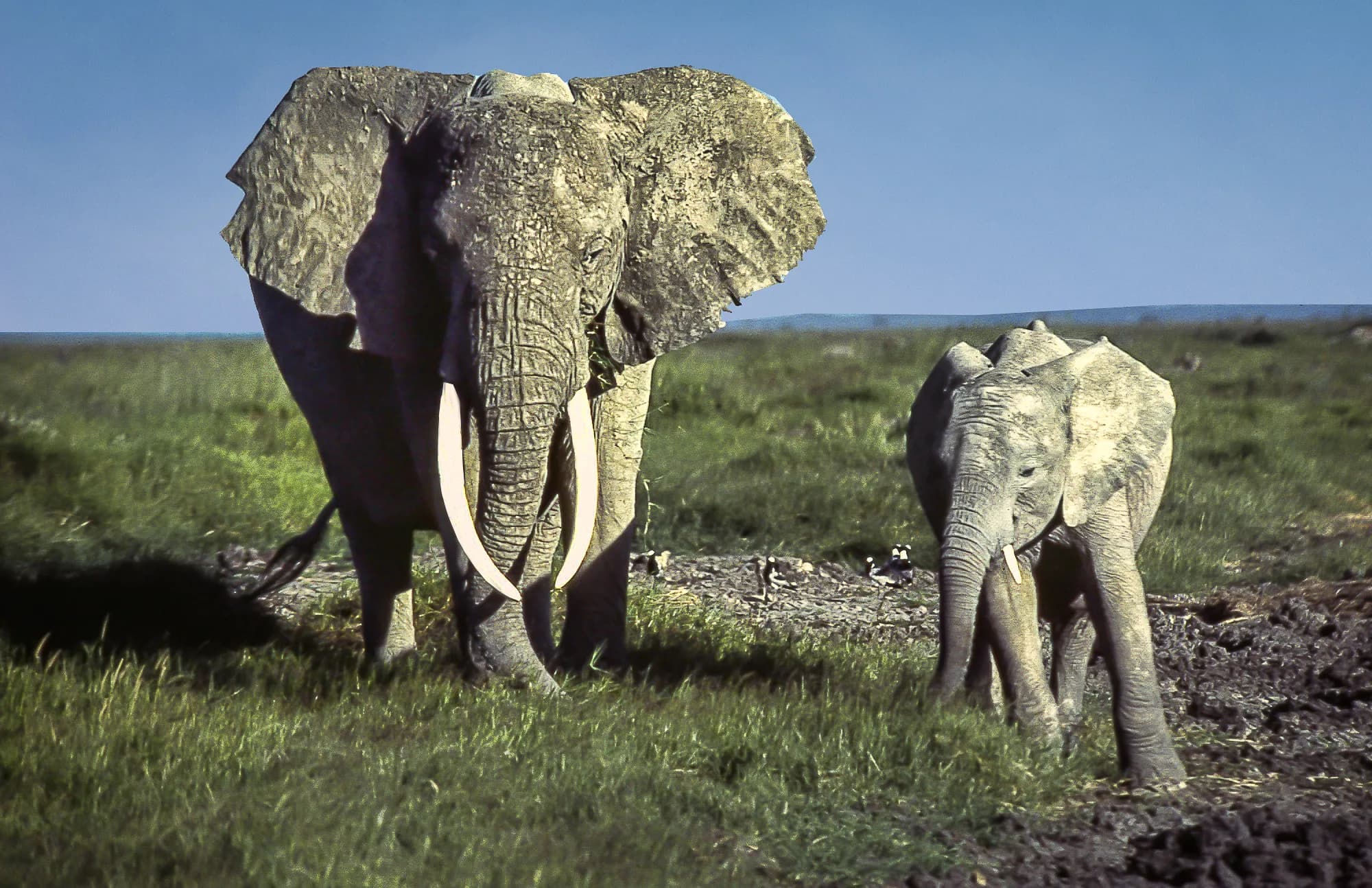
Big-tusked elephants on a dry lake bed, with Kilimanjaro standing behind them
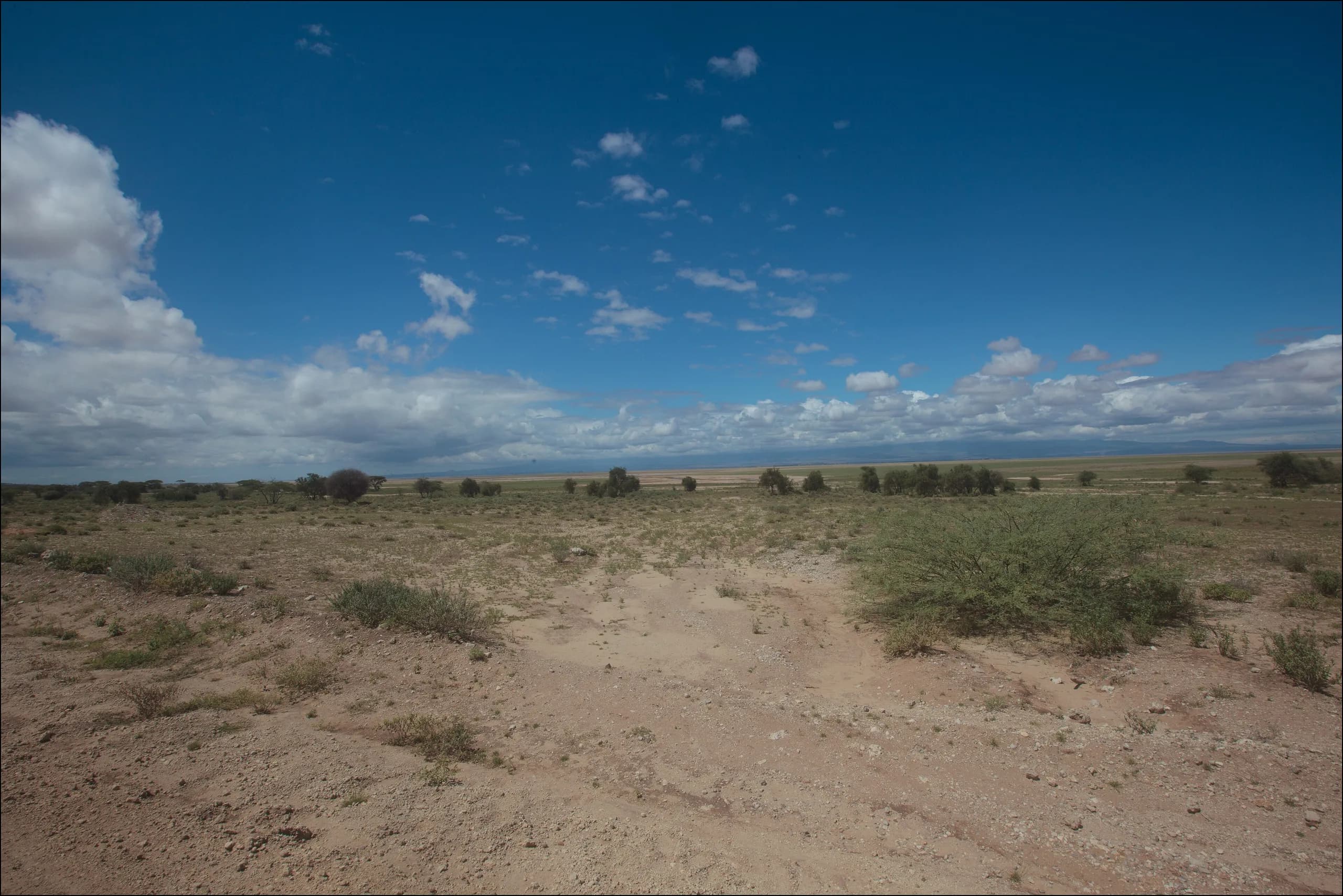
Amboseli is small, dusty and flat, and it exists for one reason: elephants in the open with the highest mountain in Africa behind them. The park covers under 400 square kilometres on the Kenyan side of the border, most of it the bed of a lake that dried out a long time ago, and its elephants have been studied continuously since 1972, which makes them among the best known wild elephants anywhere.
The mountain is not reliable. Kilimanjaro builds cloud from mid-morning and frequently stays hidden for the rest of the day, so the view happens at dawn, in the last half hour of light, or not at all. January and February and the June to October dry season give the best odds. Anyone who promises you the mountain is guessing.
What holds the park together is water. Melt and rain off Kilimanjaro travels underground and surfaces in the Enkongo Narok and Longinye swamps in the middle of the park, which is why elephant, buffalo and hippo stand belly deep in green grass in the middle of what otherwise looks like a dust bowl.
Amboseli’s elephant families are individually known, named and followed by researchers who have been here since 1972, and the guides work with that knowledge. It also means the park still holds some of the last big tuskers in East Africa: bulls whose ivory reaches the ground, which exists only because these particular animals have been protected long enough to grow old. Seeing one is not guaranteed on any given day, and the guides know roughly where the well-known bulls have been.
The honest part is what happens outside the boundary. This is a small park inside a much larger dispersal area of Maasai group ranches, the elephants move in and out constantly, and conflict over crops, water and fences is real. Poaching pressure on old bulls has never fully gone away.
Plan the mountain for the first hour of light and the last. The classic view is from the western and southern side of the park looking south-east, and there is usually a twenty-minute window at dawn before the cloud builds. The clearest weeks of the year are generally in January and February. If a photograph of elephants under Kilimanjaro is what you came for, give the park two full days rather than the single night most itineraries allow, because one dawn is one roll of the dice.
Park entry is set by Kenya Wildlife Service and currently sits at roughly 60 to 100 US dollars per adult non-resident per day depending on the season, under a peak and low season structure that has been revised more than once. Vehicle entry is charged separately. Both figures are indicative. Payment at Kenya Wildlife Service gates is cashless and made through the government platform rather than in notes at the barrier, which catches out self-drivers who arrive expecting to pay at the gate.
The gates are Kimana in the east on the Emali road, Meshanani in the west on the Namanga road, Iremito in the north-east, and the airstrip. Kimana is the usual arrival for anyone driving from Nairobi via Emali, which is the better of the two road routes.
The national park circuits are short and in high season they get busy, particularly around the swamps in the middle of the day. The fix is to sleep on the boundary rather than inside. Kitirua and Selenkay on the western and northern edges, and the Kimana Sanctuary to the east, are Maasai-owned conservation areas that permit walking with a tracker and night drives, neither of which the national park allows. Kimana also sits on the wildlife corridor that links Amboseli to the Chyulu Hills and Tsavo, so the animals passing through are not a captive population.
Amboseli is an elephant park and a mountain park. Big cats are thin on the ground, lion sightings are far less reliable than in the Mara or the Serengeti, and the leopards are effectively a bonus rather than a plan. The park is also genuinely dusty from August to October, to the point that a camera without a cover will suffer. Two nights here, paired with the Mara or with Tsavo, is the right shape. Building a whole safari around Amboseli is not.
Resident species, not a promise. Wildlife moves.
June to October is the long dry season and the most dependable, with short grass, concentrated game and good odds on a clear mountain. January and February are hot, dry and quieter and often give the very clearest Kilimanjaro mornings of the year. The long rains from late March through May and the short rains in November green the lake bed, bring the migrant birds in and drop the rates a long way, but the dust turns to black cotton mud and some tracks become hard work. Flamingo and pelican appear on the flooded lake bed after heavy rain and disappear when it dries. Whatever the month, plan the mountain for dawn and for the last hour of light and treat anything else as luck.
By air, Amboseli airstrip is about forty-five minutes from Wilson Airport in Nairobi with daily scheduled services, and most camps are within half an hour of the strip. By road it is four to five hours from Nairobi on the Mombasa highway to Emali and then south on tarmac to Kimana gate, which is the better route, or around five hours via Namanga to Meshanani gate, which is rougher going. From the Masai Mara the drive is a long day and almost everyone connects by air through Wilson instead. From Arusha and Kilimanjaro in Tanzania it is three to four hours through the Namanga border post, which makes Amboseli a natural first or last stop on a combined Kenya and Tanzania trip.
The properties we book here most often. Which one suits you depends on the season, the sector you are trekking and how much walking you want between your room and dinner.
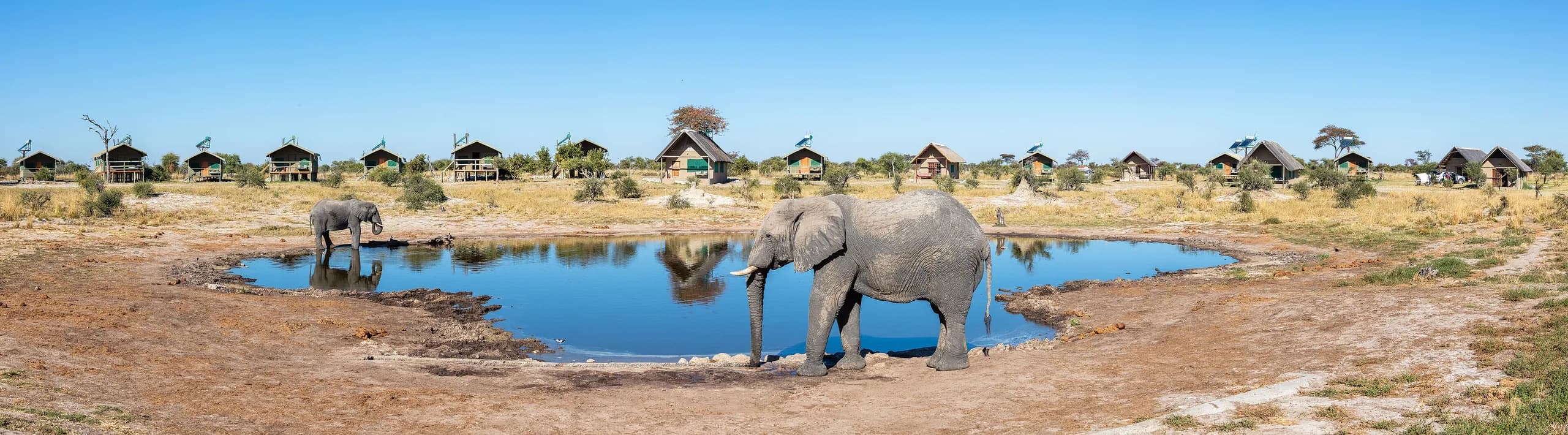
Luxury, 17 rooms
A long-established camp in its own private conservancy on the south-western side of Amboseli, with Kilimanjaro directly in front of the mess tent when the cloud lifts. The private land allows night drives and walking, which are not permitted inside the national park itself. Tents are classic canvas under thatch rather than glass and steel.
Private conservancy with night drives and bush walks, Swimming pool with a Kilimanjaro view, Family tents and a private house
We will say honestly what is available on your dates, what the permits cost and whether the season suits what you want to do in Amboseli National Park.